
Bromeliad weevil
Metamasius callizona
Description
How to identify
The Bromeliad weevil (Metamasius callizona) is a member of the Curculionidae family. It is a highly destructive insect known to target various species of the Bromeliaceae family.
Adult beetles are typically 11 to 16 mm long, characterized by a brownish-black body with distinct reddish-orange markings on the elytra. They possess a long snout, which is a hallmark of the weevil family.
The larval stage is the most damaging. The larvae are legless, creamy-white grubs with a brown head capsule, usually found boring into the soft tissues of the host plant.
The life cycle encompasses four stages: egg, larva, pupa, and adult. Under ideal tropical conditions, the generation cycle can be completed in about three months.
Females lay eggs by piercing the leaf base. A single female can produce hundreds of eggs, allowing the population to spread rapidly if left unchecked in greenhouse environments.
What it damages
The primary hosts are bromeliads, including popular ornamental genera like Tillandsia, Aechmea, and Neoregelia. The pest has caused severe ecological damage in regions where these plants are native.
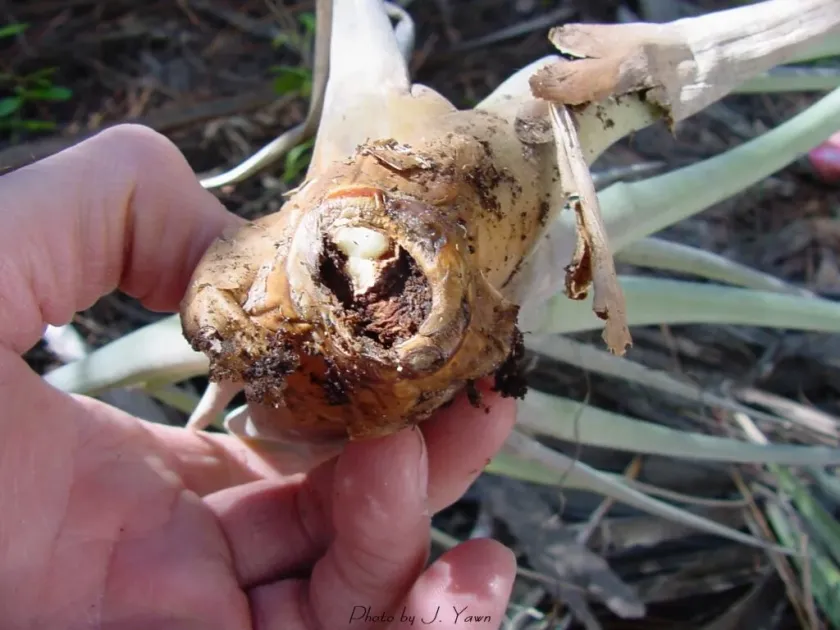
Damage begins when newly hatched larvae tunnel into the core of the bromeliad. By eating the succulent tissue, they disrupt the plant's vascular system and water transport.
As the larvae feed, they create cavities that become breeding grounds for bacteria and fungi. This secondary infection often leads to rapid decay and plant death.
Advanced infestations result in the collapse of the central shoot, leading to total structural failure of the plant. Infected specimens typically shed their inner leaves as the stem rots away.
The economic impact on the nursery and ornamental plant industry is significant, as infested shipments often have to be destroyed entirely to prevent further spread.
Signs of infestation
The earliest signs of infestation are small, pin-prick feeding marks or egg-laying punctures found on the lower sections of the bromeliad leaves.
Visible signs of larval activity include the presence of frass, which looks like fine sawdust or moist, brownish waste, accumulating at the base of the leaves.
A yellowing or wilting of the central leaves (the spear) is a classic indicator that the larvae are boring through the center and damaging the apical meristem.
If you suspect an infestation, gently pull on the central leaves. If they detach easily, it is a definitive sign of stem destruction caused by the weevil larvae.
- Small puncture wounds on leaves.
- Sawdust-like frass at the base.
- Wilting of the central spear.
- Secondary bacterial rot.
- Easy detachment of center leaves.
Control measures
Strict quarantine measures are essential. All incoming plants must be inspected thoroughly, as the cryptic nature of the larvae makes them easy to miss during initial checks.
Mechanical control involves the immediate removal and destruction of any plant showing signs of infestation to prevent the completion of the life cycle.
Systemic insecticides are the primary chemical control method. Applying these products so the plant absorbs the active ingredient can help kill larvae feeding inside the tissue.
Maintaining high sanitary standards in growing areas, such as removing debris and preventing water accumulation in leaf axils, can make plants less attractive to adult weevils.
Monitoring programs using attractant traps or regular visual inspections can help growers detect adult beetle activity early and implement control before eggs are laid.
Taxonomy
- Latin name
- Metamasius callizona
- Order
- Coleoptera (beetles)
- Family
- Dryophthoridae
- EPPO code
- METACA
Discussion
No discussions yet — be the first.