
Metamasius
Metamasius
Description
How to identify
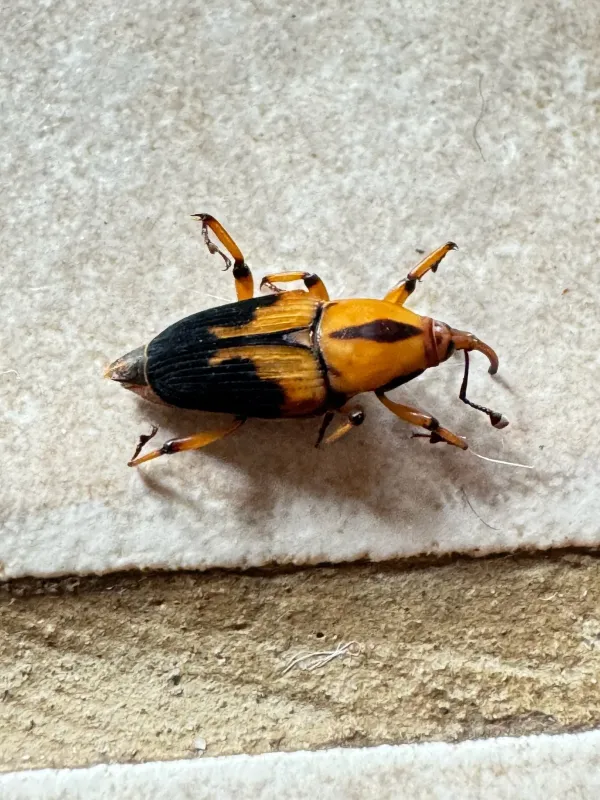
Metamasius is a genus of weevils (Curculionidae) known for their significant impact on tropical agriculture. These beetles are characterized by their elongated snouts and diverse, often striking, color patterns including black, red, and orange.
Adult weevils typically range from 10 to 15 millimeters in length. Their bodies are protected by a thick exoskeleton, allowing them to withstand various environmental stressors in their natural habitats.
The life cycle of the Metamasius consists of four stages: egg, larva, pupa, and adult. The larvae are legless, white, and grub-like, typically found living inside the plant stems or fruit where they feed.
Females utilize a specialized ovipositor to insert their eggs deep into the plant tissue. This placement ensures that the larvae have immediate access to food upon hatching while remaining protected from predators.
Species such as Metamasius hemipterus are widely recognized as severe pests, causing extensive economic damage across banana and sugarcane plantations globally.
What it damages
Metamasius species primarily target bananas, sugarcane, pineapples, and various ornamental palm species. They favor succulent tissues which are rich in nutrients and moisture.
Both adults and larvae cause damage by boring deep tunnels into pseudostems and rhizomes. This tunneling disrupts the plant's vascular system, hindering the transport of water and nutrients.
The larvae are particularly destructive as they hollow out the core of the plant. This structural damage weakens the plant significantly, often causing it to topple over under its own weight or during wind events.
Beyond physical damage, the tunnels created by the weevils serve as entry points for various pathogens, including fungi and bacteria, leading to rot and rapid decline.
In cases of heavy infestation, entire fields can be lost within a relatively short period, representing a major challenge for commercial growers in tropical regions.
Signs of infestation
Initial signs of Metamasius presence often include tiny holes on the surface of the pseudostem, sometimes accompanied by the oozing of plant sap or gum.
The overall appearance of an infested plant becomes stunted. Leaves may show symptoms of chlorosis, drooping, or premature wilting due to the interrupted vascular flow.
If the plant is cut open, one can clearly see extensive tunneling filled with frass, which is the waste produced by the larvae as they feed on the internal fibers.
A foul, fermented odor is a common indicator of internal rot, occurring as secondary infections invade the tunnels bored by the weevils.
Visible decay at the base of the plant, combined with structural instability, serves as a strong warning sign that a severe larval infestation is well underway.
Control measures
Cultural management is the cornerstone of control, involving the rigorous removal and destruction of infested plant material to prevent the cycle from continuing.
Pheromone traps are highly effective in monitoring adult populations and can be used for mass trapping to reduce the overall density of the pest in the field.
Chemical control involving systemic insecticides may be applied, though it is most successful when timed correctly with the peak activity periods of the adult beetles.
Biological control methods, such as the application of entomopathogenic fungi or nematodes, are increasingly used to target larvae hidden within the plant stems.
Strict quarantine measures are essential to prevent the spread of Metamasius into new, unaffected areas, protecting the long-term viability of agricultural production.
Taxonomy
- Latin name
- Metamasius
- Order
- Coleoptera (beetles)
- Family
- Dryophthoridae
- EPPO code
- METASP
Discussion
No discussions yet — be the first.