
Mango bud mite
Metaculus mangiferae
Description
How to identify
The mango bud mite (Metaculus mangiferae) is a microscopic pest belonging to the family Eriophyidae. These tiny arthropods are approximately 0.2 mm long, making them practically invisible to the naked eye, necessitating the use of a microscope for accurate identification.
They possess an elongated, worm-like body, typically cream or pale yellow in color. Unlike spider mites, these mites have only two pairs of legs, which are located at the anterior part of their body, a diagnostic feature of the Eriophyid family.
Their life cycle is exceptionally fast, allowing them to complete several generations in a short period, especially under warm, humid tropical conditions. This high reproductive rate often leads to severe infestations in a relatively short timeframe.
As obligate parasites, they live exclusively on host plants, hiding within the tight crevices of buds, young leaf axils, and developing flowers. Their lifestyle is highly sedentary, as they remain in protected micro-habitats most of the time.
Dispersal is passive, occurring mainly through wind currents, splashing rain, or human activities such as pruning and moving infested nursery stock. Proper hygiene during orchard management is vital to prevent their spread between trees.
What it damages
This mite is a significant pest of the mango tree (Mangifera indica). It causes damage by feeding on the meristematic tissues of the plant, which are responsible for the growth of new leaves, stems, and reproductive structures.
The mite injects salivary enzymes while feeding, which disrupts the normal hormonal balance of the plant. This leads to hyperplastic growth, where cells divide uncontrollably, resulting in the characteristic galls and malformations.
The most severe impact occurs on the floral buds. When mites infest these areas, the flowers fail to develop normally, leading to the condition often referred to as "bunchy top" or floral malformation, which drastically reduces fruit yield.
Vegetative growth is also compromised; leaves become stunted, crinkled, and brittle. The cumulative effect of these injuries weakens the tree significantly, making it less productive and more susceptible to environmental stress.
Secondary infections, such as fungal pathogens, often colonize the tissues damaged by the mites. This synergistic interaction worsens the damage, leading to necrotic patches and potential dieback of infested branches.
Signs of infestation
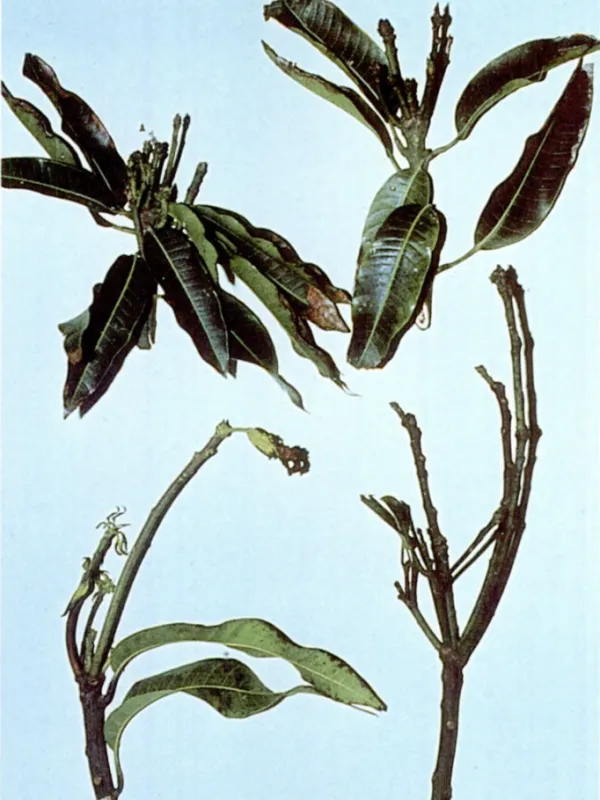
The primary visual sign of infestation is the appearance of small, hard galls on leaves, stems, and buds. These growths are irregular and can range from tiny bumps to large, woody deformities that ruin the appearance of the shoot.
Infested shoots exhibit severe curling and stunting. Leaves may emerge chlorotic, wrinkled, and thickened, showing a distinct lack of proper development compared to healthy foliage on the same tree.
Floral malformation is the most critical symptom. Affected inflorescences appear as tight, dense, and cone-like clusters of underdeveloped tissues. These are often non-functional and fail to produce viable fruit.
In cases of high infestation, the tree shows overall poor vigor. There is significant leaf drop and a noticeable failure of the buds to break dormancy correctly, leading to reduced canopy density over time.
- Appearance of irregular galls and bud deformities.
- Severe leaf curling, wrinkling, and discoloration.
- Formation of dense, cone-shaped floral clusters.
- Reduced fruit set and premature flower drop.
- Stunted growth and twig dieback.
Control measures
Effective management begins with strict sanitation practices. Pruning and destroying all infested branches and floral parts—preferably by burning—is the most reliable way to lower the pest population in an orchard.
Chemical control involves the application of specialized acaricides. Because mites hide inside tightly closed buds, contact-only pesticides are often ineffective. Systemic or translaminar acaricides are preferred for better control.
Orchard management should focus on plant health. Proper irrigation and fertilization help the tree recover from mite damage. Maintaining good airflow by proper spacing also creates a less favorable environment for mite survival.
Biological control agents, such as predatory mites (e.g., Phytoseiid species), can be integrated into the control program. These natural predators help maintain the balance of the ecosystem and suppress mite populations.
Always inspect new planting material for signs of malformation before introducing it into the orchard. Regular monitoring of trees during the flowering and flushing stages is essential for early detection and mitigation.
Taxonomy
- Latin name
- Metaculus mangiferae
- Order
- Mites
- Family
- Eriophyidae
- EPPO code
- MTCUMA
Discussion
No discussions yet — be the first.