
Juniper webworm moth
Mesophleps oxycedrella
Description
How to identify
The Juniper webworm moth (Mesophleps oxycedrella) belongs to the Gelechiidae family, a group of small moths known for their larvae that feed within plant tissues or protective webs.
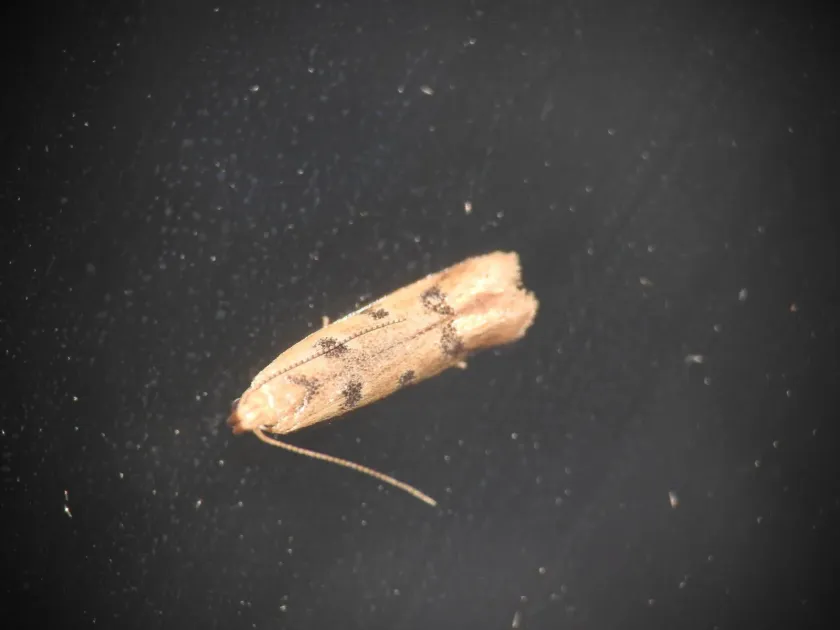
The adult moth is small with narrow, elongated wings, characterized by a cryptic coloration that allows it to blend seamlessly into the bark and foliage of host trees.
The lifecycle includes the egg, larva (caterpillar), pupa, and adult stages. The caterpillars are usually light-colored or greenish, facilitating their camouflage among the juniper needles.
Detection of Mesophleps oxycedrella is often challenging because the larvae live in concealed environments, specifically within mined shoots or enclosed webbing.
Taxonomists identify this species by examining the wing patterns of adults and the feeding behavior of larvae, which are highly specialized to thrive on Juniperus host plants.
What it damages
These pests primarily target the genus Juniperus. Larvae burrow into the young shoots and needles, causing structural damage and interrupting the nutrient flow within the plant.
The feeding activity leads to the browning and dieback of the tips of branches, significantly reducing the aesthetic value of ornamental juniper plants in garden landscapes.
If left unmanaged, heavy infestations can lead to partial crown death. The weakened state of the plant makes it susceptible to secondary infections and opportunistic wood-boring insects.
In young nursery stock, the damage can be particularly devastating, causing stunted growth and misshapen forms that render the plants unsuitable for commercial or decorative use.
The accumulation of frass (caterpillar waste) trapped within the silk webbing further weakens the needles and serves as a substrate for fungal pathogens to colonize the tree.
When it appears
Larval activity typically commences in early spring as temperatures rise, signaling the transition from overwintering to active feeding on new growth.
Adult moths are generally active during the summer months, during which they mate and lay eggs on the needles of host plants, initiating the next generation of the pest.
The most noticeable period of damage occurs from late spring to mid-summer when the larvae are at their most voracious stage of development before pupation.
Seasonal patterns can vary based on regional climate, but the monitoring period for this species usually spans from April through September to cover all active life stages.
Overwintering occurs in sheltered locations, often as pupae or mature larvae hidden in the bark crevices or within the debris located at the base of the juniper tree.
Signs of infestation
The presence of fine, silken webbing connecting the juniper needles is a primary indicator of infestation. This web often contains brown frass and debris from the host plant.
Needle discoloration, ranging from yellow to reddish-brown, on specific tips or entire branch sections is a diagnostic sign of larval feeding tunnels within the shoots.
- Thinning of the foliage on affected branches.
- Small silk nests webbing the needles together.
- Needles dropping off when the branch is shaken or inspected.
- Small exit holes found on the stem of the shoot where larvae have emerged.
A closer inspection of the branch tips often reveals the presence of larvae tucked inside the hollowed-out tissue, which confirms the active presence of the pest.
Control measures
Sanitation is a vital first step; pruning and destroying heavily infested branches will significantly reduce the local population of the moth without chemical inputs.
Biological controls, such as applications of Bacillus thuringiensis, are highly effective against larvae when applied during the early stages of their development.
Systemic insecticides can be used as a targeted treatment if the infestation is severe. Applying these treatments in late spring ensures the larvae ingest the chemical while feeding.
Promoting general plant health through proper irrigation and fertilization enhances the natural resistance of juniper bushes to various stressors, including insect attacks.
Regular monitoring of garden plantings is essential. By catching the early signs of webbing, homeowners can implement control strategies before the pest spreads to the entire shrub.
Taxonomy
- Latin name
- Mesophleps oxycedrella
- Order
- Lepidoptera (butterflies)
- Family
- Gelechiidae
- EPPO code
- MSPPOX
Discussion
No discussions yet — be the first.