
Mesophleps
Mesophleps
Description
How to identify
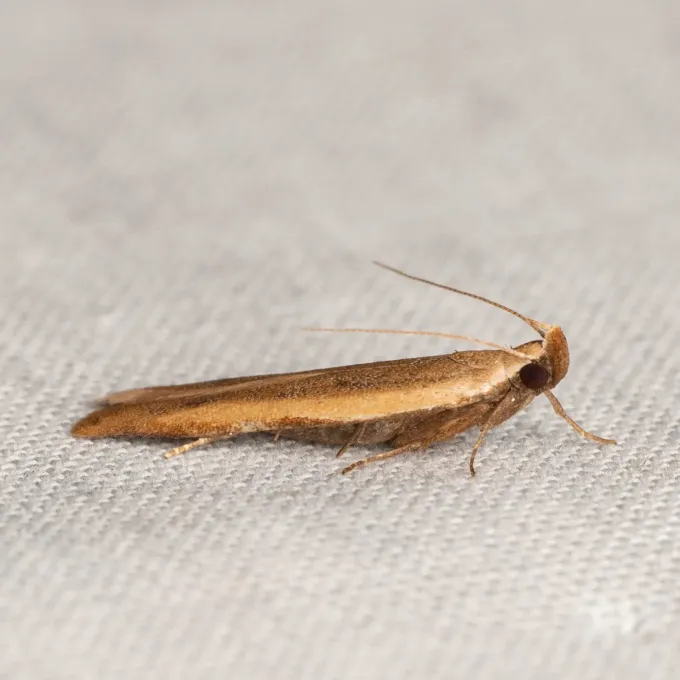
Mesophleps is a genus of moths belonging to the family Gelechiidae. These are small insects characterized by narrow wings with a distinctive notch on the hind margin, which is typical for this family of moths.
Adult moths possess cryptic coloration that provides excellent camouflage against soil and plant debris. They have smooth heads and developed maxillary palps, which help them thrive in various agricultural environments.
The larvae, or caterpillars, are the primary life stage responsible for crop damage. They possess powerful chewing mouthparts that allow them to penetrate pods and feed on the seeds and plant tissues within.
Species-level identification within the genus can be difficult and often requires examination of genitalia under magnification by an entomologist to distinguish between different related species.
Monitoring adult activity is best achieved using pheromone traps. These traps provide essential data for farmers to detect the arrival of the pest early and implement timely management decisions.
What it damages
The primary hosts of Mesophleps are plants in the Fabaceae family. They are known to cause significant economic losses in crops such as chickpeas, peas, and various other grain legumes.
Caterpillars feed on both vegetative and reproductive plant organs. By burrowing into buds, flowers, and young pods, they consume the developing seeds, which leads to yield reduction and poor-quality produce.
Damage to the pod tissue often creates entry points for secondary fungal and bacterial infections. This negatively impacts the storage life and overall market value of the harvested pulses.
Heavy infestations can lead to premature flower and pod drop, significantly reducing the plant's yield potential. In severe cases, the entire reproductive output of a field can be compromised.
Additionally, larvae may feed on leaves and stems, webbing plant parts together, which can stunt growth and hinder the development of the plant, especially during critical stages of growth.
When it appears
The lifecycle of Mesophleps is closely tied to the phenology of its host plants. Depending on the climatic zone and temperature, the pest may complete multiple generations within a single growing season.
Adult flight activity usually coincides with the flowering and pod-setting stages of the host crops. This is the period when females lay their eggs on the reproductive organs of the plants.
Larval development generally lasts several weeks, with warmer temperatures accelerating the growth rate. Peak activity often occurs during the heat of the summer, which matches the rapid growth phase of pulse crops.
The pest typically overwinters in the pupal stage or as late-instar larvae, hidden in the soil or protected by leaf litter. This dormancy allows them to survive cold winters and re-emerge in the spring.
As the season progresses, the population density may increase, necessitating ongoing monitoring throughout the flowering and pod-filling stages to prevent widespread damage.
Signs of infestation
One of the earliest signs of a Mesophleps infestation is the presence of tiny entry holes on the pods. Frass (larval excrement) is often visible near these holes, indicating active feeding inside the pod.
Premature wilting or shedding of flowers and developing pods can also indicate internal feeding. Dissecting these damaged parts will often reveal the presence of a larva inside.
Webbing between leaves is another common symptom. Caterpillars create silk-lined nests within leaves or between the pod and the stem to protect themselves from predators and harsh environmental conditions.
Regular field scouting, particularly in the evening when moths are most active, is essential for early detection. Visual inspections for both the moths and the characteristic webbing provide early warning signs.
- Entry holes in legume pods
- Presence of larval frass on pod surfaces
- Premature flower and pod abscission
- Silk webbing on leaves and pods
Control measures
Crop rotation is a fundamental cultural practice for managing Mesophleps. Avoiding the cultivation of legumes in the same field for several consecutive years helps break the pest’s lifecycle.
Post-harvest tillage is crucial to destroy overwintering pupae hidden in the soil or crop debris. Deep plowing reduces the survival rate of the population for the following planting season.
Biological control, such as the release of egg parasitoids like Trichogramma, can be highly effective in reducing pest numbers. This method is environmentally friendly and helps maintain natural balance.
When the economic threshold is reached, chemical insecticides should be applied. It is essential to use products approved for the specific crop and to target younger, more vulnerable larval stages.
Integrated Pest Management (IPM) practices, including proper timing of insecticide applications and monitoring, are key to preventing resistance and ensuring effective, sustainable control of the pest.
Taxonomy
- Latin name
- Mesophleps
- Order
- Lepidoptera (butterflies)
- Family
- Gelechiidae
- EPPO code
- MSPPSP
Discussion
No discussions yet — be the first.