
Grape root-knot nematode
Meloidogyne vitis
Description
How to identify
The grape root-knot nematode (Meloidogyne vitis) is a member of the Meloidogynidae family within the Tylenchida order, functioning as an obligate endoparasite.
The life cycle involves microscopic larvae that migrate through the soil to locate vine roots, where they penetrate and establish feeding sites.
Females become stationary inside the root tissue and transform into a swollen, sedentary state, producing eggs protected by a gelatinous matrix.
These nematodes thrive in warm, sandy soils, which facilitate their movement and increase the efficiency of host infestation.
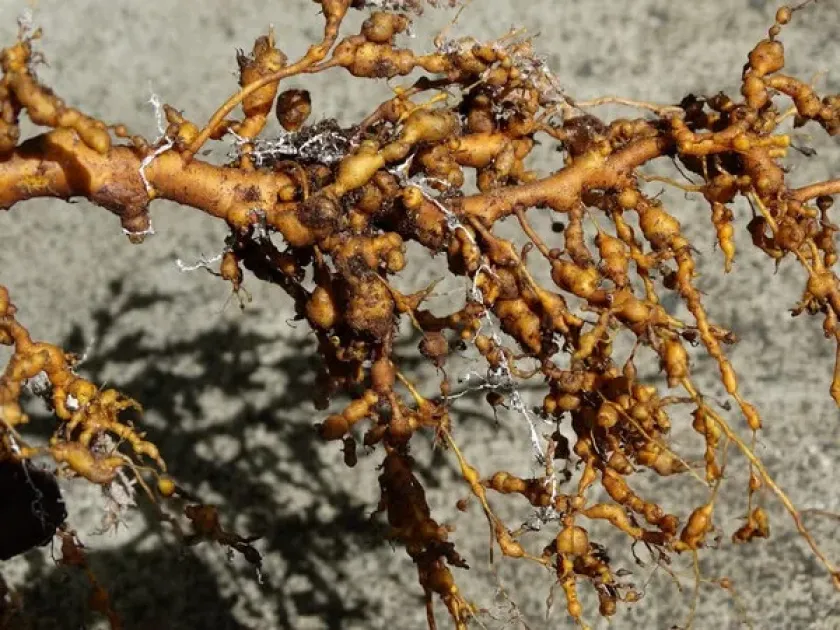
Identification is typically confirmed through root inspection for galls, followed by microscopic examination of the perineal patterns of adult females.
What it damages
This parasite primarily targets grapevines (Vitis vinifera), but it may also affect various rootstocks commonly used in commercial viticulture.
The nematode feeds on the root cells, inducing the formation of characteristic galls that disrupt the plant's vascular system and nutrient uptake.
Young vineyards are particularly vulnerable; infection can lead to stunted growth, lack of vigor, and even total vine failure in newly planted fields.
In mature vines, the pest causes reduced shoot growth and lower fruit yields, significantly impacting the long-term productivity of the vineyard.
The damage caused to the root system acts as an entry point for other soil-borne pathogens, including fungi like Fusarium and bacteria.
Signs of infestation
The most distinctive symptom of infection is the presence of knots or galls on the vine roots, which restrict the flow of water and minerals.
Above-ground symptoms include progressive vine decline, often mistaken for nutrient deficiencies such as nitrogen or magnesium shortage.
Vines infested by nematodes exhibit reduced foliage density and significantly shorter internodes, leading to a compact and unhealthy appearance.
During peak summer temperatures, affected vines show severe wilting because the damaged root system cannot sustain the necessary water demand.
Over time, the foliage turns yellowish (chlorosis), and the vine gradually loses its ability to store reserves, leading to potential vine death.
Control measures
Using nematode-free certified rootstocks is the most effective preventative measure against the establishment of this pest in a new vineyard.
Fallow management and crop rotation with non-host species can help reduce nematode populations in the soil before planting new vines.
Maintaining high levels of organic matter in the soil can support beneficial microorganisms that provide natural biological control.
When infestation is detected, chemical nematicides might be utilized, but they are subject to strict regulations and environmental safety considerations.
Vigilant monitoring, including periodic soil and root testing, is essential for early detection and management of localized infestations.
Taxonomy
- Latin name
- Meloidogyne vitis
- Order
- Nematodes
- Family
- Meloidogynidae
- EPPO code
- MELGVI
Discussion
No discussions yet — be the first.