
Cereal root-knot nematode
Hypsoperine
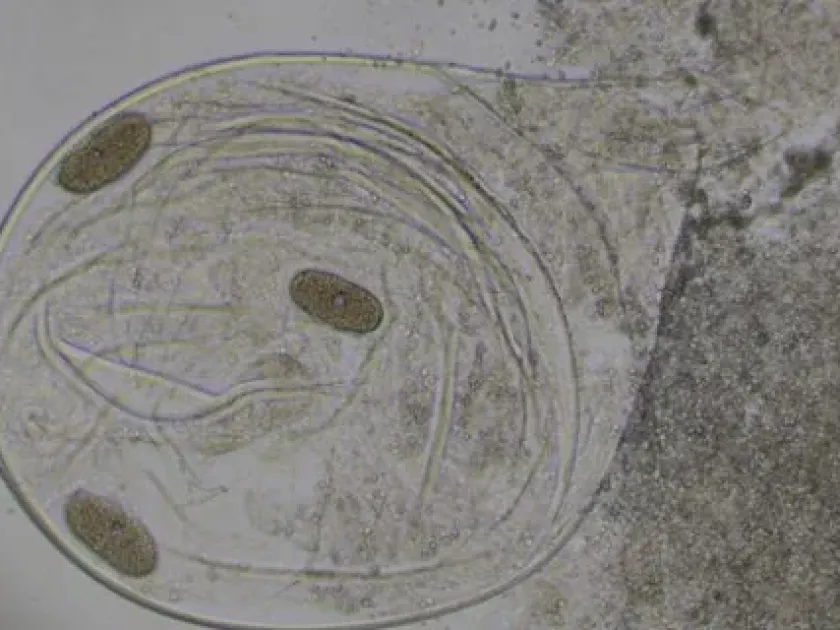
Description
How to identify
The cereal root-knot nematode (Hypsoperine graminis) belongs to the order Tylenchida. It is a highly specialized microscopic parasite that colonizes the root systems of various grass species.
Adult females of this nematode are sedentary and pear-shaped; they establish themselves within the root cortex, causing the plant to develop characteristic galls. These females remain immobile throughout their reproductive life.
Males, in contrast, are vermiform and motile. They leave the roots to locate females for mating, after which their lifespan is very limited as they do not feed on the host plant.
The life cycle is influenced by soil temperature and moisture levels. Under optimal conditions, the nematode can complete multiple generations in a single growing season, allowing for rapid population explosions.
Overwintering occurs primarily as second-stage larvae or eggs within root debris or in the soil profile, ensuring the survival of the population until the next susceptible crop is planted.
What it damages
This pest attacks a wide range of crops including wheat, barley, rye, and oats. In addition, many wild grasses act as reservoir hosts, maintaining the nematode presence in the field.
The primary damage occurs at the roots, where the nematode's feeding triggers cell hypertrophy and hyperplasia, forming knots or galls that disrupt the transport of water and nutrients.
Above-ground, the symptoms reflect an impaired root system. Plants exhibit significant stunting, chlorosis, and reduced tiller numbers, which directly leads to lower grain yield and quality.
Root damage serves as an entry point for opportunistic pathogens such as fungi and bacteria, leading to secondary root rot and plant lodging in severe cases.
Economic losses are cumulative, caused by reduced plant vigor, poor grain development, and the eventual requirement for costly soil treatments or mandatory crop rotation shifts.
Signs of infestation
The most reliable sign of infection is the presence of root galls, which can be observed by carefully excavating the root system. These galls vary in size depending on the level of infection.
In the field, infected areas often appear as patches of stunted or yellowing plants. These patches may expand over time as the nematode population spreads through the soil.
Plants affected by the nematode show a poor response to fertilization and irrigation, as the compromised root system cannot process the provided resources efficiently.
During hot and dry weather, infected plants wilt faster than healthy neighbors because of their limited ability to uptake soil moisture through the damaged root vascular tissue.
Visual diagnosis should always be confirmed through laboratory extraction and microscopic identification of the nematode life stages to distinguish it from other root-attacking pathogens.
Control measures
Crop rotation remains the cornerstone of management. Planting non-host crops like legumes or oilseeds for 3–4 years helps to significantly decrease nematode populations in the soil.
Deep plowing can be an effective cultural practice, as it exposes overwintering stages to temperature extremes and disrupts the established nematode population dynamics.
Sanitation is critical; farmers must ensure that equipment is cleaned thoroughly between fields to prevent the transfer of infested soil, which is the primary vector for spreading nematodes.
Breeding and utilizing resistant cereal varieties is the most sustainable long-term strategy for minimizing economic impacts without relying heavily on chemical inputs.
- Effective management of grassy weed hosts.
- Monitoring soil health to encourage beneficial soil microbes that may compete with nematodes.
- Application of specialized nematicides as seed treatments in high-pressure areas.
Taxonomy
- Latin name
- Hypsoperine
- Order
- Nematodes
- Family
- Meloidogynidae
- EPPO code
- HYPPSP
Discussion
No discussions yet — be the first.