
Arabian root-knot nematode
Meloidogyne arabicida
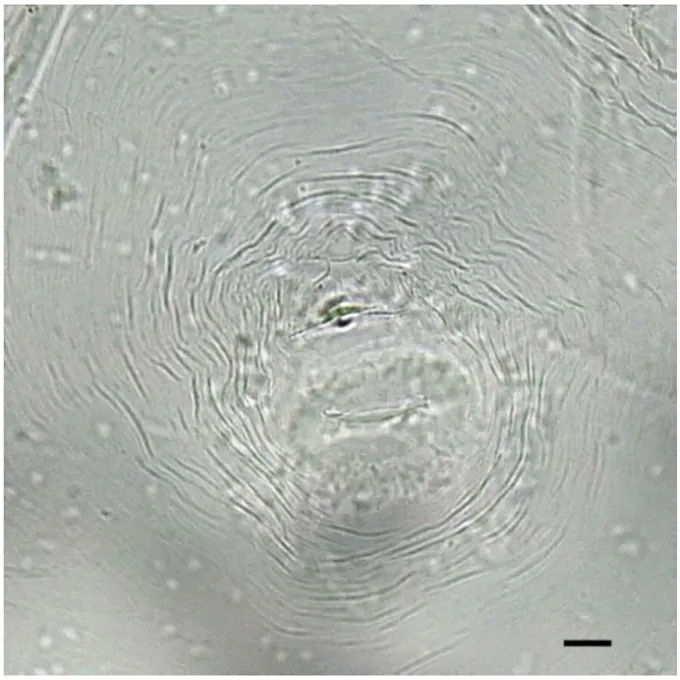
Description
How to identify
The Arabian root-knot nematode, Meloidogyne arabicida, is a microscopic worm classified under the order Tylenchida and the family Meloidogynidae. It is a specialized endoparasite that develops within the root tissues of host plants.
The life cycle initiates from eggs deposited in the soil. Second-stage juveniles are the mobile, infective form that migrates through the soil to find suitable host roots for invasion and establishment.
Once inside, the nematode settles and induces physiological changes in the host cells, leading to the formation of galls — abnormal swelling of the root tissue where the nematode feeds and matures.
Females are sedentary, pear-shaped, and produce egg masses covered in a gelatinous matrix that protects the progeny from environmental stresses and predators.
Correct identification of this species is critical, as it is morphologically very similar to other related Meloidogyne species, often requiring molecular diagnostics for absolute confirmation.
What it damages
The primary host for Meloidogyne arabicida is Arabica coffee (Coffea arabica). This nematode is a significant threat to coffee production, capable of causing localized plantation collapse.
In addition to its main host, the nematode can survive on various weed species commonly found in coffee plantations, ensuring its persistence even during fallow periods or crop rotations.
The feeding process results in the destruction of the root vascular system, which limits the plant's ability to uptake vital water and essential nutrients from the soil.
This parasitic activity results in substantial physiological stress, manifesting as reduced biomass, lower bean yield, and diminished coffee quality, affecting the economic viability of the farm.
Ultimately, severe root infestation leads to the total decline and death of the plant, forcing growers to abandon infested areas or invest in costly soil rehabilitation efforts.
Signs of infestation
The most reliable sign of infection is the presence of root galls, which can be observed upon carefully excavating the root system. These swellings range in size and severely distort root architecture.
Above-ground, affected plants exhibit symptoms similar to severe drought or nutrient deficiency, including chlorosis (yellowing of leaves) and stunted development.
Plants often show pronounced wilting during peak sunlight or high-temperature periods, as the damaged root system fails to compensate for the transpiration demand of the canopy.
In mature plantations, infested trees appear unhealthy compared to neighboring healthy plants, often showing thin canopies, reduced leaf size, and significant vigor decline.
Secondary infections are common, as the nematode-induced wounds on the roots provide entry points for soil-borne pathogens like fungi, which accelerate the overall plant mortality.
Control measures
The first line of defense is the rigorous use of nematode-free, certified seedlings to prevent the introduction of the pest into non-infested fields.
Cultural control measures, such as clean cultivation and the removal of weed hosts, play a crucial role in reducing the overall nematode population density in the soil environment.
Implementing effective crop rotation strategies with non-host or antagonistic plants helps break the nematode's reproductive cycle and promotes soil health recovery.
Biological control, including the application of beneficial fungi and predatory bacteria, has shown promise in suppressing juvenile nematode populations in the rhizosphere.
Where necessary, chemical control using specialized nematicides may be employed; however, these must be integrated carefully into the farm's management plan to minimize environmental impact.
Taxonomy
- Latin name
- Meloidogyne arabicida
- Order
- Nematodes
- Family
- Meloidogynidae
- EPPO code
- MELGAB
Discussion
No discussions yet — be the first.