
Thames root-knot nematode
Meloidogyne thamesi
Description
How to identify
The Thames root-knot nematode (Meloidogyne thamesi) is a member of the phylum Nematoda, class Chromadorea, order Rhabditida, and family Meloidogynidae. It is a microscopic soil-borne pest.
Adult females are sedentary endoparasites, characterized by a pear-shaped body and a whitish color, residing within the root tissues of their host plants.
The males are vermiform and motile, but they play a less significant role in the infestation process compared to the reproductive females.
The infective stage is the second-stage juvenile (J2), which moves through soil pores to locate and penetrate the roots of host plants.
Due to the morphological similarity to other Meloidogyne species, accurate identification requires specialized laboratory techniques, including biochemical or molecular analysis.
What it damages
This nematode is a broad polyphage that affects a wide variety of important agricultural crops, including tomatoes, peppers, and various cucurbits.
It poses a significant threat to greenhouse production systems, where the controlled environment facilitates rapid population growth and year-round infestation cycles.
The damage extends beyond vegetable crops to include several ornamental species, which complicates field sanitation and rotation practices for affected growers.
Infested plants suffer from impaired water and nutrient uptake, leading to severe stunting, poor vegetative development, and drastically reduced yield.
Secondary infections caused by soil-borne bacteria and fungi often follow nematode damage, leading to root rot and total plant collapse in extreme cases.
When it appears
The development rate of this nematode is heavily dependent on soil temperature, with the optimal range for activity being between +20°C and +30°C.
Under optimal conditions, the life cycle from egg to mature female can be completed in as little as 3 to 4 weeks, allowing for multiple generations per season.
In spring, as soil temperatures rise above +15°C, juveniles emerge from overwintering eggs and begin the search for suitable plant roots.
In greenhouses, the nematode maintains its life cycle indefinitely, as temperatures are kept consistently favorable for growth and reproduction.
During colder months, the population may survive in a dormant state within eggs protected inside the galls, waiting for warmer conditions to reactivate.
Signs of infestation
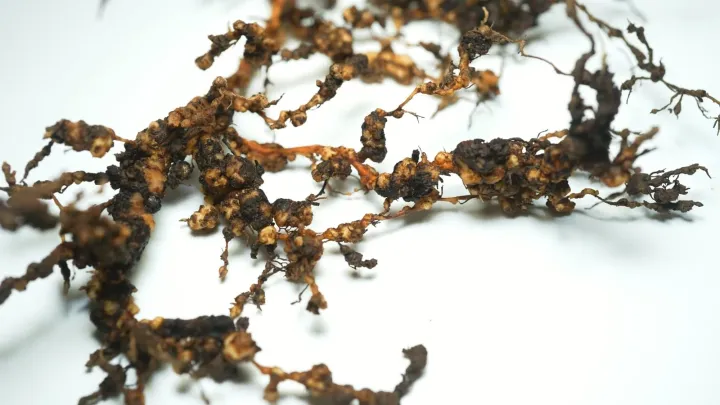
The most diagnostic sign of infestation is the formation of abnormal swellings, known as galls or knots, on the root system of infected plants.
Above-ground symptoms include wilting during the hottest parts of the day, as damaged roots fail to supply sufficient water to the foliage.
Chronic infestation results in stunted growth, leaf chlorosis, and poor fruit development that cannot be rectified by fertilizers or irrigation.
- Deformed and distorted root systems with visible galls.
- Significant decrease in fruit quality and biomass.
- Patches of stunted or dying plants in the field or greenhouse.
By examining the roots, one can observe that they have lost their fibrous structure and have become thick, knobby, and unable to support the plant properly.
Control measures
Implementing a strict crop rotation strategy using non-host species is essential for reducing nematode population levels in the soil over time.
Soil solarization or steam sterilization are highly effective methods for eradicating nematodes in greenhouse substrates and preventing re-infestation.
Utilizing nematode-resistant cultivars or rootstocks is the most sustainable and efficient approach for managing infestations in high-risk areas.
Good sanitation practices, such as using nematode-free transplants and cleaning tools thoroughly, are critical to prevent the spread of the pest.
Chemical control with nematicides is generally reserved for severe cases and should be performed according to strict safety guidelines to protect the environment.
Taxonomy
- Latin name
- Meloidogyne thamesi
- Order
- Nematodes
- Family
- Meloidogynidae
- EPPO code
- MELGTH
Discussion
No discussions yet — be the first.