
Root-knot nematode Meloidogyne spartelensis
Meloidogyne spartelensis
Description
How to identify
Meloidogyne spartelensis is a species within the Meloidogynidae family (order Tylenchida). These microscopic organisms are obligate endoparasites that spend most of their life cycle sequestered inside plant tissues.
Adult females are typically sedentary, pear-shaped, and located deep within the plant roots. Identifying this specific species requires advanced molecular or morphological analysis, particularly examining the perineal patterns of the female cuticle in a lab setting.
The infective stage is the second-stage juvenile (J2), which moves through soil pores to locate suitable host roots. Because they are invisible to the naked eye, soil and root samples must be processed using extraction methods like the Baermann funnel technique for diagnosis.
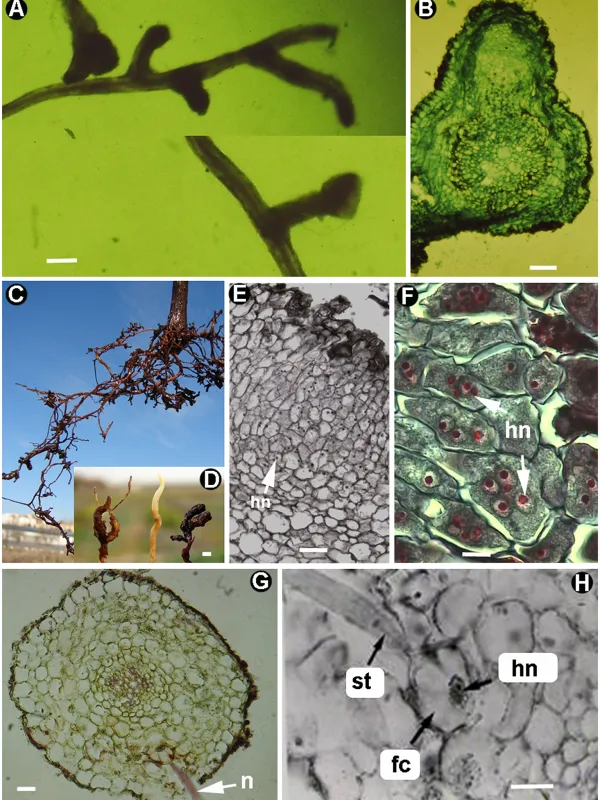
Field identification is challenging because the above-ground symptoms mimic nutrient deficiencies or drought stress. The definitive sign remains the presence of characteristic root galls upon careful root inspection.
This species is highly adapted to specific environments, and its presence can significantly alter the success of crops in infested areas due to its efficient parasitic nature.
What it damages
Meloidogyne spartelensis attacks a variety of host plants, particularly targeting the root systems. By invading the roots, the nematode triggers the development of giant cells, which function as permanent feeding sites.
These feeding sites divert essential nutrients from the plant to the parasite, leading to significant physiological stress. The disruption of the vascular system prevents efficient water and nutrient uptake, causing stunted growth.
Affected plants often exhibit signs of wilting, especially under water stress, even when soil moisture is adequate. Over time, the plant leaves may show chlorosis and reduced vigor, eventually leading to diminished yield quantity and quality.
The galled roots are often prone to secondary infections by soil-borne pathogens like fungi and bacteria, which exacerbate the damage. This interaction can lead to root rot and premature decay of the entire root system.
The economic impact of this nematode is severe, as it reduces crop uniformity and can cause long-term soil infestation that limits the choice of future crops for the affected field.
When it appears
The development of Meloidogyne spartelensis is highly temperature-dependent, with activity peaking during the warmer months when soil temperatures are conducive to metabolic activity.
The life cycle encompasses several larval stages, with the J2 juveniles actively seeking roots during periods of active plant growth. In greenhouse settings, the nematode can thrive year-round if temperatures are maintained within their optimal range.
The pest survives unfavorable conditions as eggs or larvae in the soil or protected within plant debris. These stages are resistant to desiccation and can persist for extended periods until a suitable host is available.
Dispersal occurs mainly through human activities, including the movement of contaminated soil, agricultural tools, irrigation water, and the transport of infected nursery stock.
Successful management requires understanding these seasonal activity peaks to time control measures, such as soil solarization or pre-planting fumigation, when the nematodes are most vulnerable.
Signs of infestation
The most distinctive symptom is the presence of root galls, which are knot-like swellings on the roots. These galls interfere with the root's ability to transport water and nutrients to the plant canopy.
Stunted growth, leaf yellowing, and frequent wilting are common symptoms of an infested crop. Plants often fail to reach their full potential, appearing significantly smaller than healthy specimens.
In cases of severe infestation, the root system may become deformed, sparse, and brittle. The destruction of root tissue is often clearly visible upon washing the roots and observing the localized damage caused by the feeding nematodes.
Patches of unhealthy plants in a field often indicate a spreading infestation. These patches may start small but expand over time as the nematode population increases and disperses through the soil.
Reduced root health also impacts the plant's resilience to other stressors, making the crop more susceptible to environmental extremes and secondary pests or diseases.
Control measures
Integrated pest management (IPM) is essential for controlling Meloidogyne spartelensis. Prevention is the most effective tool, focusing on sanitation and host resistance.
- Use only certified, nematode-free transplants or seeds for new plantings.
- Practice crop rotation with non-host or antagonistic cover crops, such as specific marigold varieties or mustard.
- Implement rigorous sanitation protocols, including cleaning all farm equipment and machinery before moving between fields.
- Apply biological control agents, including nematophagous fungi and bacteria, to reduce soil populations of nematodes.
- Use soil solarization or chemical fumigation in greenhouses to eliminate high populations before the planting season.
Post-harvest management, including the removal of infected root residues, is critical to preventing the nematode population from over-wintering and building up in the soil for the next cycle.
Monitoring programs using soil testing are recommended to assess population densities, allowing growers to make data-driven decisions regarding the need for intervention and the suitability of fields for specific crops.
Taxonomy
- Latin name
- Meloidogyne spartelensis
- Order
- Nematodes
- Family
- Meloidogynidae
- EPPO code
- MELGST
Discussion
No discussions yet — be the first.