
Root-knot nematode
Meloidogyne propora
Description
How to identify
The root-knot nematode, scientifically classified within the genus Meloidogyne and the family Meloidogynidae, is a highly specialized plant-parasitic roundworm. The adult female is sedentary and pear-shaped, residing within the plant roots.
The life cycle begins with the hatching of second-stage larvae from eggs, which are protected by a gelatinous matrix. These larvae are the mobile phase, moving through the soil to find and invade the roots of susceptible host plants.
Upon entering the root tissue, the nematodes induce the formation of specialized "giant cells," which serve as their primary food source. This interaction triggers the development of characteristic galls or knots on the root structure.
The biological success of Meloidogyne propora is attributed to its ability to reproduce both through sexual mating and parthenogenesis. This high reproductive rate allows populations to explode in favorable soil conditions.
Accurate identification is typically confirmed through laboratory analysis of soil and root samples. Diagnostic features include the presence of characteristic root galls and the visual detection of embedded females during microscopic examination.
What it damages
This nematode is a polyphagous pest, meaning it attacks a wide range of economically important crops. It is a major threat in both open-field agriculture and intensive greenhouse production systems.
Vegetable crops such as tomatoes, peppers, cucumbers, and melons are highly susceptible. Nematode infestation often leads to severe stunted growth, foliage yellowing, and significantly reduced yield quality.
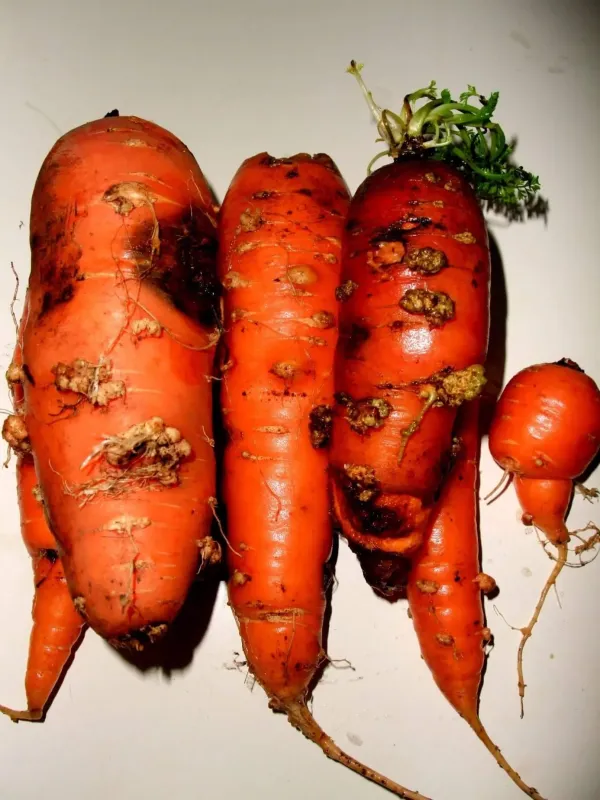
Root crops like carrots and parsnips suffer substantial physical damage. The formation of galls renders these crops unmarketable due to severe deformation and surface scarring of the edible roots.
In addition to direct feeding damage, the parasitic activity weakens the root system's ability to absorb water and essential minerals, leading to overall plant decline during periods of environmental stress.
The damage often creates pathways for secondary fungal and bacterial pathogens. This complex infection often causes rapid root decay and premature plant death, leading to major crop failure.
Signs of infestation
The most distinctive sign of infestation is the development of galls on the root system. These swellings are caused by the nematode's secretion, which promotes abnormal tissue growth in the root.
Above-ground symptoms often mimic nutrient deficiency or drought stress. Plants may appear chlorotic, wilting easily during the day, and failing to respond adequately to regular irrigation and fertilization.
Stunted growth and poor fruit set are common indicators of a heavily infested root system. Infested plants rarely achieve their full genetic potential in terms of size or productivity.
Upon closer inspection, the roots appear knotted and distorted. In cases of severe infection, the root system is reduced to a mass of decaying galls, lacking sufficient lateral roots for nutrient uptake.
Localized patches of unhealthy plants in a field are a typical sign of an expanding nematode population. These areas often grow larger each season if appropriate management practices are not implemented.
Control measures
Successful management begins with robust sanitation practices. Only certified pathogen-free transplants should be used, and soil should be tested prior to planting if previous infestations have occurred.
In greenhouse settings, thermal treatment of the soil is highly effective. Steaming the soil to reach adequate temperatures throughout the root zone can eliminate nematode populations effectively.
Crop rotation remains a cornerstone of integrated pest management. Planting non-host crops or cover crops with nematicidal properties, such as certain cultivars of marigolds or oilseed radish, can reduce nematode density.
Chemical control options include the application of soil nematicides, which should be used strategically and in compliance with local regulations due to their potential environmental impact.
- Utilizing nematode-resistant plant varieties
- Strict cleaning of tools to prevent soil transfer
- Removal and destruction of infected root debris
- Application of biological control agents like Purpureocillium lilacinum
Taxonomy
- Latin name
- Meloidogyne propora
- Order
- Nematodes
- Family
- Meloidogynidae
- EPPO code
- MELGPR
Discussion
No discussions yet — be the first.