
Pecan root-knot nematode
Meloidogyne partityla
Description
How to identify
The pecan root-knot nematode, Meloidogyne partityla, belongs to the order Tylenchida and the family Meloidogynidae, known as one of the most destructive plant parasites.
These nematodes are microscopic soil-dwelling organisms that specialize in infecting the root systems of specific nut-bearing trees, particularly the pecan tree.
Adult females are sedentary, pear-shaped endoparasites that remain embedded within the root cortex, where they extract nutrients for their development.
The second-stage juveniles (J2) are the only infective motile stage, swimming through soil pores to find and penetrate the root tips of the host plant.
Precise identification is achieved through microscopic examination of the perineal pattern of adult females or molecular methods like PCR analysis.
What it damages
Meloidogyne partityla primarily targets the pecan (Carya illinoinensis), causing significant damage to both root development and nutrient uptake.
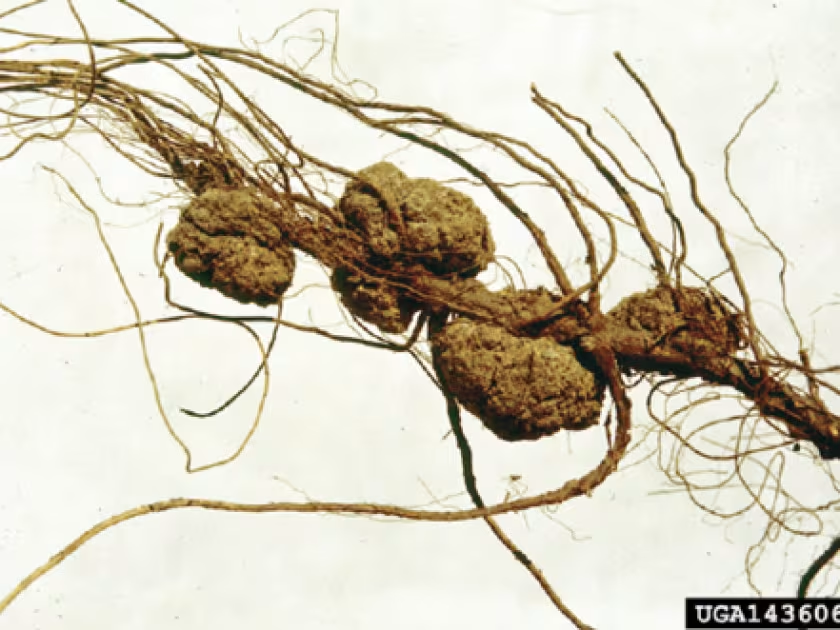
The nematode induces the formation of characteristic galls or knots on the root system, which disrupt the flow of water and essential mineral nutrients.
Affected trees show stunted growth, reduced foliage density, and severe yellowing of leaves, often mistaken for nutritional deficiencies.
In addition to direct physiological damage, the galls create openings that facilitate the entry of soil-borne fungi and bacteria, leading to root rot.
Long-term infestation significantly impacts nut yield and quality, often resulting in premature fruit drop and weakened tree structure over time.
When it appears
The nematode population activity is highly synchronized with the growing season of the host tree and the temperature of the root zone.
Optimal development occurs when soil temperatures are between 20°C and 30°C, leading to rapid completion of life cycles during the summer months.
In temperate climates, the nematode overwintering stages (eggs or J2 juveniles) persist within the soil or in the decaying roots of the host plant.
Activity peaks during the spring and fall root flush periods, which provide abundant new tissues for the larvae to colonize and initiate new galls.
Moisture availability in the soil is critical; excessive drainage or waterlogged conditions can limit the movement and infection efficiency of the larvae.
Signs of infestation
The most visible above-ground signs include patches of unthrifty, stunted trees that fail to show the vigorous growth expected for their age.
When soil moisture is limited, infected trees often exhibit signs of drought stress, such as leaf wilting, despite regular irrigation efforts.
On examination of the root system, clear, bead-like galls will be evident on the secondary and tertiary lateral roots of the pecan tree.
A decline in annual nut production and smaller nut sizes are classic indicators of a long-term, high-density infestation within the orchard.
As the nematode population increases, tree canopy density may decrease significantly, leaving the tree more susceptible to opportunistic secondary pathogens.
Control measures
The most effective strategy is to avoid introducing the nematode into the orchard by planting only certified, nematode-free nursery stock.
Pre-planting soil fumigation is a common method for managing high nematode populations in sites identified as infested prior to orchard establishment.
Implementing cover crops that suppress nematode populations, such as specific brassicas, can serve as a biological management tool between planting seasons.
Ensuring optimal tree nutrition and water management helps maintain plant vigor, allowing the pecan trees to better withstand nematode-induced stress.
Regular monitoring of soil and root samples is essential for early detection, which allows for timely intervention before the pest reaches economic threshold levels.
Taxonomy
- Latin name
- Meloidogyne partityla
- Order
- Nematodes
- Family
- Meloidogynidae
- EPPO code
- MELGPT
Discussion
No discussions yet — be the first.