
Small gall nematode
Meloidogyne minor
Description
How to identify
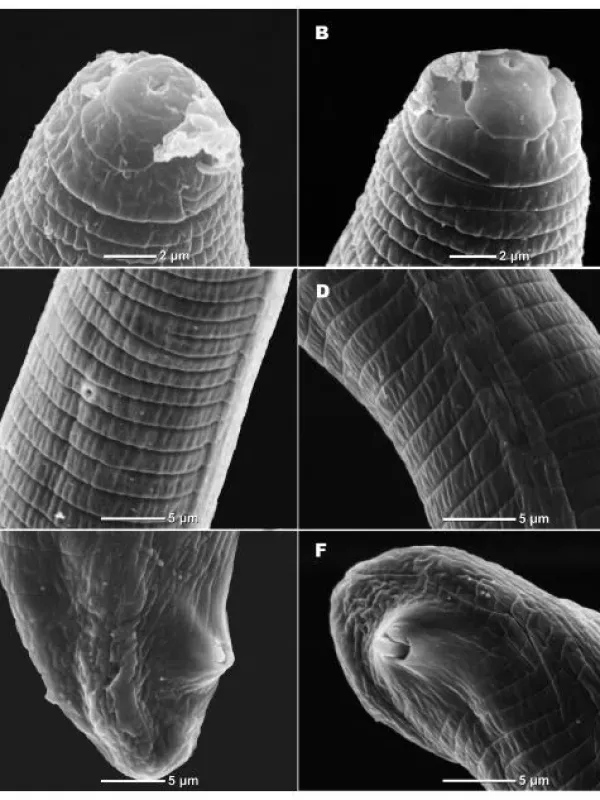
The small gall nematode Meloidogyne minor belongs to the family Meloidogynidae within the order Tylenchida. It is a microscopic endoparasitic worm that lives within the vascular tissues of plant roots.
Females of this species exhibit a pear-shaped morphology and remain sessile within the root tissue, while the second-stage juveniles are mobile and actively migrate through the soil to find new infection sites.
Identification of Meloidogyne minor is complex and necessitates advanced laboratory techniques, such as perineal pattern analysis and PCR-based diagnostics to differentiate it from other related root-knot species.
This species is notable for its adaptation to cooler temperate climates, allowing it to remain active and cause damage in regions where other heat-loving Meloidogyne species might struggle.
As an obligate parasite, its life cycle is strictly dependent on the host plant, making its presence highly localized to the root system of susceptible species.
What it damages
The primary economic impact of Meloidogyne minor is observed in turfgrass, particularly on golf courses and sports fields, where it causes significant turf quality degradation.
The nematode also attacks various agricultural crops, including potatoes and carrots, leading to root malformations, reduced crop quality, and substantial yield losses in infested fields.
Because of its wide host range, the nematode can survive in the soil even after the primary host crop is harvested, posing a continuous threat to subsequent plantings if not managed correctly.
The physical damage to the root system restricts the plant's ability to uptake water and nutrients, resulting in stunted growth and heightened susceptibility to environmental stressors.
Secondary infections by soil-borne pathogens are common in nematode-damaged roots, as the feeding sites create easy entry points for bacteria and fungi, further compounding the damage.
Signs of infestation
Symptoms above ground typically manifest as chlorosis, stunted growth, and a general decline in plant vigor, which is often misinterpreted as simple nutrient deficiency or drought stress.
Root system inspection reveals the presence of small galls or swellings, although these may be less pronounced than the dramatic knots caused by other root-knot nematode species, leading to missed diagnoses.
On lawns and turf, the characteristic signs include patchy areas of thinning and discolored grass that do not respond to fertilization or improved irrigation schedules.
In severely infested specimens, the root structure is brittle and necrotic, often with extensive branching due to the plant's attempt to compensate for the loss of primary root function.
The overall plant health declines progressively, and during periods of peak vegetative demand, the host plants may collapse rapidly due to the inability of the root system to support them.
Control measures
Strict phytosanitary protocols are essential to prevent the spread of the nematode, including the use of certified nematode-free planting materials and the thorough disinfection of soil-moving equipment.
Crop rotation using non-host species or green manure crops with nematocidal properties can effectively reduce population levels in the soil over several growing seasons.
Integrated pest management (IPM) strategies, including the application of biological control agents like certain predatory fungi, have shown potential in managing Meloidogyne minor infestations.
When chemical interventions are necessary, specific nematicides must be applied according to regulatory guidelines, ensuring minimal environmental impact while maximizing the suppression of the nematode population.
- Periodic soil sampling and laboratory analysis in high-risk areas.
- Improving soil organic matter to support beneficial microbial life.
- Implementation of quarantine zones to stop the spread to non-infested fields.
Taxonomy
- Latin name
- Meloidogyne minor
- Order
- Nematodes
- Family
- Meloidogynidae
- EPPO code
- MELGMI
Discussion
No discussions yet — be the first.