
Peanut root-knot nematode
Meloidogyne haplanaria
Description
How to identify
The peanut root-knot nematode (Meloidogyne haplanaria) is a microscopic soil-borne parasite belonging to the phylum Nematoda, class Chromadorea, order Rhabditida, and family Meloidogynidae.
Adult females are sedentary, pear-shaped endoparasites that reside within the plant roots. In contrast, males are vermiform and motile, moving through the soil to locate females for reproduction.
The second-stage juveniles (J2) are the primary infective stage. These microscopic larvae move through the soil water film to find and penetrate the root tips of suitable host plants.
Identification typically requires morphological analysis of the perineal pattern of adult females under a laboratory microscope. Molecular methods are also employed for precise taxonomic confirmation.
This species is well-adapted to warmer climates, making it a significant threat to peanut production and other susceptible crops in tropical and subtropical agricultural regions.
What it damages
The primary host for Meloidogyne haplanaria is peanut (Arachis hypogaea). The nematode feeds on plant tissues, causing disruption to the vascular system of the roots.
Beyond peanuts, this species has a relatively wide host range, affecting various vegetable crops, which complicates integrated pest management strategies in mixed farming systems.
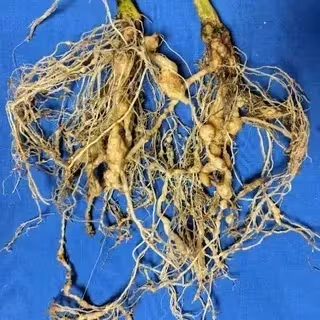
The feeding activity triggers cellular division in the roots, leading to the formation of galls (knots). These malformations impede the uptake of water and essential nutrients from the soil.
Infected plants suffer from stunted growth, reduced vigor, and chlorosis. The damage to the root system significantly limits the plant's ability to produce high-quality pods.
Heavy infestations can lead to total crop failure, particularly in light sandy soils where nematodes can move more easily and environmental conditions favor rapid pathogen reproduction.
When it appears
The life cycle of the peanut root-knot nematode is highly temperature-dependent. Activity levels are highest during the warm growing season when soil moisture is adequate.
The parasite overwinters primarily as eggs within the soil or as larvae within surviving root tissue. They can remain dormant until favorable environmental conditions return.
In early spring, when soil temperatures rise, juveniles emerge and begin to search for roots. The speed of the life cycle allows for multiple generations per growing season.
Peak infection and gall formation occur mid-season. The rapid build-up of the population can lead to severe root damage before the harvest of the peanut crop is completed.
As temperatures drop in late autumn, the nematode population slows its metabolic activity, transitioning to survival stages to withstand the winter months in the soil profile.
Signs of infestation
Above-ground symptoms often include patchy growth in the field. Affected plants appear yellowed, weak, and may show signs of premature wilting during hot afternoon hours.
The lack of proper water uptake due to the damaged root system is a classic sign. Plants show severe water stress even when soil moisture levels appear to be sufficient.
The definitive sign is found below the soil surface: the roots are typically covered with distinct, tumor-like galls. The roots themselves often appear stunted and irregularly branched.
In severe cases, the root system may become necrotic or start to rot due to secondary fungal or bacterial infections that invade the damaged gall tissues.
Visible examination of the root tissues using a hand lens can sometimes reveal the presence of adult females, which look like small, pearly-white objects embedded in the gall tissue.
Control measures
Crop rotation is a fundamental management strategy. Planting non-host species, such as specific grasses or corn, can significantly reduce the population of nematodes in the soil.
Strict weed control is necessary, as many common weeds serve as alternative hosts, allowing the nematode population to persist between primary crop cycles.
Sanitation practices are vital, including cleaning agricultural machinery to prevent the movement of infested soil from contaminated fields to clean areas.
Chemical control with nematicides applied pre-plant is an option in high-pressure scenarios, although this requires careful adherence to environmental safety and application guidelines.
Biological control, such as using soil amendments or antagonistic fungi and bacteria, can help suppress nematode levels and improve overall soil health for long-term management.
Taxonomy
- Latin name
- Meloidogyne haplanaria
- Order
- Nematodes
- Family
- Meloidogynidae
- EPPO code
- MELGHP
Discussion
No discussions yet — be the first.