
Florida root-knot nematode
Meloidogyne floridensis
Description
How to identify
The Florida root-knot nematode (Meloidogyne floridensis) is a microscopic worm within the phylum Nematoda, class Chromadorea, order Rhabditida, and family Meloidogynidae. It is a highly specialized plant-parasitic nematode that lives inside host roots.
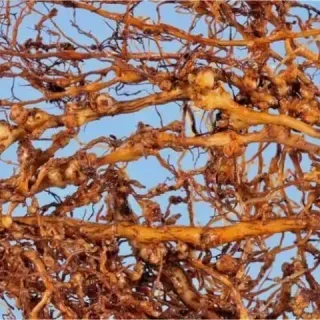
Adult females of this species are pear-shaped and sedentary, remaining embedded in the plant tissues. They induce the formation of galls (knots) on the roots, which serve as their feeding sites and protected environment throughout their lifespan.
The life cycle progresses through the egg stage, four larval stages, and the adult stage. The second-stage juvenile (J2) is the infectious stage, which moves through the soil water film to locate and penetrate the root tips of suitable host plants.
Favorable conditions for this nematode include warm soil temperatures and adequate moisture. These factors significantly accelerate the development from egg to adult, allowing the nematode population to multiply rapidly during a single growing season.
This species was primarily identified in Florida, USA, and has since been recognized as a major threat in both agricultural and nursery settings. Its ability to infect plants that are resistant to other Meloidogyne species makes it particularly concerning.
What it damages
The host range of Meloidogyne floridensis is broad and includes economically significant crops such as peaches, tomatoes, peppers, and various legumes. Damage is usually most severe in crops grown in sandy, well-aerated soils where nematodes thrive.
In woody plants like peaches, infestation leads to a steady decline in tree vigor. In nursery environments, this nematode is a major economic pest because even minor infestations render plant material unsuitable for distribution and certification.
Signs of infestation
The most diagnostic symptom of infestation is the presence of characteristic galls on the roots. These galls are distinct, irregular swellings that disrupt the normal vascular system of the plant, severely limiting water and nutrient uptake.
Above-ground symptoms often mimic nutritional deficiencies, such as yellowing leaves and stunted growth. Infected plants appear less vigorous and are significantly less productive compared to non-infested specimens in the same field.
During periods of heat stress, infected plants are the first to wilt. Even with sufficient irrigation, the compromised root systems fail to transport enough water, leading to permanent wilting or death of the plant in severe cases.
Upon examination of the root system, one may observe a lack of fine root hairs and lateral roots. The roots may appear thick, woody, and deformed. Secondary infections from soil-borne fungi and bacteria often follow nematode damage, leading to root rot.
To confirm the presence of this specific nematode, microscopic analysis is required. Specialists use morphological assessments or molecular methods (such as PCR) to distinguish Meloidogyne floridensis from other closely related root-knot species.
Control measures
Integrated Pest Management (IPM) is the most effective approach. Crop rotation with non-host or antagonistic crops, such as certain marigold varieties or mustard cover crops, can significantly reduce the nematode soil population over time.
Sanitation practices are vital. Cleaning agricultural tools and machinery before moving them between fields prevents the spread of infested soil. Additionally, sourcing certified, nematode-free planting material is essential for new installations.
- Apply soil fumigants or nematicides in high-pressure greenhouse or orchard environments.
- Use organic amendments to increase soil suppressiveness against nematodes.
- Deploy biological control agents, including parasitic fungi and bacteria.
- Remove and destroy all root debris immediately after harvesting to reduce inoculum.
Maintaining optimal irrigation and fertilization helps plants compensate for the damage caused by nematodes. Healthy plants are better able to survive mild infestations and maintain their growth rates despite the presence of the pest.
When infestation is severe, a fallow period combined with solarization or heat treatment of the soil can be highly effective. This strategy helps to exhaust the nematode population in the soil before replanting susceptible crops.
Taxonomy
- Latin name
- Meloidogyne floridensis
- Order
- Nematodes
- Family
- Meloidogynidae
- EPPO code
- MELGFL
Discussion
No discussions yet — be the first.