
Coffee root-knot nematode
Meloidogyne exigua
Description
How to identify
The Coffee root-knot nematode (Meloidogyne exigua) is a microscopic soil-borne parasite belonging to the phylum Nematoda, class Chromadorea, order Rhabditida, and the family Meloidogynidae.
This species is characterized by sexual dimorphism. Adult females are sedentary and pear-shaped, residing within the host root tissues, where they develop specific physiological structures known as galls.
Males are vermiform (worm-like) and mobile, allowing them to move through the soil to locate and fertilize females. The larval second stage is the primary infective stage capable of penetrating roots.
Species identification usually requires detailed analysis of the female's perineal pattern using microscopy, as visual symptoms on roots may resemble other Meloidogyne species.
Understanding its biological traits, such as host specificity and survival mechanisms, is crucial for developing accurate detection and management protocols for coffee producers.
What it damages
The primary host of Meloidogyne exigua is the coffee plant (Coffea arabica), but it also possesses a host range that includes various tropical crops, leading to significant economic losses.
Damage occurs when larvae penetrate the roots, disrupting the plant's vascular system. This prevents the efficient transport of water and essential nutrients from the soil to the leaves.
In nursery settings, heavy infestation can cause seedling stunting or death, preventing them from being transplanted effectively into the field.
In mature coffee plantations, the nematode causes physiological stress, which manifests as reduced vegetative growth, yellowing foliage, and a substantial decrease in coffee bean yield.
The root damage caused by these nematodes often serves as a pathway for soil fungi and bacteria to enter the plant, exacerbating root decay and potentially leading to plant death.
When it appears
The development of Meloidogyne exigua is highly dependent on environmental factors, particularly soil temperature and moisture levels, which regulate their metabolic rate.
In tropical climates, the nematode can complete multiple life cycles within a single year, as the warm conditions provide an almost constant environment for continuous reproduction.
Larval activity is highest during periods of active plant growth and when moisture is available in the soil, which facilitates their movement toward potential root sites.
During rainy seasons, the spread of the nematode across a plantation is accelerated as water runoff transports larvae to previously uninfested patches of the field.
During dry conditions, while their development may decelerate, the nematodes remain safely protected within the root galls, ready to re-emerge when conditions become favorable again.
Signs of infestation
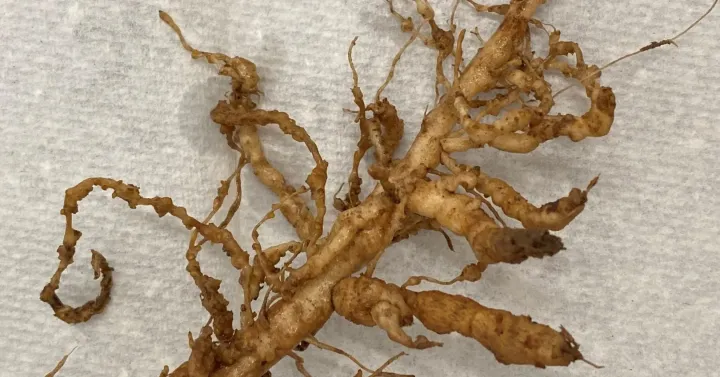
The most distinctive symptom of infestation is the formation of small galls or swellings on the root system, where the female nematodes develop and feed on plant tissues.
Above-ground symptoms often include general weakness, chlorosis of the leaves, and stunted growth, which can be easily mistaken for nutrient deficiencies or water stress.
The roots of an infested plant typically exhibit a knotted, deformed appearance, significantly impairing the plant's ability to maintain a healthy root architecture.
A noticeable decline in fruit production and the development of undersized or poor-quality coffee beans are common economic indicators of a severe nematode population build-up.
Over time, infested trees show increased sensitivity to environmental stress and a reduced lifespan, leading to empty spaces within the plantation that require costly replanting.
Control measures
Prevention is the first line of defense; growers should always use certified nematode-free seedlings and maintain strict sanitation of all tools used on the plantation.
Cultural practices such as crop rotation with non-host species and removing volunteer coffee plants can significantly disrupt the nematode's life cycle and reduce population density.
The selection of coffee cultivars with natural resistance to Meloidogyne exigua or the use of grafted trees on nematode-resistant rootstocks is highly recommended.
Biological control, utilizing soil amendments or products containing antagonistic fungi, can help suppress nematode populations without relying heavily on synthetic chemicals.
Where chemical intervention is necessary, the application of targeted nematicides must be managed carefully to ensure compliance with coffee certification and environmental safety standards.
Taxonomy
- Latin name
- Meloidogyne exigua
- Order
- Nematodes
- Family
- Meloidogynidae
- EPPO code
- MELGEX
Discussion
No discussions yet — be the first.