
Ten-line root-knot nematode
Meloidogyne decalineata
Description
How to identify
The ten-line root-knot nematode, scientifically known as Meloidogyne decalineata, is a significant member of the Tylenchida order and the Meloidogynidae family. It is a sedentary endoparasite that primarily invades the root tissues of host plants.
Adult females of this species exhibit a pear-shaped body, typically ranging from 0.5 to 1.0 mm in length. Due to their microscopic size and presence within plant roots, they remain invisible to the naked eye during standard field inspections.
The life cycle involves a second-stage juvenile (J2) which is the infectious form capable of moving through soil water films to reach new root systems. Upon penetration, they establish a permanent feeding site.
Morphological identification is based on perineal pattern analysis, where the specific arrangement of cuticular striae (ten lines) around the vulva and anus is examined using high-magnification light microscopy.
These nematodes thrive in warm, moist soils, making greenhouses and tropical climates particularly susceptible to their rapid reproduction and persistent establishment within the growing medium.
What it damages
Meloidogyne decalineata affects a diverse range of crops, including high-value vegetables like tomatoes, peppers, and various leguminous species. It constitutes a major threat to agricultural productivity worldwide.
As the nematode feeds, it secretes proteins that induce the formation of giant cells within the root vascular system. These cells act as a nutrient sink for the parasite but physically disrupt the plant's hydraulic architecture.
Damage results in restricted root development, leading to inefficient water and nutrient uptake. This physiological impairment forces the plant into a state of chronic drought stress, regardless of irrigation levels.
Visible decline in the canopy is observed, characterized by stunting, chlorosis, and reduced vigor. In extreme cases of infestation, the entire root system may collapse, leading to premature wilting and death.
The economic damage is multifaceted, involving total yield loss, poor quality of marketable products due to restricted nutrient uptake, and the necessity for costly soil replacement or sterilization measures.
Signs of infestation
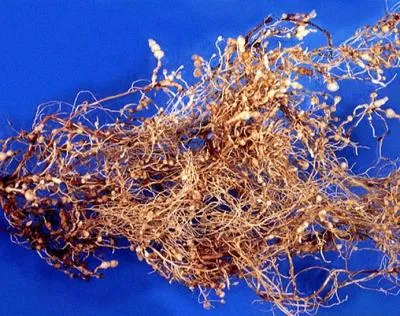
The hallmark symptom of infestation is the development of galls (knots) on the roots. These swellings are the result of the plant's cellular reaction to the nematode's metabolic activity during the parasitic stage.
Above-ground symptoms often mimic nutritional deficiencies, such as yellowing of leaves or premature aging. However, unlike nutrient issues, these plants typically show a lack of responsiveness to fertilizer applications.
Plants often exhibit wilting during the hottest part of the day, as the damaged root system fails to supply enough moisture to meet the transpiration demands of the foliage.
Careful inspection of the root zone reveals uneven thickening and deformities. When roots are sliced, the white, globular body of the sedentary female can often be located within the tissue of the gall.
In heavily infested fields, plants will appear patchy. Areas of reduced plant density and suppressed growth are classic indicators that an infestation has spread across a specific plot of land.
Control measures
Effective management begins with the use of certified, nematode-free transplants. Soil sterilization through steam treatment is considered the gold standard for high-intensity greenhouse production systems.
Cultural control strategies include long-term crop rotation using non-host or antagonistic crops, such as marigolds, to naturally reduce the J2 population in the soil profile between growing seasons.
Biological control agents, including parasitic fungi like Pochonia chlamydosporia, are increasingly used to suppress nematode egg density in the soil and mitigate the impact of the pest on plant health.
Chemical intervention remains an option when pest pressure exceeds the economic threshold. Nematicides should be applied with precision to minimize environmental impact and follow all localized regulatory requirements.
- Implement strict quarantine measures for incoming planting stock.
- Thoroughly sanitize farm equipment between different fields.
- Utilize integrated pest management (IPM) to combine biological and cultural strategies.
Taxonomy
- Latin name
- Meloidogyne decalineata
- Order
- Nematodes
- Family
- Meloidogynidae
- EPPO code
- MELGDE
Discussion
No discussions yet — be the first.