
Coffee root-knot nematode
Meloidogyne coffeicola
Description
How to identify
The coffee root-knot nematode (Meloidogyne coffeicola) is a microscopic worm classified under the Meloidogynidae family, order Tylenchida. It is an obligate sedentary endoparasite.
Females of this species are pear-shaped and typically dwell within the root tissues, where they establish specialized feeding sites known as giant cells.
Males are vermiform (worm-like) and leave the roots to find and fertilize females in the surrounding soil environment.
The second-stage juveniles (J2) are the infectious stage, moving through the soil to locate and penetrate the root tips of the coffee plant.
Identification often requires molecular techniques or detailed microscopic examination of the perineal pattern of the female to distinguish it from other root-knot species.
What it damages
This nematode primarily attacks coffee (Coffea arabica), significantly impairing the plant's ability to uptake water and essential minerals.
The feeding activity disrupts the vascular tissues of the root, leading to stunted growth, reduced vigor, and lower coffee berry yield.
Meloidogyne coffeicola can also survive on various weed species found within coffee plantations, which acts as a reservoir for the pest.
Repeated planting of coffee in infested soil without proper management leads to a severe decline in plantation productivity over several years.
In addition to direct damage, the root lesions facilitate secondary entry points for pathogenic fungi and bacteria, leading to complex root rot diseases.
When it appears
The life cycle of the nematode is strongly influenced by soil temperature and moisture levels, which determine the rate of population development.
Optimal soil conditions trigger the hatching of eggs and the migration of J2 juveniles towards the host roots during the active growing season.
Dispersal is frequently facilitated by human activities, including the movement of contaminated equipment, farm tools, and infested seedling soil.
The nematode can persist in the soil during unfavorable conditions by remaining as eggs within a protective gelatinous matrix secreted by the female.
Early in the rainy season, when new root flushes appear on coffee trees, the nematode population typically experiences a surge in colonization.
Signs of infestation
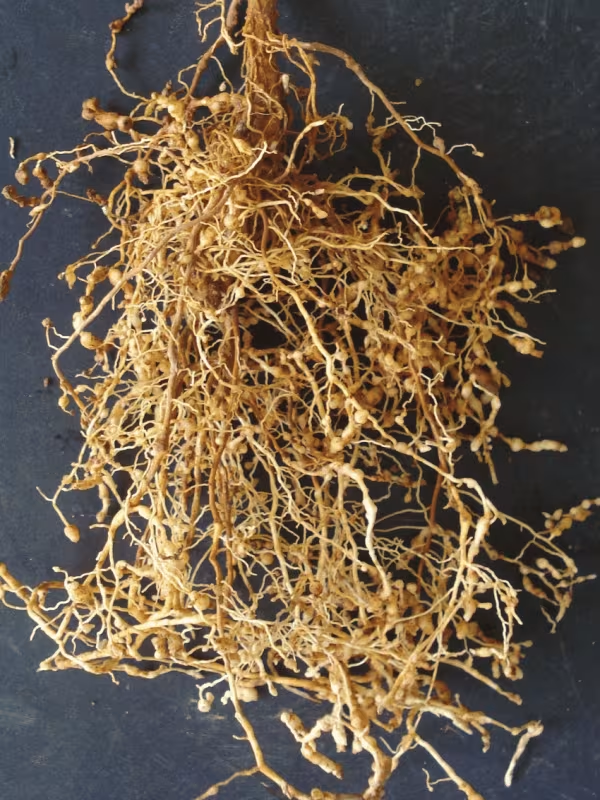
The most distinctive sign is the formation of galls (knots) on the roots, although they are sometimes less pronounced compared to other Meloidogyne species.
Above-ground symptoms include chlorosis, interveinal yellowing of leaves, premature defoliation, and a noticeable reduction in plant height.
Trees often exhibit signs of drought stress, including leaf wilting during mid-day, even when soil moisture appears adequate.
Severe infestations manifest as patches of stunted or dying coffee trees, creating a fragmented canopy across the plantation.
Decreased bean quality and size are often the final indicators of long-term root damage that impact the harvest value of the coffee crop.
Control measures
The primary control strategy is the use of nematode-free certified nursery seedlings to prevent the initial introduction of the pest into the plantation.
Utilizing resistant or tolerant coffee cultivars is the most sustainable approach for managing Meloidogyne coffeicola over long-term operations.
Implementing good agricultural practices, such as proper soil sanitation and the use of organic amendments, can help mitigate nematode pressure.
- Use of chemical nematicides under strict regulatory supervision.
- Implementing fallow periods and crop rotation where feasible.
- Sanitation of all tools and machinery between different plantation plots.
- Control of weeds that serve as alternative hosts for the nematode.
Regular monitoring through soil and root sampling helps determine population density and the appropriate threshold for initiating control measures.
Taxonomy
- Latin name
- Meloidogyne coffeicola
- Order
- Nematodes
- Family
- Meloidogynidae
- EPPO code
- MELGCO
Discussion
No discussions yet — be the first.