
Columbia root-knot nematode
Meloidogyne chitwoodi
Description
How to identify
The Columbia root-knot nematode, Meloidogyne chitwoodi, is a highly destructive sedentary endoparasite classified within the order Tylenchida and the family Meloidogynidae.
These microscopic roundworms exhibit significant sexual dimorphism, with females becoming pear-shaped and sessile within plant tissues, while males remain worm-like and mobile.
The second-stage juveniles (L2) represent the infectious stage, possessing the ability to penetrate host roots and establish permanent feeding sites that lead to gall formation.
Unlike many other root-knot nematodes that thrive in tropical climates, M. chitwoodi is specifically adapted to temperate environments, making it a critical threat to Northern Hemisphere agriculture.
Accurate identification requires professional nematological analysis or molecular diagnostics to distinguish it from related species like M. hapla, which often inhabit similar regions.
What it damages
This nematode has an exceptionally broad host range, primarily infecting potatoes, carrots, and sugar beets, while also affecting numerous grains and weed species.
In potatoes, the damage is primarily cosmetic and physiological, as the nematode induces gall formation on the tubers, rendering the crop unmarketable for fresh consumption.
Severe infestations interfere with the plant's ability to transport water and nutrients, resulting in stunted growth, leaf chlorosis, and reduced tuber size and quality.
In addition to direct physiological damage, infection sites serve as entry points for various bacterial and fungal pathogens, potentially leading to post-harvest decay.
The pest poses a significant threat to international trade, as many countries impose strict phytosanitary regulations to prevent its introduction into non-infested regions.
Signs of infestation
Infested potato tubers typically show a bumpy, irregular skin surface, often mistaken for common scab or other skin blemishes by casual observers.
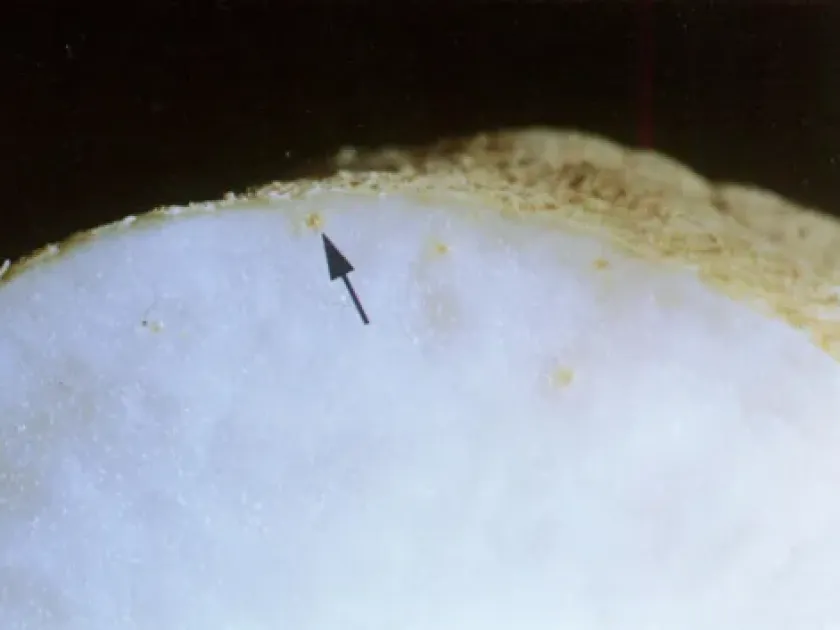
Cross-sections of infected tubers reveal localized necrotic brown spots beneath the surface, often associated with the presence of developing nematode egg masses.
The roots of susceptible plants show distinct swellings or galls, which are the hallmark symptoms of colonization by the female nematode feeding on plant cells.
Field symptoms often appear as patchy areas of poor crop development, where plants exhibit early senescence, leaf wilting, and overall reduced biomass.
These patches often expand over time as the nematode populations grow, especially if susceptible crops are grown in continuous succession without adequate rotation.
Control measures
The primary control strategy is the use of nematode-free, certified seed tubers to prevent the initial introduction of the pest into clean soil environments.
Crop rotation using non-host species, such as specific fodder radishes or grasses, is an effective management tool to reduce soil population densities over several seasons.
Strict sanitation protocols for farm machinery are essential, as soil adhering to tires and equipment is the most common vector for moving nematode cysts between fields.
Chemical control options are restricted in many jurisdictions and should only be employed as part of an integrated pest management (IPM) program alongside cultural practices.
Effective weed management is crucial because many common weeds can sustain M. chitwoodi populations, allowing the nematode to persist even in the absence of primary commercial crops.
Taxonomy
- Latin name
- Meloidogyne chitwoodi
- Order
- Nematodes
- Family
- Meloidogynidae
- EPPO code
- MELGCH
Discussion
No discussions yet — be the first.