
Cereal root-knot nematode
Meloidogyne artiellia
Description
How to identify
The cereal root-knot nematode Meloidogyne artiellia belongs to the phylum Nematoda, class Secernentea, and the family Meloidogynidae. It is a microscopic obligate parasite that specifically targets the root systems of various cereal crops.
The life cycle involves eggs, multiple larval stages, and sedentary adult females. Second-stage larvae (J2) are the infectious stage, moving through the soil film to locate and penetrate the roots of host plants.
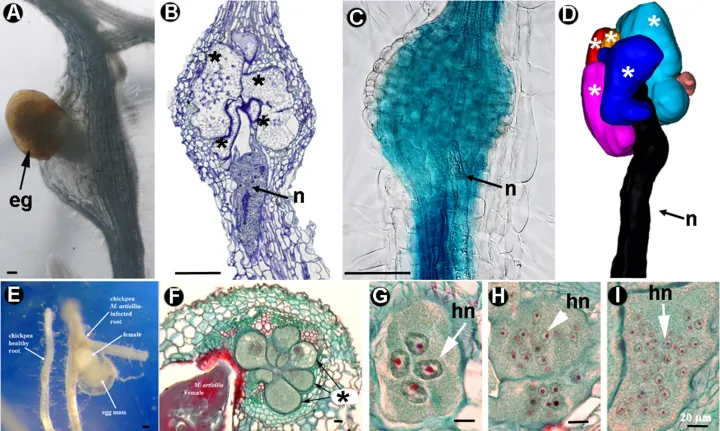
Once inside the root, the female nematode becomes sedentary and induces the formation of multinucleate giant cells. These cells serve as a constant food source, leading to the development of characteristic root galls or knots.
The nematode reproduces sexually or through parthenogenesis. It thrives in soils with moderate moisture and requires the presence of active root systems to complete its developmental stages successfully.
Overwintering occurs in the soil as eggs or larvae protected within root debris. The survival of the population is highly dependent on environmental conditions, particularly soil temperature and moisture levels.
What it damages
This nematode primarily affects wheat, barley, and other small grains. Additionally, it has a significant host range among legumes such as chickpeas and peas, making crop rotation planning complex.
Damage is caused by the disruption of the vascular system in the roots, which prevents the uptake of water and essential nutrients. This systemic interference severely stunts the growth of the host plant.
Infested roots display abnormal growth, showing characteristic knots or galls. These malformations are entry points for secondary pathogens like fungi and bacteria, leading to root rot.
In highly infested soils, the damage results in poor stand establishment, yellowing of leaves, and significant reduction in grain yield and quality throughout the growing season.
Field patches with high nematode density show clear signs of poor crop performance, frequently resulting in thin, unproductive areas that lead to substantial economic losses for farmers.
Signs of infestation
The first visual signs of an infestation include stunted plant growth, characterized by yellowish foliage and reduced plant height compared to neighboring healthy plants.
Plants in heavily infested spots appear weak and are often the first to show wilting symptoms during dry or hot periods, indicating a compromised root system unable to meet transpiration needs.
The primary diagnostic sign is found underground: the presence of small, rounded galls on the roots. These galls distinguish the root-knot nematode from other soil-borne plant pathogens.
Field evaluation should involve excavating entire plants, including the surrounding soil, to carefully inspect the root system for the characteristic knotting symptoms mentioned above.
Professional diagnosis often requires soil samples sent to a laboratory to determine the density of larvae per unit of soil, which helps predict the severity of future infestations.
Control measures
Crop rotation remains the most effective management strategy. Growing non-host crops, such as certain brassicas or specific grasses, helps to reduce the soil nematode population over time.
Effective weed management is essential, as many grassy weeds act as alternative hosts that support the nematode population during periods when main crops are not in the field.
Improving soil fertility through proper fertilization helps the crop sustain its growth despite the parasite damage, allowing the plant to tolerate higher levels of nematode presence.
The utilization of resistant crop varieties is the preferred method for long-term control. Breeding programs are continuously working to introduce specific genes that inhibit the nematode's ability to develop inside the roots.
Chemical control is rarely used due to the high cost and environmental concerns. If necessary, soil solarization or specific nematicide treatments may be used in intensive farming systems to suppress localized outbreaks.
Taxonomy
- Latin name
- Meloidogyne artiellia
- Order
- Nematodes
- Family
- Meloidogynidae
- EPPO code
- MELGAT
Discussion
No discussions yet — be the first.