
Peanut root-knot nematode
Meloidogyne arenaria
Description
How to identify
The peanut root-knot nematode (Meloidogyne arenaria) is a highly destructive soil-borne parasite belonging to the family Meloidogynidae and order Tylenchida.
These microscopic roundworms exhibit sexual dimorphism, where sedentary females become swollen and pear-shaped after infiltrating the host root tissue.
The lifecycle begins with eggs deposited in a protective gelatinous matrix within the root galls, which then hatch into vermiform second-stage infective juveniles.
These larvae move through the soil profile in search of susceptible host roots, where they initiate the formation of giant cells essential for their nutrition.
Temperature and soil moisture are the most critical factors for its development, with the nematode thriving in warm, tropical and subtropical soil conditions.
What it damages
The nematode has a very wide host range, attacking peanuts, tomatoes, peppers, tobacco, and various ornamental plants, leading to severe economic losses.
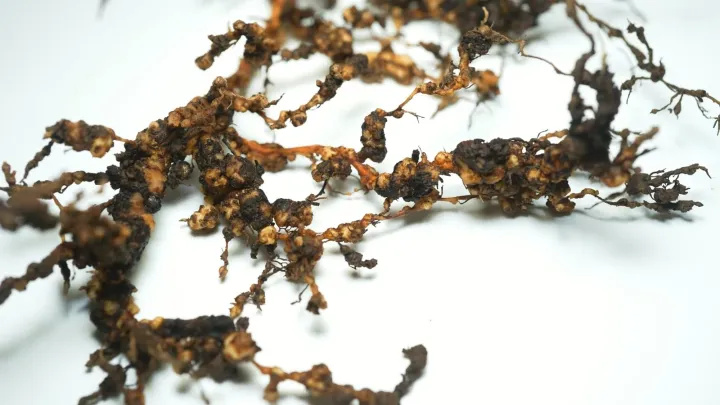
By hijacking the plant's root development, the nematode creates distinct galls, which effectively turn the roots into sinks for nutrients and disrupt water uptake.
Infected plants show signs of malnutrition, reduced yield, and increased susceptibility to drought and other environmental stresses due to damaged root systems.
Root galls serve as entry points for various soil-borne pathogens, including Fusarium and Rhizoctonia, which cause further root rot and plant decay.
Yield reduction can vary from minor stunting to total crop failure, depending on the initial nematode population density and the susceptibility of the crop.
Signs of infestation
The most diagnostic sign is the presence of characteristic knot-like galls on the roots, which can be easily seen upon removing the plant from the soil.
Above-ground symptoms include progressive yellowing of foliage, severe stunting of growth, and wilting during periods of peak heat, despite adequate irrigation.
In field settings, the infestation usually appears in patches where the plants exhibit stunted growth compared to the surrounding healthy vegetation.
Reduced root volume and necrotic lesions on the root surface are common indicators of advanced nematode infestation that hinder the plant's structural stability.
Microscopic examination of root tissue reveals the presence of sedentary adult females and their egg masses, which confirms the diagnosis of root-knot infection.
Control measures
Integrated Pest Management (IPM) is the best approach, starting with long-term crop rotation using non-host plants to starve the nematode population.
Improving soil health through the addition of organic matter and green manure can stimulate natural enemies of nematodes, such as predatory fungi.
Using resistant crop cultivars is considered the most cost-effective and environmentally friendly method for managing infestations in large peanut fields.
Chemical nematicides can provide short-term suppression of nematode populations, though they should be applied with caution regarding environmental regulations.
- Sanitation of farming equipment to prevent soil transport between fields.
- Early removal and destruction of crop residues post-harvest.
- Use of certified nematode-free planting stock.
Taxonomy
- Latin name
- Meloidogyne arenaria
- Order
- Nematodes
- Family
- Meloidogynidae
- EPPO code
- MELGAR
Discussion
No discussions yet — be the first.