
Melanophthalma fuscipennis
Melanophthalma fuscipennis
Description
How to identify
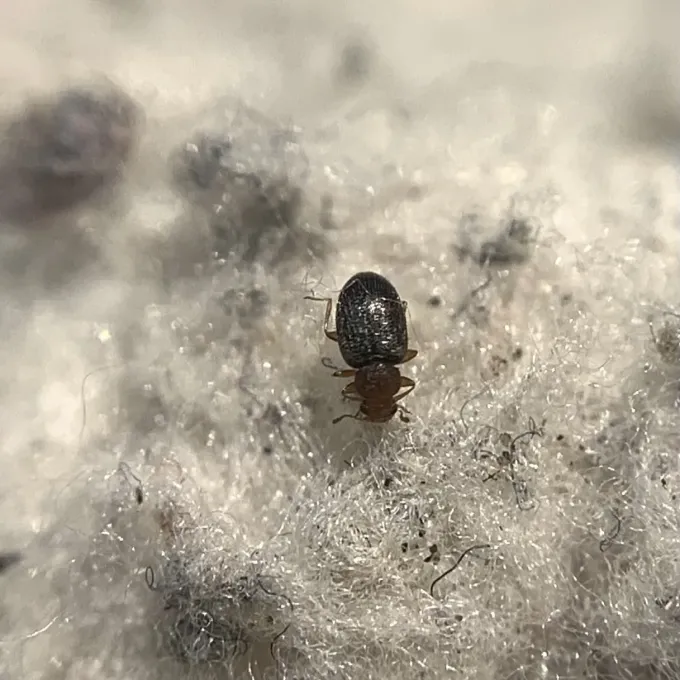
Melanophthalma fuscipennis belongs to the family Latridiidae, commonly known as minute brown scavenger beetles. These are tiny insects typically measuring between 1.5 and 2.0 mm in length.
Adult beetles exhibit an oval body shape with distinctive sculpturing on their elytra. Their coloration ranges from dark brown to black, allowing them to remain well-camouflaged within plant debris or stored grain.
The head features well-developed compound eyes, and the antennae possess a three-segmented club at the end, which serves as a key diagnostic trait for identification.
Larvae are elongated with a distinct head capsule and three pairs of thoracic legs. The body surface is often covered in microscopic setae that assist in movement across substrates.
This species is highly attracted to high-moisture environments where microfungi develop, as these fungi serve as the primary food source for both adults and larvae.
What it damages
Melanophthalma fuscipennis is primarily a mycophagous insect, meaning it feeds on the mold and fungi that colonize weakened or damp plant tissues.
In the field, this pest can damage cereal crops, especially during extended rainy periods, by congregating on damp stems and spikes that are already affected by phytopathogenic fungi.
The most significant economic damage occurs during post-harvest storage. When grain moisture levels are high, these beetles can multiply rapidly, infesting entire grain masses.
By grazing on fungal growth, the beetles inadvertently spread mold spores throughout the storage facility, leading to widespread spoilage and loss of product quality.
Furthermore, the presence of these beetles and their frass contaminates the grain, rendering it unsuitable for food or feed due to the elevated risk of mycotoxin accumulation.
When it appears
In field conditions, the activity of the beetle begins with the onset of warm, humid weather, which is ideal for fungal proliferation. Peak populations are typically observed in late summer.
Within storage facilities, warehouses, or grain elevators, the pest can remain active year-round if temperature and humidity levels are conducive to mold growth.
Adult beetles typically overwinter in protected areas, such as plant residues, tree bark, or cracks and crevices within building structures, waiting for favorable conditions to emerge.
The developmental cycle is heavily dependent on the moisture content of the environment; higher humidity allows for faster development from egg to adult.
Delayed harvesting due to adverse wet weather is a critical agronomic factor that often leads to the initial field infestation before grain is even moved to storage.
Signs of infestation
A primary indicator of infestation in the field is the presence of visible mold on ears and stalks, where colonies of these small, dark beetles can be observed upon close inspection.
In warehouses, the pest is often detected by a distinct musty or "fungal" odor emanating from the grain pile, along with visible mold patches on the surface of the grain mass.
When analyzing grain samples or debris, adults and larvae can be found moving actively across the substrate, especially when exposed to light.
Grain discoloration is another warning sign; the seeds become dull, grey, or darkened due to fungal invasion, which supports the beetle population.
In severe cases, grains may be found matted or stuck together by fungal hyphae, within which colonies of these scavenger beetles are localized.
Control measures
The most effective method of control is maintaining grain moisture levels below 14% during storage, as this starves the beetles by preventing mold growth.
Adhering to proper harvest schedules is essential to prevent field infestation caused by high humidity and subsequent fungal infection of the crops.
Maintaining strict sanitary standards in storage facilities, including regular cleaning and disinfection of equipment, is vital to prevent the establishment of the pest.
For established infestations, fumigation using registered products (such as aluminum phosphide) is necessary to eliminate hidden populations within the grain mass.
Continuous monitoring using pheromone traps and regular sampling of stored grain are highly recommended to detect and manage potential outbreaks before they spread.
Taxonomy
- Latin name
- Melanophthalma fuscipennis
- Order
- Coleoptera (beetles)
- Family
- Latridiidae
- EPPO code
- MNOHFU
Discussion
No discussions yet — be the first.