
Fungus beetle
Cartodere nodifer
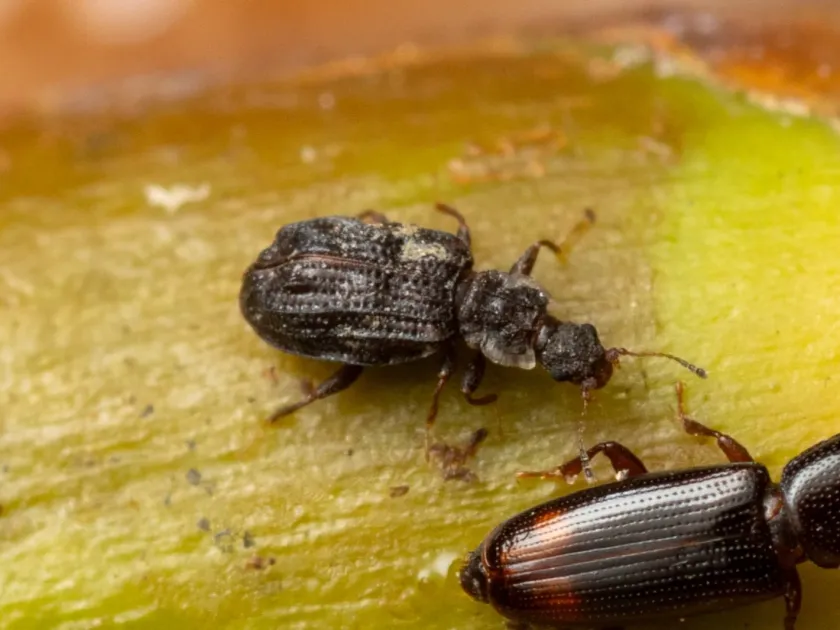
Description
How to identify
The fungus beetle (Cartodere nodifer) is a small insect belonging to the family Latridiidae. Adult beetles are typically 1.2–1.5 mm long, characterized by a dark reddish-brown to blackish appearance.
These beetles possess distinct punctate rows on their elytra and prominent nodular growths on the pronotum, which serve as the primary diagnostic feature for identification.
The larvae are elongated, pale in color, and have well-developed mouthparts. They prefer humid, sheltered environments where micro-fungi growth provides a stable food supply.
As members of the order Coleoptera, these insects are significant storage pests. They are commonly found in environments where dampness allows for mold growth, creating a micro-ecosystem for their development.
The biological cycle consists of egg, larva, pupa, and adult stages. Under favorable conditions with high moisture and temperature, the life cycle is completed rapidly, allowing for quick population spikes.
What it damages
Cartodere nodifer primarily damages stored plant products by feeding on the microscopic fungi (molds) that grow on moist surfaces. They are common in silos, warehouses, and storage facilities.
The beetle affects a wide range of goods, including stored grains, legumes, oilseeds, flour, and processed cereal products. Infestation often occurs when storage conditions are improperly managed.
While they are primarily mycophagous, their feeding activity can damage the outer layers of seeds, leading to a loss of seed viability and germination potential in stored agricultural stocks.
The most significant impact is the contamination of food products with frass, cast skins, and fungal spores. This renders the products unsuitable for commercial sale or human consumption.
Furthermore, these beetles act as vectors for fungal spores, spreading mold throughout the grain mass, which accelerates the decay of the entire inventory stored in the facility.
Signs of infestation
The presence of a musty or damp odor in a storage facility is a classic indicator of mold activity, which is invariably linked to a potential infestation of fungus beetles.
During inspections, adult beetles can be observed in areas where the grain mass has begun to experience moisture issues or localized self-heating. They concentrate in damp pockets.
Sifting grain samples is an effective diagnostic method. Small, mobile adults can be detected on standard sieves, although they are often so tiny that a magnifying glass is necessary for confirmation.
In cases of severe infestation, the surface of grain bags or warehouse walls may show dark fecal staining and moisture accumulation caused by the beetles' metabolic activity.
The presence of fine dust or "frass" near sacks or stored containers is a clear sign that the beetles are actively colonizing the material and consuming the organic matter present.
Control measures
The primary control strategy is strict moisture management. Keeping grain moisture levels below the threshold for fungal growth is the most effective way to prevent infestations.
Ensuring proper warehouse hygiene is essential. Regular cleaning to remove dust, spilled grain, and debris eliminates potential breeding grounds and reduces the attractiveness of the facility to pests.
Improved ventilation and regular turning of stored grain help to prevent the formation of moist pockets. Maintaining a stable, dry environment is the foundation of long-term storage success.
In cases where infestations are detected, professional fumigation of the warehouse and the affected commodities is required to eliminate the pest at all stages of its development.
Preventive inspection of all incoming stock is crucial to avoid introducing the fungus beetle into clean storage environments. Monitoring programs ensure that any initial outbreaks are contained.
Taxonomy
- Latin name
- Cartodere nodifer
- Order
- Coleoptera (beetles)
- Family
- Latridiidae
- EPPO code
- LATINO
Discussion
No discussions yet — be the first.