
Fungus beetle
Cartodere filum
Description
How to identify
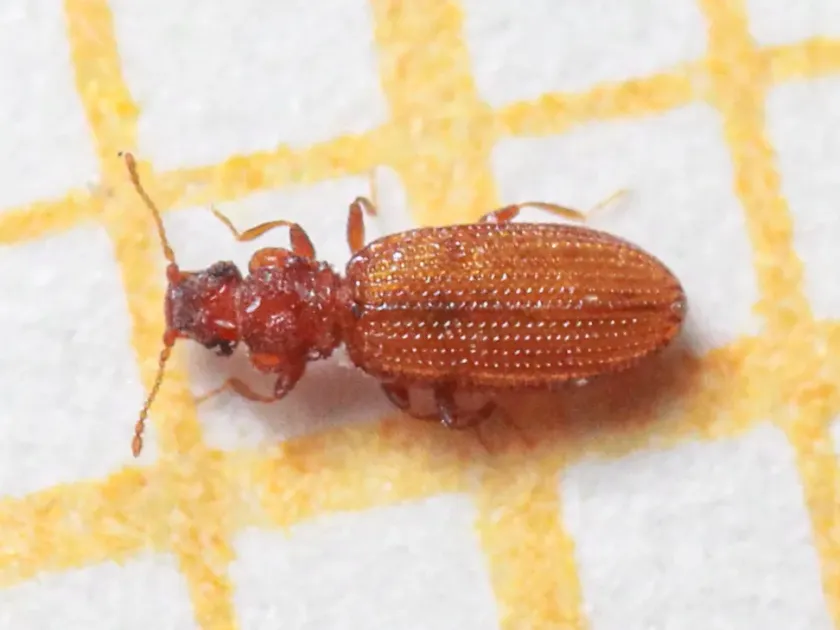
The fungus beetle (Cartodere filum) is a small insect belonging to the order Coleoptera and the family Latridiidae. These beetles typically measure between 1.2 and 1.5 mm in length.
Their bodies are elongated and slender, appearing reddish-brown or dark brown. A distinctive physical trait of this species is the matte surface of the elytra, often covered in fine, microscopic hairs.
Adult beetles possess functional wings and are highly mobile, allowing them to disperse quickly throughout storage facilities in search of suitable environments.
The larvae are minute, pale, or whitish in color, possessing three pairs of legs. They are exclusively found in environments containing microfungi, which serve as their primary food source.
The development of this species is highly dependent on environmental conditions, particularly moisture levels. They thrive in damp settings where mold growth is present.
What it damages
Cartodere filum is a secondary pest, meaning it does not attack high-quality, dry grain. Instead, it targets stored food products that have already begun to deteriorate due to high moisture levels.
These insects consume the spores and mycelium of various molds found on stored grains, flour, dried vegetables, and fruits. Their presence is a direct indicator of improper storage conditions.
The primary damage occurs through the spreading of mold spores, which these beetles carry on their bodies. This facilitates the rapid spread of decay throughout an entire stored shipment.
In infested areas, the metabolic activity of these beetles can cause a rise in local temperature and moisture, creating a self-sustaining cycle of spoilage and pest proliferation.
While they do not cause direct mechanical damage to healthy kernels, their massive presence makes products unmarketable and creates sanitary hazards in food storage units.
Signs of infestation
The most immediate sign of an infestation is the visual detection of adult beetles on the surfaces of storage containers or within samples of the stored commodity.
A persistent musty odor in the warehouse is a classic sign of mold growth, which inevitably attracts fungus beetles to colonize the damp product.
Laboratory analysis of grain samples often reveals insect frass, cast larval skins, and beetle fragments, confirming an active and reproducing population.
Due to their tiny size, these beetles easily fall through standard testing sieves, making them relatively simple to detect during routine quality control checks of stored grain.
Sudden emergence of beetles near windows or light sources indicates a major outbreak within the grain bulk, triggered by high relative humidity within the storage facility.
Control measures
Preventative management focuses primarily on humidity control. Maintaining grain moisture content below levels that support mold growth effectively prevents the beetle from surviving.
Sanitation is a critical control measure. Thoroughly removing dust, spilled grain, and debris from storage areas eliminates the habitats where these beetles establish their initial colonies.
The use of approved contact insecticides to treat empty storage facilities helps in sanitizing the area before the introduction of new stock, preventing cross-contamination.
If an infestation reaches severe levels, fumigation is the most effective way to eliminate all life stages of the pest, especially in deep-seated grain bulks.
Implementing effective aeration systems for grain storage helps regulate internal temperature and humidity, which serves as a long-term deterrent against both mold and fungus beetles.
Taxonomy
- Latin name
- Cartodere filum
- Order
- Coleoptera (beetles)
- Family
- Latridiidae
- EPPO code
- CARTFU
Discussion
No discussions yet — be the first.