
Minute brown scavenger beetle
Melanophthalma
Description
How to identify
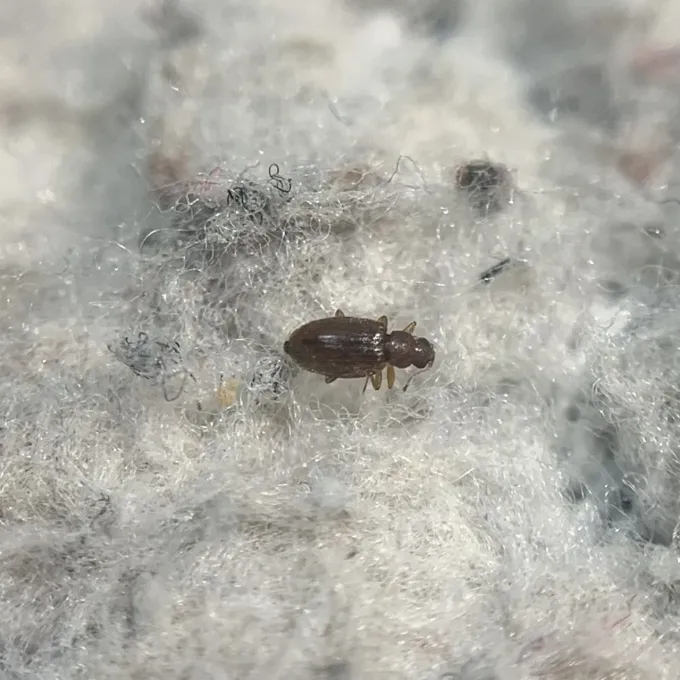
Beetles of the genus Melanophthalma, commonly known as minute brown scavenger beetles, belong to the family Latridiidae. These are tiny insects, rarely exceeding 1–2 mm in length.
The beetle's body has a characteristic oval or slightly elongated shape. Coloration varies from yellowish-brown to dark brown, sometimes appearing almost black.
The head features short antennae ending in a distinct club. The surface of the elytra is often covered with fine hairs, which are easily visible under magnification.
Systematically, this genus is classified within the order Coleoptera. A key diagnostic feature is the presence of distinct lateral projections on the pronotum.
Larvae are elongated, light-colored, and possess mouthparts specialized for feeding on mold fungi and organic debris.
What it damages
Minute brown scavenger beetles are primarily mycophagous, meaning they feed on spores and hyphae of mold fungi. They are commonly found in warehouses, grain stores, and fields with high humidity.
While they do not always cause direct damage to healthy plant tissues, their presence serves as an indicator of poor crop maintenance or improper storage conditions.
In field conditions, they may damage seeds or seedlings that have been compromised by secondary fungal infections, reducing germination rates and crop vigor.
They pose a significant risk during grain storage as they proliferate in moldy grain batches, facilitating the further spread of fungal spores throughout the storage facility.
Furthermore, these beetles can act as vectors, carrying pathogens on their bodies and contaminating healthy plant parts or stored goods with secondary infections.
When it appears
In the field, peak activity of these beetles occurs during periods of high humidity and moderate temperatures, which favor mold growth.
They reproduce actively in spring and autumn, when weather conditions lead to crop lodging or soil waterlogging, creating an ideal environment for their food sources.
In closed environments, the life cycle can continue year-round if the warehouse maintains high humidity and poor ventilation.
Females lay eggs in areas where mold is present. Larvae develop quickly, passing through several instars before pupating within the substrate.
Adults are capable of flying short distances to find new food sources, colonizing damaged or diseased parts of the crop.
Signs of infestation
The primary sign of an infestation is the presence of adult beetles or larvae in areas of fungal growth on leaves, stems, or grain masses.
In grain stores, their presence is often accompanied by a characteristic musty moldy odor and a localized increase in grain mass temperature.
When inspecting fields, look for patches of fungal infection where congregations of these tiny beetles become visible, even to the naked eye upon closer inspection.
Plant damage is also indicated by stunted seedling growth and microscopic tissue scarring caused by the beetles feeding on fungal-affected areas.
- Presence of moldy growth on crop debris.
- Aggregations of tiny beetles on damp seed patches.
- Reduced flowability of grain in colonized areas.
- Emergence of secondary fungal infection spots on neighboring plants.
Control measures
The cornerstone of control is maintaining strict phytosanitary standards in fields and storage facilities. Timely harvesting and proper grain drying are the most effective measures.
Agronomic practices include weed management and the mitigation of crop lodging, which acts as a primary habitat for these mycophagous beetles.
In warehouses, regular disinfestation and proper ventilation to reduce humidity levels are essential to render the environment unsuitable for fungal growth.
Chemical control (insecticides) is rarely required and should only be employed when beetle populations reach critical thresholds that threaten the integrity of the harvest.
Biological control strategies involve maintaining populations of natural entomophagous predators, which naturally regulate scavenger beetle numbers within the agroecosystem.
Taxonomy
- Latin name
- Melanophthalma
- Order
- Coleoptera (beetles)
- Family
- Latridiidae
- EPPO code
- MNOHSP
Discussion
No discussions yet — be the first.