
Southern flannel moth
Megalopyge urens
Description
How to identify
The Southern flannel moth (Megalopyge urens) belongs to the Megalopygidae family. Adult moths are characterized by dense, woolly hair that covers their bodies, giving them a distinct fuzzy appearance. Their wingspan generally ranges from 3 to 5 centimeters, with colors typically shifting between brown and grey shades.
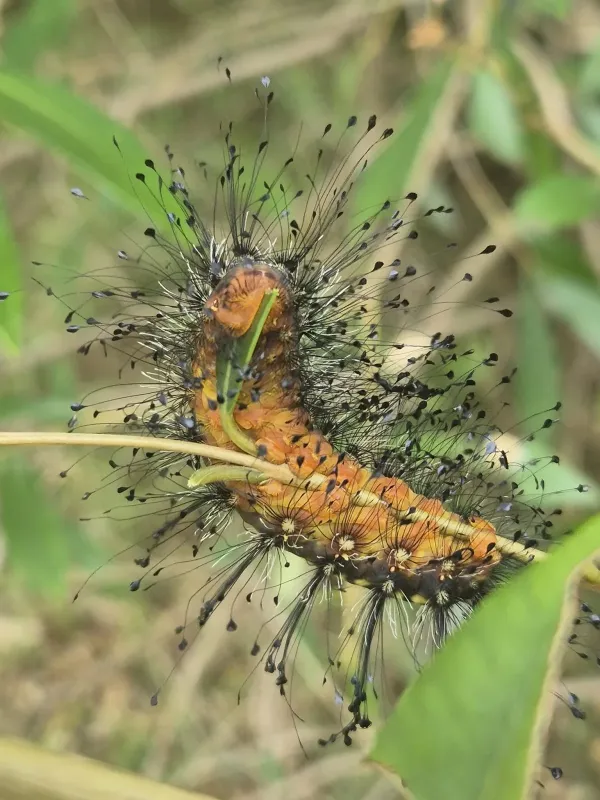
The larvae, often referred to as flannel moth caterpillars, are the primary stage of concern. Their bodies are covered in thick, toxic setae (hair-like structures) connected to venom glands. Contact with these hairs causes immediate and intense pain, redness, and swelling in humans.
Pupation occurs within firm, tear-shaped cocoons that are securely fastened to twigs or tree bark. These cocoons are often cleverly camouflaged to match the texture and color of the host plant, making them difficult to spot during routine inspections.
The larvae undergo several developmental stages, growing significantly in size and becoming increasingly covered in stinging hairs. These hairs serve as a potent defense mechanism against potential avian predators.
Due to the venomous nature of the caterpillars, handling them requires extreme caution. Agronomists recommend using specialized equipment and protective gear if physical identification or removal is necessary.
What it damages
This species is a polyphagous pest, showing a strong preference for various woody plants and shrubs. In agricultural settings, it frequently attacks fruit trees, including members of the Rosaceae family such as apples, pears, and plums.
Caterpillars cause damage by feeding on leaves, often stripping them down to the veins. In cases of high infestation, they can cause complete defoliation, which severely drains the plant's stored energy reserves and disrupts photosynthesis.
The impact of leaf loss leads to a reduction in fruit yield, decreased fruit quality, and overall weakening of the tree's vigor. In nursery settings, such defoliation can stunt the growth of young saplings, rendering them susceptible to environmental stress.
Beyond direct feeding, the caterpillars facilitate the spread of secondary pathogens. Holes in the leaf tissue and damaged bark provide easy entry points for fungi and bacteria, leading to further decay and disease.
The aesthetic damage is significant for ornamental plants in parks and private gardens. Moreover, the presence of these stinging caterpillars creates a health risk, turning a pleasant garden area into a hazardous zone for people and pets.
When it appears
The life cycle of the Southern flannel moth is closely synchronized with the growth cycle of its host trees. Larval emergence typically occurs in the spring, coinciding with the budding and the initial vegetative growth phase of host plants.
The period of maximum damage usually occurs throughout the mid-summer months. During this time, the larvae are in their final instars, requiring large quantities of foliage to sustain their rapid development.
Pupation takes place toward the end of summer. Depending on the local climate and temperature gradients, the species may complete one or two generations within a single calendar year.
The moths overwinter in the pupal stage protected within their sturdy cocoons. This survival strategy allows the species to endure harsh winter conditions and emerge successfully once warmer temperatures return.
Regular monitoring starting in early spring is vital for effective management. Early detection of eggs or small larvae allows for targeted intervention before the population reaches economically damaging thresholds.
Signs of infestation
The most common sign of an infestation is skeletalized leaves or large notches missing from the foliage. A careful inspection of the tree canopy often reveals patches where the leaves have been extensively consumed.
Finding cocoons attached to the branches or trunk is a definitive sign of the species' presence. These structures can look like unusual bark growths or small, fuzzy knots and are often found in tree forks or sheltered areas.
Frass (caterpillar droppings) accumulating on the ground or on lower branches is a clear indicator of a feeding colony located in the upper canopy. Large quantities of frass require an immediate inspection of the foliage above.
In young trees, significant damage to the apical buds or stems can result in wilting or stunted growth patterns. This stress response signals that the tree's internal nutrient distribution is being hampered by the defoliation.
Adult moth activity can be monitored using light traps in the evening. Increased captures in these traps serve as an early warning system, indicating the start of the egg-laying season and the need to prepare for control measures.
Control measures
Effective management involves the use of contact and systemic insecticides, which are most effective when applied during the early larval stages. Proper timing ensures that the caterpillars are eliminated before they can cause widespread defoliation.
Biological control options, such as using preparations containing Bacillus thuringiensis, offer an environmentally friendly alternative. These agents specifically target lepidopteran larvae while sparing most beneficial insects.
Cultural practices are essential for long-term control. Manually removing and destroying cocoons during the dormant winter season can significantly reduce the overwintering population. Pruning and thinning the canopy also disrupts the pest's habitat.
Encouraging natural predators, including insectivorous birds, parasitic wasps, and predatory beetles, helps maintain the moth population at sub-economic levels. A balanced ecosystem is the best defense against major outbreaks.
Pheromone traps are highly useful for monitoring adult moth activity and timing insecticide applications precisely. Always prioritize worker safety by wearing long sleeves and gloves to avoid accidental contact with the stinging larvae.
Taxonomy
- Latin name
- Megalopyge urens
- Order
- Lepidoptera (butterflies)
- Family
- Megalopygidae
- EPPO code
- MEGAUR
Discussion
No discussions yet — be the first.