
Megalopyge crispata
Megalopyge crispata
Description
How to identify
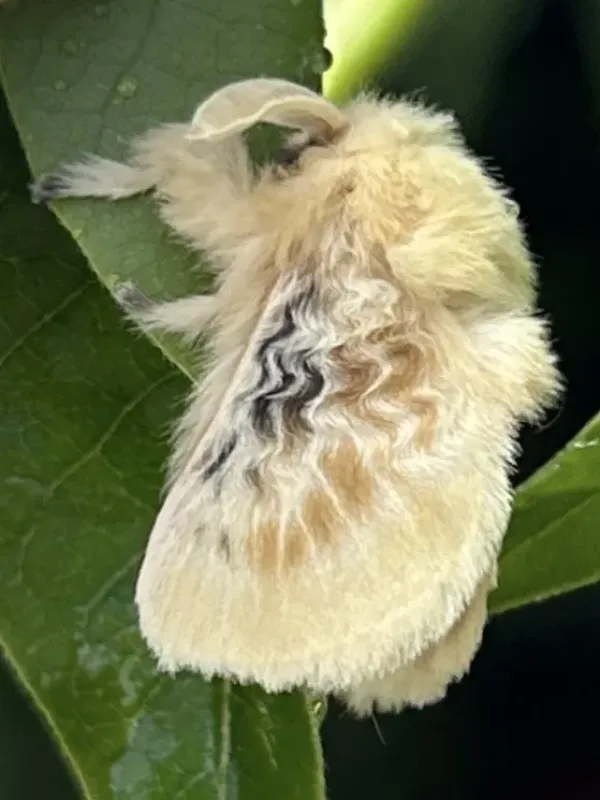
Megalopyge crispata, commonly known as the black-waved flannel moth, belongs to the family Megalopygidae. While the adult moths are relatively plain, their larvae are notorious for their distinct, furry appearance.
The caterpillars reach a length of 3–4 cm and are covered in a thick coat of soft, wavy hairs. These hairs range in color from yellowish-gold to dark brown or gray.
The primary identifying hazard of this caterpillar is the presence of venomous spines concealed beneath its dense, fur-like coat. Contact with these spines results in an immediate, intense burning sensation and painful skin irritation.
Adult moths have a wingspan of approximately 35–45 mm. Their wings are covered with dense, wavy scales that give them a textured, curly appearance, which is the origin of the species name.
The life cycle involves complete metamorphosis, consisting of the egg, larva, pupa, and adult stages. In temperate climates, this species typically undergoes one generation per year.
What it damages
Megalopyge crispata is a generalist feeder (polyphagous), capable of attacking a diverse range of host plants. It poses a significant threat to deciduous trees, ornamental shrubs, and orchard fruit trees.
Common host plants include various species of oak, elm, apple, cherry, pear, and other trees in the Rosaceae family. The caterpillars feed primarily on the foliage.
As they feed, the caterpillars skeletonize or create large, irregular holes in the leaves. In cases of high infestation, they can cause widespread defoliation of the host tree.
This defoliation stresses the plant, reducing its vigor and photosynthetic capacity. Consequently, the weakened tree becomes more susceptible to secondary pest attacks and fungal infections.
Young trees are particularly vulnerable, as repeated loss of foliage can hinder their structural development and reduce their ability to survive winter dormancy.
When it appears
The larval stage is most active during the summer months, typically spanning from June through September. During this period, the caterpillars feed voraciously to build up energy reserves.
The species overwinters in the pupal stage, encased in a durable, well-camouflaged cocoon. These cocoons are typically attached firmly to the twigs or branches of the host tree.
Adult moths emerge in late spring or early summer to mate and lay eggs. The females deposit their eggs directly onto leaves or branches, often covering them with hair from their own bodies.
Warmer temperatures accelerate the development of the larvae, potentially leading to larger population spikes in favorable years compared to cooler, more volatile seasons.
Monitoring for the presence of the pest should begin in early summer, with careful inspection of the foliage to detect young larvae before they cause significant damage.
Signs of infestation
Initial signs of an infestation include the appearance of partially consumed foliage, where caterpillars have eaten the leaf blade while leaving the tougher veins intact.
The presence of cocoons on the branches serves as a key indicator of an established population. These cocoons are often mistaken for natural bumps or old buds on the bark.
Accidental contact with the caterpillars while performing garden maintenance is a frequent way homeowners become aware of their presence, signaled by an intense, stinging pain.
Accumulation of frass (caterpillar droppings) on the ground or on lower leaves is a clear sign that a colony is actively feeding in the upper canopy of the tree.
The presence of discarded larval skins (exuviae) left behind after molting events can also indicate the active growth and development of the population within the garden canopy.
Control measures
Mechanical removal of cocoons and egg masses is highly effective if performed during the dormant season. Always wear heavy-duty gloves to prevent accidental contact with the stinging hairs.
Chemical control using insecticides targeting leaf-eating caterpillars is most effective when applied shortly after the eggs hatch, as younger larvae are more susceptible to treatment.
Biological control, such as using products based on Bacillus thuringiensis, provides an eco-friendly option that targets the larvae while sparing beneficial insects and pollinators.
Promoting a healthy garden ecosystem by encouraging birds and predatory insects can help keep the population of Megalopyge crispata under control naturally.
Sanitary pruning and the destruction of heavily infested branches help reduce the overwintering population and prevent the spread of the moth to adjacent healthy plants.
Taxonomy
- Latin name
- Megalopyge crispata
- Order
- Lepidoptera (butterflies)
- Family
- Megalopygidae
- EPPO code
- MEGACR
Discussion
No discussions yet — be the first.