
Megalopyge opercularis
Megalopyge opercularis
Description
How to identify
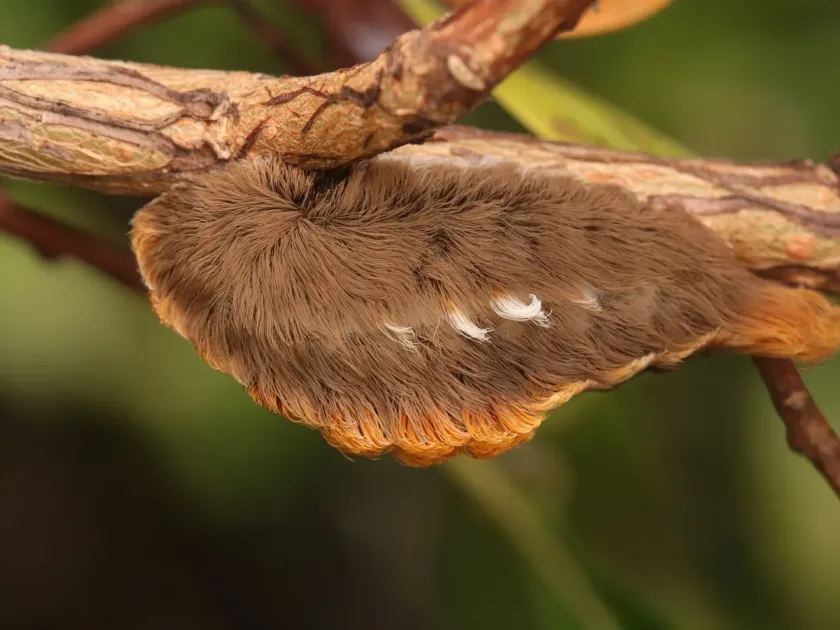
Megalopyge opercularis, commonly known as the puss caterpillar or the larva of the Southern flannel moth, is a notorious member of the Megalopygidae family.
The larva is distinguished by a dense coating of long, soft hairs, which gives it the appearance of a small tuft of fur. Its color can range from golden-brown to grayish-white.
Crucially, hidden beneath this soft-looking coat are hollow, venomous spines. Contact with these spines leads to severe pain, swelling, and localized allergic reactions in humans.
The life cycle encompasses a complete metamorphosis, including egg, larval, pupal, and adult stages. The adult moth is also fuzzy but lacks the venomous sting of the larva.
The species is primarily distributed across the United States, particularly in the South, as well as parts of Mexico and Central America, thriving in warm environments.
##damage##The puss caterpillar is a significant defoliator, feeding on the leaves of a wide variety of trees and shrubs found in residential gardens and forest landscapes.
Common host plants include oak, elm, maple, and citrus trees. When populations are high, they can rapidly strip a tree of its foliage, leading to reduced photosynthetic capacity.
While the physical loss of leaves is damaging, the primary concern in managed landscapes is the health risk posed to maintenance workers, gardeners, and property owners.
Repeated or severe defoliation can leave trees weakened, making them more susceptible to drought, secondary pest attacks, and various wood-decaying fungal pathogens.
The economic impact involves not only the loss of aesthetic value or fruit yield but also the direct costs associated with safely managing and eradicating the hazardous larvae.
##season##The presence of this pest is highly seasonal, with larval activity beginning in the spring when overwintered eggs hatch as temperatures rise.
The most active feeding stage occurs throughout the summer months. During this time, the caterpillars consume large quantities of foliage to support their rapid growth and development.
Depending on regional climate conditions, the species may produce multiple generations in a single year, necessitating prolonged vigilance throughout the growing season.
By autumn, larvae enter the pupal stage, constructing tough, silken cocoons on the branches of host trees, where they remain until the following season.
Monitoring efforts should be focused on the peak summer months, specifically targeting the undersides of leaves and twigs where the caterpillars often congregate.
##signs##The most obvious sign of an infestation is the visual detection of the fuzzy, teardrop-shaped caterpillars resting on the surfaces of leaves or stems.
Early-stage damage manifests as "skeletonized" leaves, where the soft tissue is consumed, leaving only the veins behind, often starting in the higher canopy.
The discovery of mature, firm cocoons securely attached to twigs or bark is a definitive indicator of the pest's life cycle being completed in the immediate area.
Large amounts of larval frass (droppings) on the ground or patio surfaces beneath an infested tree are clear signs that a population is actively feeding above.
Unexpected physical reactions, such as stinging or burning sensations after touching plant material, serve as an immediate warning of this caterpillar's presence.
##control##Mechanical removal is the primary control method, but it must be performed with extreme caution using heavy-duty gloves and protective clothing to avoid skin contact.
Biological control using formulations of Bacillus thuringiensis (Bt) is highly effective against the larval stage while remaining safe for beneficial insects and predators.
Chemical control with contact insecticides should be reserved for severe outbreaks, utilizing products that minimize harm to non-target, beneficial pollinator species.
Pruning and destroying infested branches during the dormant winter period is a highly effective way to remove cocoons and reduce the overwintering population.
Encouraging natural biodiversity in the garden helps maintain a balance, as birds and parasitic wasps are known to predate upon this species, keeping numbers low.
Taxonomy
- Latin name
- Megalopyge opercularis
- Order
- Lepidoptera (butterflies)
- Family
- Megalopygidae
- EPPO code
- MEGAOP
Discussion
No discussions yet — be the first.