
Mahasena
Mahasena
Description
How to identify
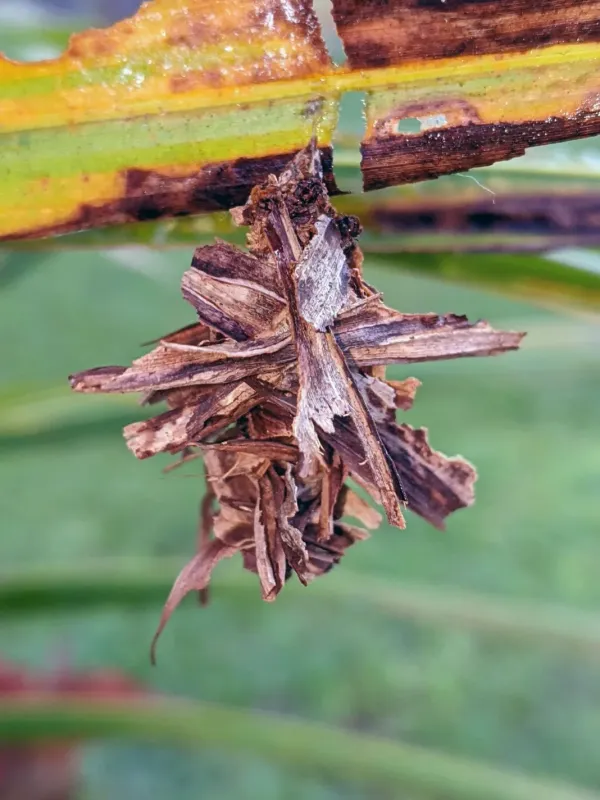
Mahasena (genus Mahasena, family Psychidae) belongs to the group of insects known as bagworms. Mature larvae construct characteristic protective cases from leaf fragments, twigs, and silk.
The males of this pest are winged moths, whereas the females are wingless and spend their entire lives inside their protective cocoon-like bags.
The larvae are typically dark brown to black in color, featuring a hardened chitinous plate on the prothorax, which protects them from predators.
Eggs are deposited by the female directly inside the case, where they remain shielded from external adverse weather conditions.
The size of the larval bag can reach 5 to 8 centimeters, making them visually prominent on the trunks and branches of host plants.
What it damages
Mahasena is a polyphagous pest that causes significant damage to a wide range of woody and shrub crops, especially in tropical and subtropical regions.
The primary host plants include oil palms, tea bushes, cacao, as well as various fruit and deciduous forest trees.
The larvae actively feed on the leaf lamina, starting from the edges or chewing holes in the center of the leaf, leading to a substantial loss of photosynthetic area.
During mass outbreaks, the pest can cause complete defoliation of the crown, leading to tree weakness and a reduction in crop yield.
A serious factor in the damage caused is that the injured plant tissues become entry points for secondary fungal and bacterial infections.
When it appears
The life cycle of Mahasena is closely tied to climatic conditions and humidity, as the species prefers warm regions with high humidity levels.
Pest activity is observed throughout the year in tropical climates, but population peaks often coincide with periods of active shoot growth.
The development cycle from egg to adult can take three to five months, depending on temperature regimes and the availability of food sources.
The dispersal of first-instar larvae occurs via wind, which carries them on silk threads to neighboring plants and areas.
The highest intensity of larval feeding occurs during the fruit ripening period, which places limitations on the use of aggressive chemical treatments.
Signs of infestation
The first sign of infestation is the presence of specific cone-shaped "bags" hanging motionless from tree branches or trunks.
Characteristic damage includes the "skeletonization" of leaves, where the larva consumes the soft tissues, leaving behind only the larger veins.
The presence of the pest is often indicated by the accumulation of excrement in the form of small granules on the leaves located below the feeding sites.
The premature drying of young shoots and leaf drop also indicate a high degree of infestation by bagworm larvae.
In the evening, traces of silk used by the larvae to move and anchor their cases on the surface can be found on tree bark.
Control measures
The mechanical method remains the most effective for small areas: hand-picking and destroying the pest's bags before mass reproduction begins.
Biological control includes the use of products based on Bacillus thuringiensis, which are effective against early-instar larvae.
The application of systemic insecticides is only recommended when the economic threshold of damage is exceeded and strictly during early larval development stages.
It is recommended to conserve natural biological control agents, such as predatory bugs and parasitic wasps, which can suppress bagworm populations.
Monitoring using pheromone traps for males allows for the timely detection of the start of mass moth flight, enabling effective planning of treatments.
Taxonomy
- Latin name
- Mahasena
- Order
- Lepidoptera (butterflies)
- Family
- Psychidae
- EPPO code
- MAHSSP
Discussion
No discussions yet — be the first.