
Macrothele gigas
Macrothele gigas
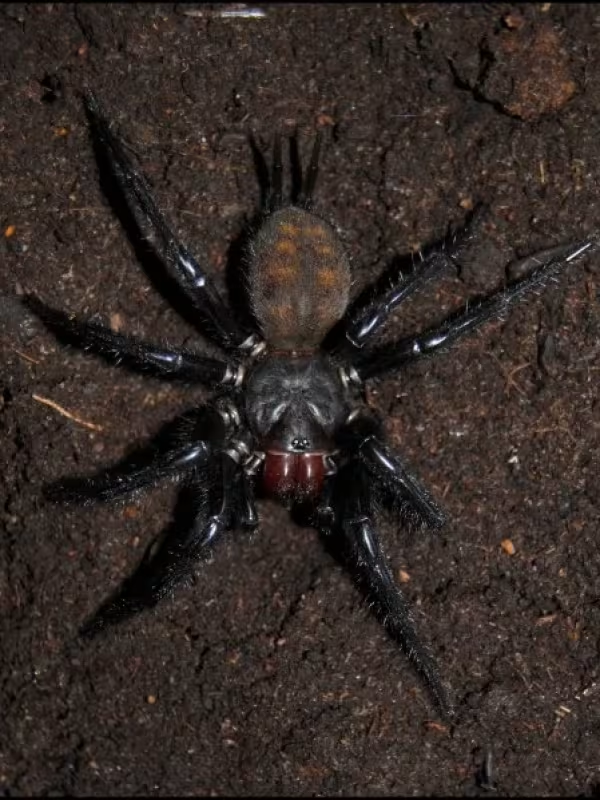
Description
How to identify
Macrothele gigas is a species of funnel-web spider belonging to the family Macrothelidae (order Araneae). This species is notable for its large body size and robust physical appearance compared to other soil-dwelling arthropods.
Morphologically, these spiders are characterized by a dark brown or black exoskeleton, thick bristly hairs, and powerful chelicerae. Their size often makes them easily observable in agricultural soil samples.
Taxonomically, they are mygalomorph spiders known for their sedentary and secretive behavior. Unlike wandering spiders, they create long-term burrows in the ground, reinforced with silk webbing.
Their biology is centered around the soil environment, where they find protection from predators and environmental extremes. They are primarily nocturnal predators.
While often beneficial as predators of other insects, their habit of digging extensive burrows can cause structural damage to the immediate soil environment around cultivated plants.
What it damages
The agricultural damage caused by Macrothele gigas is primarily mechanical. Their burrowing activity can disturb the rhizosphere of young crops and saplings.
When these spiders dig their tunnels near the root systems, they create air pockets and gaps in the soil structure. This interferes with the plant's ability to uptake water and nutrients effectively.
In nurseries, the presence of these spiders can lead to uneven growth or wilting in seedlings due to root disruption and soil desiccation.
While they do not consume plant tissue directly, their cumulative impact on soil stability can lead to root stress, especially in intensive farming operations.
High population densities in specific fields can compromise the overall health of the crop, resulting in reduced vigor and potential yield loss.
When it appears
The activity of these spiders is heavily influenced by soil moisture levels and ambient temperatures. They are most active during the warmer spring and summer months.
Increased soil moisture following irrigation or rainfall often triggers surface activity for hunting and mating, bringing them into closer contact with crop roots.
As temperatures drop during the autumn and winter months, these spiders tend to retreat deeper into their burrows to maintain a stable microclimate.
Environmental factors, such as flooding or prolonged drought, can cause them to relocate, sometimes moving into cultivated areas unexpectedly.
Agronomic field observations suggest that population peaks occur when favorable weather conditions overlap with the initial stages of crop development.
Signs of infestation
The primary indicator of a Macrothele gigas presence is the discovery of well-defined burrow entrances, often lined with subtle, fine silk webbing.
Visible soil surface disturbances or small, funnel-like craters around the base of stems often suggest spider burrowing activity below the surface.
Plants showing localized wilting that cannot be attributed to pathogens or irrigation issues may indicate root system disturbance caused by spider activity.
During soil preparation or tilling, adult spiders or remnants of their silk-lined tunnels are frequently uncovered.
- Distinctive burrow entrances in the soil.
- Presence of fine silk webs around base areas.
- Localized wilting in otherwise healthy crop rows.
Control measures
Mechanical cultivation and frequent tilling of inter-row spaces are highly effective for destroying spider burrows and disrupting their nesting sites.
Implementing consistent crop rotation practices helps in managing the population by disturbing the soil environment, making it less attractive for established colonies.
Proper irrigation management is essential; avoiding excessively damp, undisturbed soil patches reduces the likelihood of colonization.
Biological control methods, such as encouraging natural predators and managing soil biodiversity, can naturally suppress the growth of spider populations.
Deep plowing in the off-season is recommended to shift soil profiles and eliminate overwintering sites, significantly reducing the impact on the next season's crop.
Taxonomy
- Latin name
- Macrothele gigas
- Family
- Hexathelidae
- EPPO code
- MKRTGI
Discussion
No discussions yet — be the first.