
Sydney funnel-web spider
Atrax
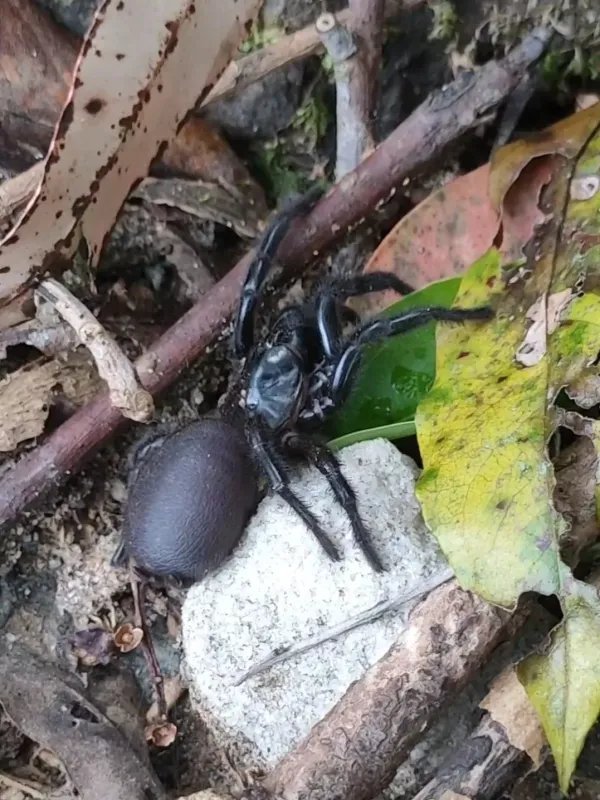
Description
How to identify
The genus Atrax belongs to the family Atracidae. These spiders are iconic for their heavy-bodied appearance and extremely potent venom, with Atrax robustus being the most recognized species.
They are medium-to-large in size, typically ranging from 1 to 5 cm in body length. Their color is usually a dark, shiny black or brownish-black, giving them a distinct polished look.
Identification is easiest through their habitat: they build deep, funnel-shaped silk burrows in the soil, often hidden under logs, rocks, or dense vegetation in cool, humid environments.
The life cycle involves slow development. Females spend most of their lives within their burrows, while males emerge upon reaching maturity to wander in search of mates, increasing the risk of human encounters.
These spiders are strictly nocturnal and highly moisture-dependent, which dictates their activity patterns in agricultural landscapes during rainy seasons or irrigation cycles.
What it damages
It is critical to note that Atrax spiders do not feed on vegetation or agricultural crops. They are obligate predators of invertebrates and do not contribute to crop loss or damage.
They do not infest plants, transmit plant diseases, or compete with livestock for feed. From an agronomic perspective, their presence is benign and essentially irrelevant to crop production.
In fact, these spiders can be considered beneficial in some ecological contexts, as they prey on various ground-dwelling insects that could potentially reach pest status within the local ecosystem.
The only concern for farmers is occupational health. Because of their defensive behavior and potent neurotoxic venom, they pose a safety hazard if accidentally disturbed by hand during gardening or harvesting.
Therefore, agricultural policy does not include monitoring or management programs for this genus, as they do not constitute a threat to global or local food supply chains.
Control measures
Since Atrax spiders are not pests, there is no need for chemical control. The application of insecticides targeting these arachnids is highly discouraged as it harms beneficial biodiversity.
Standard safety protocols are the most effective management strategy. Wearing heavy-duty gloves and protective boots while working with soil, mulch, or compost is sufficient to prevent accidental bites.
Habitat management around farms and garden edges can reduce spider presence. Regularly clearing debris, woodpiles, and thick leaf litter removes the cool, moist refuges these spiders prefer.
If a burrow is located in an area frequently used by workers, it is advisable to cordon off the area or contact professional wildlife relocation services rather than attempting extermination.
Educational awareness for farm staff regarding the identification of funnel-web burrows remains the primary and most effective method of minimizing conflict between agricultural activities and this spider.
Taxonomy
- Latin name
- Atrax
- Family
- Hexathelidae
- EPPO code
- ATRXSP
Discussion
No discussions yet — be the first.