
Macrothele spiders
Macrothele
Description
How to identify
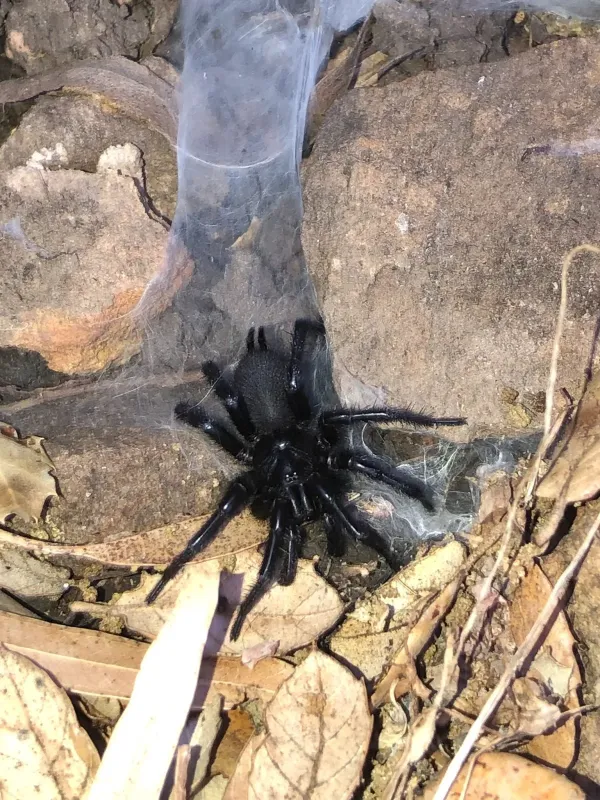
Spiders of the genus Macrothele belong to the family Hexathelidae, known as funnel-web spiders, which are characterized by robust, heavy bodies.
They are primarily identified by their deep, vertical burrows in the soil, which are often lined with a distinctive, dense, white sheet of silk.
These spiders have large, forward-facing chelicerae, which they use to capture prey that wanders onto their web surface at night.
While often shy, their morphology includes a dark, sometimes black exoskeleton and a noticeable size difference between males and females.
In a field or greenhouse setting, the most identifiable feature is the architectural funnel at the burrow entrance, which stands out against the soil background.
What it damages
While not feeding directly on plant tissues, Macrothele spiders cause significant indirect damage through their burrowing activities in managed soil.
Their deep tunnels often slice through root systems, particularly in young shrubs, ornamental plants, or potted nursery crops.
This root disruption leads to wilting, poor nutrient uptake, and increased vulnerability to soil-borne pathogens and drought stress.
In high-density cultivation areas, the extensive silk webbing can also interfere with irrigation and manual weed control operations.
Moreover, the presence of these spiders often causes concern for workers, complicating standard horticultural maintenance tasks.
When it appears
These spiders are most active during the warmer months when temperatures allow for both prey abundance and optimal burrow building.
Spring is a critical period for juveniles as they emerge and establish their initial territories in new areas of the garden or greenhouse.
Summer is characterized by the highest level of hunting activity, with mature spiders maintaining and expanding their existing funnel webs.
During the cooler autumn season, activity may start to decline as the spiders settle deeper into their burrows to prepare for potential environmental shifts.
Indoor greenhouse environments can support year-round activity for Macrothele, necessitating vigilant monitoring throughout the entire growing season.
Signs of infestation
The most visible sign of infestation is the presence of thick, white funnel-shaped webs stretching across the soil or onto the plant base.
Soil mounds of fresh earth at the entrance of a burrow are classic indicators of recent excavation or home improvement by the spider.
Plants suddenly showing symptoms of root distress, such as drooping leaves or lack of vigor, should be inspected for nearby burrow entrances.
The accumulation of chitinous insect remains around a web entrance is a strong indicator that a spider is successfully hunting in that location.
Nocturnal observations with a flashlight near the soil surface will often reveal the spiders waiting at the threshold of their burrows.
Control measures
Mechanical destruction of the silk funnel and the collapse of the burrow tunnel are effective ways to disrupt the spider's territory.
Regular cultivation and loosening of the soil surface discourage the spider from establishing deep, stable tunnels in the growing area.
Targeted application of insecticides to the burrow entrance can be used in commercial nursery settings to eliminate localized high populations.
Maintaining a clear, mulch-free zone immediately around the stems of high-value plants can reduce the attractiveness of the site to spider colonization.
Removing piles of debris and old plant material reduces the density of prey insects, making the area less hospitable to Macrothele spiders.
Taxonomy
- Latin name
- Macrothele
- Family
- Hexathelidae
- EPPO code
- MKRTSP
Discussion
No discussions yet — be the first.