
Macrocheraia
Macrocheraia
Description
How to identify
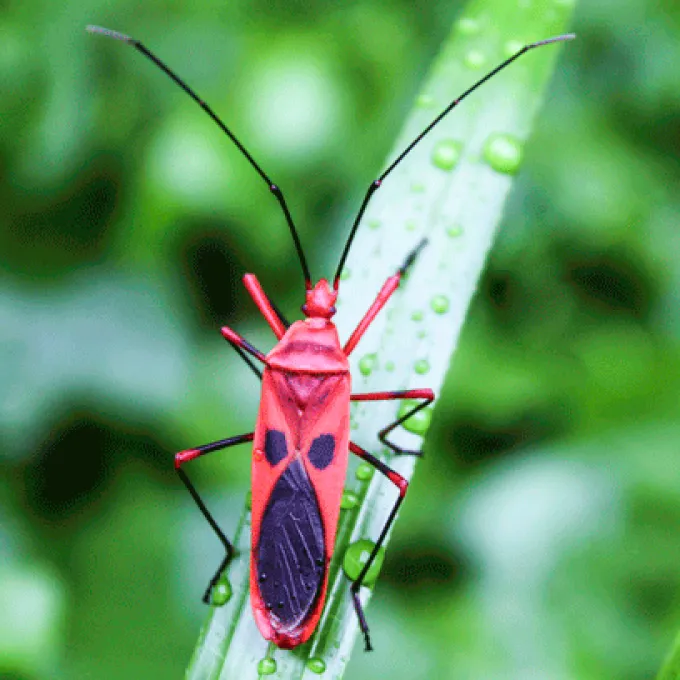
Macrocheraia is a genus of insects belonging to the order Hemiptera and the family Largidae. Among these, Macrocheraia grandis is the most recognized species, noted for its significant size compared to other members of the family.
Adult specimens typically reach lengths of 20-30 mm. Their appearance is characterized by an elongated body shape, featuring a dark coloration often accented with vibrant red or orange markings on the pronotum and abdomen, serving as a warning coloration.
A notable behavioral trait of this genus is the formation of dense aggregations. These insects often cluster together on plant stems, which makes them highly visible and facilitates easy detection during field scouting.
The developmental cycle follows hemimetabolous metamorphosis. Nymphs are miniature versions of the adults but lack fully developed wings and distinct sexual organs, transitioning through several molts before reaching maturity.
Their large size and grouping behavior simplify identification, allowing agronomists and farmers to perform rapid visual assessments and monitor population growth effectively in agricultural settings.
What it damages
Macrocheraia species are specialized phytophagous pests that feed primarily on plant sap. They utilize their piercing-sucking mouthparts to extract fluids directly from the stems and petioles of host plants.
These pests are most destructive in tropical and subtropical regions, where favorable climatic conditions allow them to thrive and complete multiple life cycles throughout the growing season.
Infested plants often experience a severe loss of turgor pressure. This leads to wilting, stunted growth, and potential deformation of new shoots, which compromises the plant's overall vitality and metabolic function.
Beyond the direct nutrient loss, the piercing of plant tissue causes mechanical damage that provides easy entry points for various bacterial and fungal pathogens, potentially leading to secondary infections.
When infestation levels are high, the impact on reproductive tissues can be substantial, resulting in reduced yields, diminished fruit quality, and significant economic losses for commercial growers.
When it appears
The presence and activity of Macrocheraia are highly dependent on ambient temperature and humidity. They are most active during warm months when conditions for reproduction and feeding are optimal.
Winter survival is typically achieved by adults, which seek shelter in plant debris, under tree bark, or within the upper layers of the soil to withstand colder conditions until the arrival of spring.
As temperatures rise, the insects emerge and begin feeding on early-season weeds before moving onto primary agricultural crops as they reach the appropriate developmental stage for colonization.
Population peaks usually occur mid-summer due to the overlapping of successive generations. Constant vigilance is required during this period to prevent the pest population from reaching economic threshold levels.
As the season draws to a close and light duration decreases, the insects prepare for diapause, seeking protected habitats where they can remain dormant throughout the winter months.
Signs of infestation
The most prominent sign of infestation is the discovery of large, dense colonies of these bugs clustering along the stems of the host plants, often visible to the naked eye.
Damage symptoms include localized dark or sunken spots on the stems at the sites where the insects have been feeding. These spots result from the toxic enzymatic effect of the bug's saliva on the plant tissues.
Leaf chlorosis, yellowing, and curling are common indicators that the plant is struggling due to vascular damage and disrupted nutrient transport caused by the pests' sustained feeding activity.
Visible wilting of the plant tops, even when soil moisture is adequate, serves as a strong warning that the internal vascular structure may be compromised by heavy feeding.
Furthermore, the presence of frass (insect excrement) on the plant surface is a reliable indicator of established colonies and persistent feeding, signaling the need for immediate intervention.
Control measures
Managing Macrocheraia effectively requires an Integrated Pest Management (IPM) approach that combines cultural, mechanical, and chemical control strategies.
- Sanitation practices, including the removal of crop residues and weeds that serve as overwintering sites.
- Manual collection and destruction of bug clusters on small-scale farms or garden plots.
- Application of selective insecticides when population densities exceed the threshold for economic damage.
- Implementation of crop rotation cycles to disrupt the pest's life cycle and reduce future infestation risks.
- Promotion of natural predator populations, such as beneficial insects, to maintain ecological balance.
When chemical interventions are necessary, choosing systemic or contact insecticides approved for the target crop is vital, with strict adherence to dosage guidelines and harvest safety intervals.
Consistent field scouting and the use of pheromone traps are essential tools that enable early detection, allowing for precise control measures that minimize the need for broad-spectrum chemical sprays.
Taxonomy
- Latin name
- Macrocheraia
- Order
- Hemiptera (bugs, aphids, leafhoppers)
- Family
- Largidae
- EPPO code
- MCRRSP
Discussion
No discussions yet — be the first.