
Bordered plant bug
Largus convivus
Description
How to identify
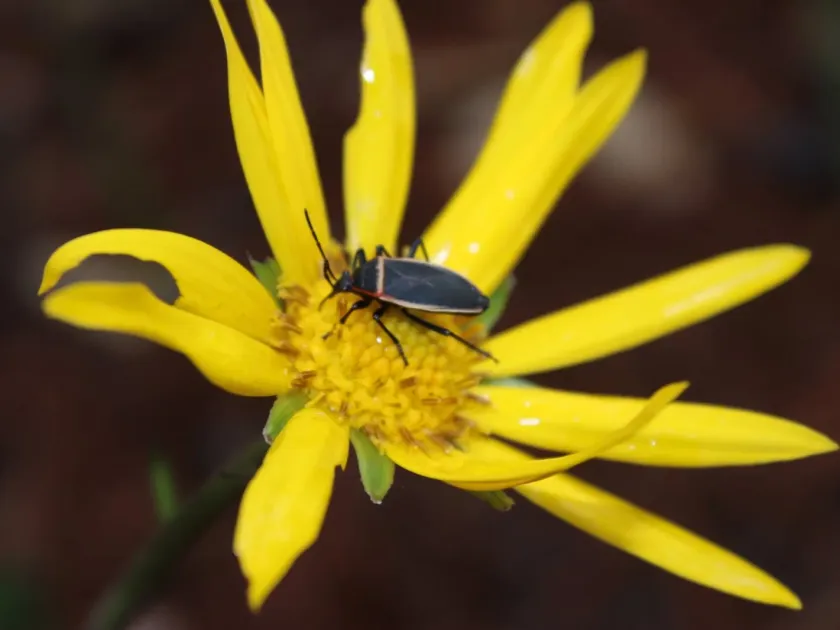
The bordered plant bug (Largus convivus) belongs to the family Largidae and is a common insect in many agricultural and horticultural settings, known for its distinct coloration.
Adult bugs typically measure 10–15 mm in length, featuring an oval, dark-colored body framed by a vibrant reddish or orange border that runs along the sides of the pronotum and wings.
Nymphs of this species are easily recognized by their bright red abdomen, which contrasts sharply with their dark head and thorax, making them quite conspicuous in the garden.
They are gregarious insects, often found in clusters on stems, trunks, or the soil surface, especially during the warmer hours of the day when they gather to bask in the sunlight.
Understanding their visual characteristics is key to early detection, as their tendency to group together makes them relatively easy to spot on host plants during routine inspections.
What it damages
As a polyphagous pest, the bordered plant bug feeds on a wide range of host plants, including various vegetables, small fruits, and many ornamental shrub species.
They use their piercing-sucking mouthparts to penetrate plant tissues and extract vital fluids, which leads to general weakening and physiological stress of the affected plants.
Heavy feeding can cause significant damage, such as leaf wilting, distortion of young shoots, and stunted development of flowers, which reduces both yield and aesthetic value.
The wounds left by their feeding provide easy access for secondary pathogens, such as fungi and bacteria, which can cause further necrotic damage to the plant tissue.
In cases of high infestation, the cumulative effect of their feeding can result in the premature death of tender young shoots or even the entire plant if left untreated.
When it appears
The life cycle and activity levels of the bordered plant bug are heavily influenced by ambient temperature, with activity peaking during the spring and summer months.
Overwintering adults emerge in early spring as soon as temperatures rise, immediately seeking out host plants to begin the reproductive cycle and establish new generations.
Throughout the summer, multiple generations can develop, leading to a significant increase in the pest population, which requires vigilant monitoring and timely management.
As autumn approaches and temperatures drop, these bugs begin looking for suitable overwintering sites, such as debris, leaf litter, or sheltered crevices in tree bark.
Recognizing these seasonal patterns helps gardeners and growers anticipate potential outbreaks and schedule management activities for maximum effectiveness.
Signs of infestation
The most reliable sign of a bordered plant bug infestation is the presence of clusters of red-and-black insects congregating on the leaves, stems, or fruits of plants.
Feeding damage often manifests as tiny chlorotic spots on the leaf surface, which can coalesce over time, causing the foliage to dry out and eventually fall off.
Distorted growth patterns or stunted shoots, often accompanied by the presence of bugs on the growing tips, are clear indicators that the plant is under attack.
A foul-smelling odor in the vicinity of infested plants is another common sign, as the bugs release chemical defenses when threatened or when disturbed in large numbers.
Finding egg masses on the underside of leaves or at the base of the plant is a critical early warning sign that a new generation of nymphs will soon appear.
Control measures
Effective management of the bordered plant bug requires a combination of cultural practices and targeted chemical interventions to suppress population growth.
Keeping the growing area clear of weeds, plant debris, and fallen leaves is essential, as these provide the shelter that the bugs need to survive through the winter.
If chemical control is necessary, choose insecticides that are specifically labeled for these pests and always follow application instructions to minimize harm to beneficial insects.
Biological control agents, including various parasitic wasps and predatory insects, can help keep populations in check naturally if their presence is encouraged in the garden.
- Practice regular sanitation to eliminate overwintering sites.
- Hand-pick and destroy small clusters of insects if observed.
- Use horticultural soaps for organic control of nymphs.
- Monitor periodically using sticky traps to assess population levels.
Taxonomy
- Latin name
- Largus convivus
- Order
- Hemiptera (bugs, aphids, leafhoppers)
- Family
- Largidae
- EPPO code
- LARGCO
Discussion
No discussions yet — be the first.