
Brown Gypsy Moth
Lymantria brunneiplaga
Description
How to identify
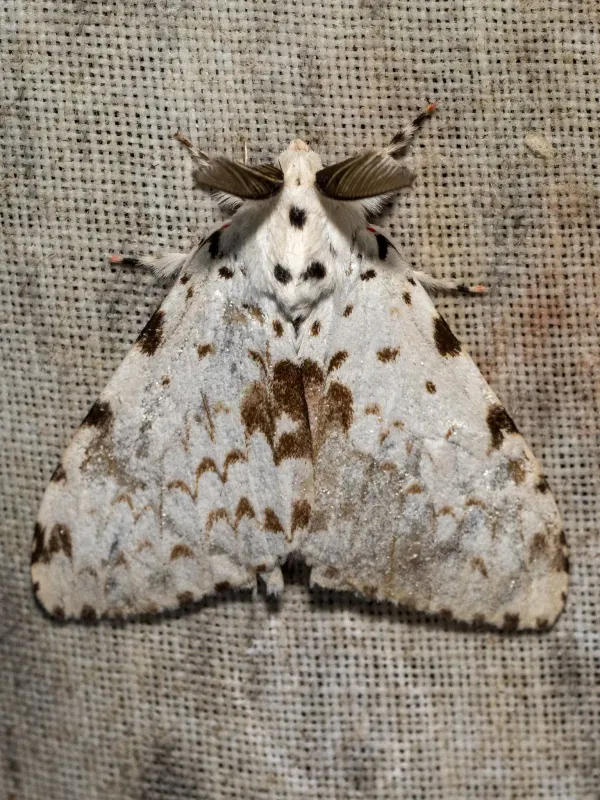
The Brown Gypsy Moth (Lymantria brunneiplaga) belongs to the family Erebidae and the subfamily Lymantriinae. It is a distinct species within its genus, characterized by specific wing patterns and coloration.
The species exhibits sexual dimorphism common to Lymantria moths. Males are typically smaller with feathered antennae designed for detecting females, while females are larger, often flightless or weak fliers with robust bodies.
The larvae are covered in dense, irritating hairs, which serve as a primary defense mechanism against predators. Their appearance varies throughout their larval stages, often featuring distinct colored tubercles along the body.
The lifecycle includes a complete metamorphosis process: egg, larva, pupa, and adult. Each stage has adapted to specific environmental conditions, allowing the species to survive in varied temperate climates.
Professional identification usually requires examining adult wing morphology or conducting genetic analysis, as other members of the Lymantria complex can look visually similar to the untrained eye.
What it damages
As a polyphagous insect, the Brown Gypsy Moth feeds on a wide range of deciduous trees. In severe cases, infestations can lead to massive defoliation of entire forest stands.
Larval feeding causes significant stress to the host plant by consuming leaves, which reduces the tree's ability to undergo photosynthesis. This leads to weakened immunity and stunted growth.
Repeated defoliation over several consecutive years can cause branch dieback and eventually tree death. This is particularly dangerous for trees already stressed by drought or poor soil conditions.
In orchards and landscapes, the damage extends to aesthetic degradation and loss of fruit production. The presence of caterpillars can also affect human comfort due to their irritating hairs.
Economic impacts include the costs of pest suppression, potential loss of timber value, and the requirement for long-term recovery plans for affected forest ecosystems.
When it appears
The species typically overwinters in the egg stage, with egg masses attached to tree trunks or other hard surfaces. This stage is highly resistant to cold weather conditions.
Egg hatching usually occurs in the spring, timed precisely with the bud burst of host trees. This ensures that the newly emerged larvae have immediate access to a food source.
Larval development takes several weeks during the spring and early summer. As the caterpillars grow, they consume increasing amounts of foliage until they reach the pupal stage.
The adult moth flight period occurs mid-to-late summer. During this time, mating occurs and females lay eggs in clusters, covering them with specialized hairs for environmental protection.
Annual population monitoring focuses on counting egg masses during the winter and monitoring larvae counts during the active feeding period to predict the severity of the upcoming season.
Signs of infestation
The most visible sign of an infestation is skeletonized foliage, where only the leaf veins remain. Caterpillars are often seen congregating on branches or moving along the trunk.
Winter egg masses are key indicators of the infestation density. They appear as tan or brownish patches on tree bark and are typically oval in shape with a fuzzy texture.
Frass, or caterpillar droppings, accumulates in large quantities under infested trees. This is often a clear indication of a heavy larval population feeding in the canopy above.
Silken threads left behind by larvae are another common sign. These threads may be used for movement or to anchor leaves together, creating small protective nests for the caterpillars.
Large numbers of adult moths appearing around outdoor lights in the summer are a sign of a mature, localized population and potential egg-laying activity nearby.
Control measures
Biological control is the most recommended approach for large-scale forest management. Products containing Bacillus thuringiensis are highly effective against young larvae while minimizing environmental impact.
In smaller landscapes or gardens, chemical insecticides can be applied when thresholds are reached. It is important to treat trees thoroughly to ensure full canopy coverage.
Manual removal of egg masses during the dormant winter months is a highly effective, low-cost method. Scraping and destroying the clusters helps reduce the local population significantly.
Pheromone traps are essential for monitoring adult population levels. They help determine the exact timing of the moth flight, which is crucial for timing any necessary control interventions.
Encouraging natural predators, such as insectivorous birds and parasitic wasps, plays a vital role in keeping Brown Gypsy Moth populations at manageable levels naturally.
Taxonomy
- Latin name
- Lymantria brunneiplaga
- Order
- Lepidoptera (butterflies)
- Family
- Erebidae
- EPPO code
- LYMABR
Discussion
No discussions yet — be the first.