
Beet webworm
Loxostege similalis
Description
How to identify
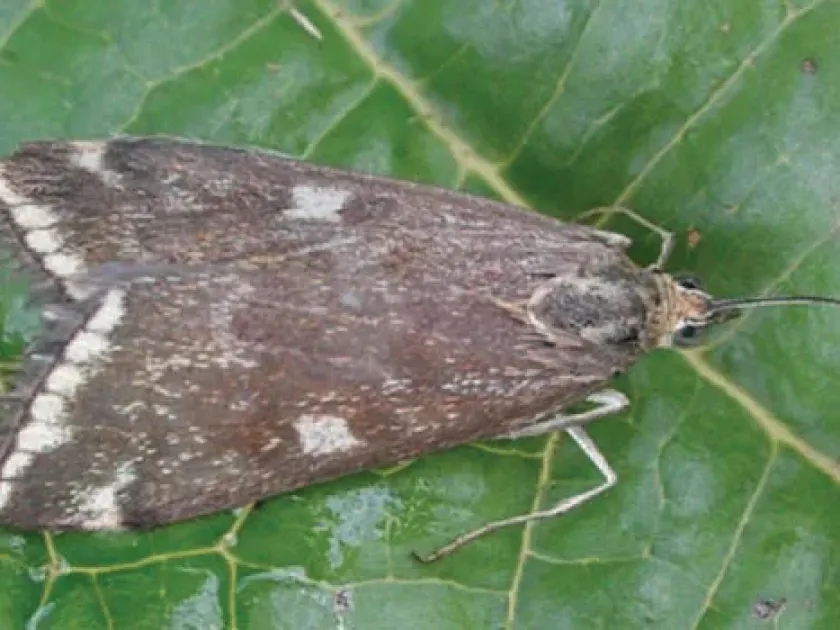
The beet webworm is a species of moth belonging to the family Crambidae. The adult moth has a wingspan of approximately 20–26 mm, featuring brownish-gray wings with dark spots and a distinct pale margin along the edges.
The larvae, or caterpillars, progress through several instars, changing color from pale green to dark gray or nearly black. A key diagnostic feature is the presence of longitudinal light stripes along their bodies and scattered small bristles.
The insect undergoes a complete metamorphosis involving the egg, larva, pupa, and adult stages. They typically overwinter as pre-pupae inside firm silken cocoons buried in the soil at depths of up to 15 cm.
The developmental rate is heavily dependent on ambient temperature and moisture levels. Under favorable climatic conditions, the moth can produce up to three generations per year, leading to rapid population growth.
Adult moths become active and initiate mating flights when average daily temperatures remain consistently above 15 degrees Celsius, making spring monitoring essential for predicting potential infestations.
What it damages
This is a highly polyphagous pest capable of attacking over 200 plant species. Its primary hosts include sugar beets, sunflowers, corn, and various legumes, where it can cause devastating losses.
Early-stage larvae feed on the underside of leaves, skeletonizing them by consuming the green tissue while leaving the epidermis intact. As they grow, they consume entire leaf blades, leaving only the midribs.
During outbreaks, large populations of larvae can move across fields in swarms, completely defoliating entire crops within a few days, which drastically reduces the photosynthetic capacity of the plants.
In sugar beets, severe infestation not only destroys the foliage but also inhibits sugar accumulation in the roots, leading to significant yield losses and lower quality of the raw material.
Sunflower crops suffer from larvae feeding on both the leaves and the flower heads. Such damage not only stunts growth but also facilitates the entry of secondary fungal pathogens that cause rot.
When it appears
The first generation emerges in spring once the soil temperature is high enough for pupal development. These adults often congregate on early-flowering weeds to feed on nectar before migrating to crops.
The second generation, occurring in mid-summer, is usually the most destructive. It coincides with the rapid vegetative growth of primary crops, making the impact of defoliation particularly severe.
Weather patterns are critical for population regulation. Drought during the egg-laying period often results in significant mortality, whereas moderate moisture promotes successful larval establishment.
In southern regions, a third generation may occur if the season is long and food resources are abundant, which can pose a secondary threat to late-harvested crops or winter plant development.
Effective management requires consistent monitoring using light traps and field scouts to identify the presence of adults and the timing of larval emergence for timely intervention.
Signs of infestation
An early indicator of infestation is the observation of moths performing rapid, zigzagging flights when disturbed within the field. Their sudden take-off is a clear signal for agronomists.
Leaf windowing, where tissue is eaten down to a thin, translucent membrane, indicates the activity of young larvae. These small patches are the first visible signs of successful egg hatching.
The formation of silken webs on the leaves suggests that the caterpillars have reached later growth stages. They use these webs to anchor themselves and protect their bodies while feeding intensely.
Accumulated larval frass (small dark pellets) on the leaves or at the base of the plants is a definitive sign of active feeding and high population density, warranting immediate action.
Extensive browning and drying of a field is the most severe symptom, occurring when larvae have stripped the plants bare, causing the vegetation to die back prematurely.
Control measures
Control strategies begin with cultural practices, such as deep autumn plowing, which disturbs the soil and destroys overwintering cocoons by exposing them to extreme weather or burying them too deep.
Weed management is vital, as the presence of flowering weeds provides essential nectar for adult moths and creates an environment conducive to early-season egg-laying on non-crop hosts.
Chemical control via insecticides is necessary when the economic injury level is exceeded. The application must be timed to target early-instar larvae, as they are significantly more susceptible to control measures.
- Applying biological insecticides, such as those containing Bacillus thuringiensis, to manage early larval stages.
- Scheduling spray applications during the evening when larvae are most active on the leaf surfaces.
- Rotating chemical modes of action to prevent the development of insecticide resistance in local pest populations.
By conducting regular field counts of larvae per square meter, farmers can optimize spray schedules, saving costs and protecting beneficial insects that may help in natural population suppression.
Taxonomy
- Latin name
- Loxostege similalis
- Order
- Lepidoptera (butterflies)
- Family
- Crambidae
- EPPO code
- LOXOSI
Discussion
No discussions yet — be the first.