
Lophocampa sobrina
Lophocampa sobrina
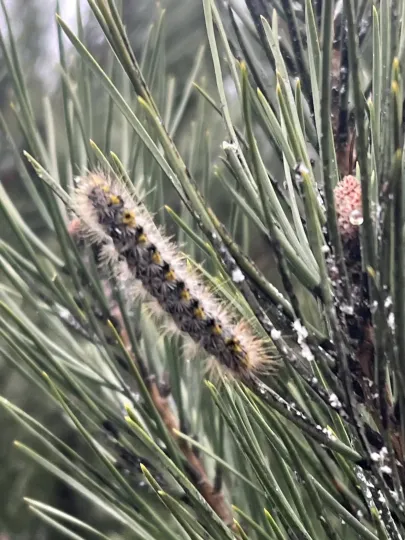
Description
How to identify
Lophocampa sobrina belongs to the family Erebidae, subfamily Arctiinae. As an adult, this insect is a moth, typically characterized by patterned wings that provide effective camouflage against tree bark.
The larvae, or caterpillars, are known for their dense, often brightly colored setae (hairs), which serve as a defense mechanism against birds and other natural predators.
The life cycle undergoes complete metamorphosis, consisting of four stages: egg, larva, pupa, and adult. Females lay eggs in clusters, primarily on the underside of host plant leaves.
Pupation occurs within a loose silk cocoon, which the caterpillar constructs using silk and often incorporates its own shed hairs for extra protection against environmental threats.
Identifying this pest early can be challenging, as young larvae often remain hidden in clusters within the dense foliage of the host tree.
What it damages
This species primarily targets various deciduous trees and shrub species found in forested areas, parks, and residential gardens.
The larvae are leaf-eaters that can rapidly skeletonize leaves, leaving only the primary veins, which significantly impairs the tree's photosynthetic ability.
High population densities of Lophocampa sobrina can lead to premature leaf drop, which weakens the plant and decreases its resilience during winter months.
Young saplings are at the highest risk, as severe defoliation can cause stunted growth and even lead to dieback in susceptible species.
Beyond the direct structural damage to leaves, the pest can reduce the overall aesthetic value of ornamental plants and decrease fruit yields in orchard settings.
When it appears
The pest's activity typically begins in the spring and continues through the summer, coinciding with the peak vegetative growth phase of host trees.
Larval feeding intensity usually peaks during the mid-to-late summer, as the caterpillars consume nutrients to prepare for the pupal stage.
Adult moths are primarily nocturnal, meaning they are active at night and often go unnoticed by gardeners during the daylight hours.
The duration of each generation varies depending on local climate conditions, with temperature playing a major role in the rate of larval development.
The insect typically overwinters in the pupal stage, protected within cocoons hidden in bark crevices or among the leaf litter at the base of the tree.
Signs of infestation
The first sign of an infestation is the appearance of damaged patches of foliage, which gradually spread to adjacent branches as the larvae grow.
The presence of silken nests containing larval exuviae (shed skins) and droppings on the leaves is a clear indicator of a resident colony.
Careful inspection of the underside of leaves may reveal egg clusters laid in a distinct, orderly pattern characteristic of this moth family.
Frass accumulation on lower leaves or on the ground beneath the tree canopy is a strong indirect indicator of active feeding in the upper branches.
Attraction of moths to artificial outdoor lights during summer evenings can serve as a warning sign that egg-laying is occurring in the vicinity.
Control measures
Mechanical control involves manually picking off and destroying larval clusters before they spread significantly through the canopy.
Biological control, such as the use of Bacillus thuringiensis-based insecticides, is effective against younger larvae while preserving beneficial insect populations.
Chemical intervention may be necessary in cases of severe infestation, utilizing targeted insecticides applied according to local agricultural regulations.
- Removing old bark and debris from the base of trees.
- Encouraging natural bird populations to forage in the garden.
- Conducting regular visual surveys of tree foliage throughout the growing season.
Late-season cultivation of the soil around the base of the trees helps disrupt the pupal stage, effectively reducing the overwintering population.
Taxonomy
- Latin name
- Lophocampa sobrina
- Order
- Lepidoptera (butterflies)
- Family
- Erebidae
- EPPO code
- HALSSO
Discussion
No discussions yet — be the first.