
Lonchaea chorea
Lonchaea chorea
Description
How to identify
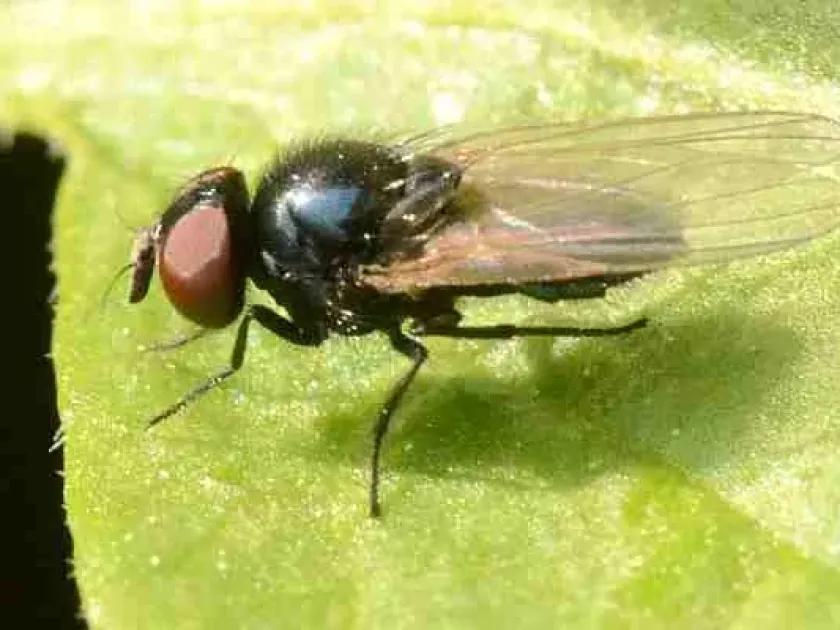
Lonchaea chorea belongs to the family Lonchaeidae, commonly known as lance flies. Adult specimens are small flies characterized by a metallic, dark blue or black sheen on their bodies, which is typical for this family.
The wings of the adults are transparent with a specific venation pattern. The head is rounded and features large compound eyes; in males, these eyes often meet, whereas in females, they are separated by a frontal stripe.
The larvae are cylindrical, legless, and lack a distinct head capsule, similar to many other fly larvae. Their color typically ranges from off-white to cream, blending with the decaying plant matter they inhabit.
The life cycle involves complete metamorphosis: egg, three larval instars, puparium, and adult. Adult flies are highly mobile and are frequently found on plants where they feed on plant juices and decaying organic matter.
These pests primarily overwinter as puparia in the soil or within decaying plant residues, allowing them to survive harsh winter conditions and emerge successfully in temperate climate zones.
What it damages
The primary damage is caused by the larvae, which lead a cryptic life. They infest both healthy tissues of growing plants and already decaying organic matter, often facilitating the spread of secondary infections like bacterial rot.
The affected crops include various vegetables such as brassicas, onions, and root vegetables. They are also known to infest fruits that have been mechanically damaged or already attacked by other primary pests.
In greenhouses and storage facilities, Lonchaea chorea can infest onion and root vegetable stocks, penetrating deep into the tissues, leading to premature softening, decay, and total loss of commercial quality.
Larval activity in the root collar area disrupts the plant's nutrient uptake, causing symptoms such as wilting, yellowing, and eventually the death of the infested plant.
The pest often acts as a secondary colonizer, invading plants that have already been weakened by primary diseases (bacteriosis) or other insects, significantly accelerating the rate of spoilage in the field.
When it appears
The emergence of overwintered adults begins in spring when temperatures become consistently warm, usually starting in April or May. During this time, the flies actively seek out areas rich in organic matter.
Fly activity continues throughout the warm season until late autumn. Depending on the climatic region, the pest can complete two to three generations within a single growing season.
Larval activity peaks during periods of high humidity, as damp soil and moist plant residues provide the necessary environment for the larvae to feed and develop efficiently.
In the second half of summer and during autumn harvests, there is a high risk of root crop infestation if vegetables are left in the field or are not properly dried before being placed in long-term storage.
The pest population dynamics are closely linked to the availability of decaying plant substrates; therefore, a warm and humid autumn often leads to a significant increase in the pest population for the following year.
Signs of infestation
One of the first signs of infestation is the appearance of small holes or tunnels inside root vegetables or bulbs, accompanied by tissue softening and a distinct foul odor characteristic of rot.
The foliage of heavily infested plants typically yellows and wilts during the daytime, despite adequate irrigation, which is a clear indication of damage to the root system by the larvae.
Observing adult flies near vegetable beds or storage sites is a strong indicator of potential egg-laying activity, which will lead to subsequent larval infestation of the produce.
- Presence of larval colonies inside stems, bulbs, or root vegetables.
- Characteristic surface depressions on vegetables surrounded by dark, water-soaked spots.
- Identification of dark puparia in the substrate surrounding damaged plants.
Affected plant tissues quickly become colonized by saprophytic fungi and bacteria, resulting in "wet rot," which often masks the underlying cause of the damage — the lance fly larvae.
Control measures
An essential control method is the implementation of crop rotation and the prompt removal of all plant residues from the field after harvest to eliminate the pest's overwintering sites.
Deep autumn plowing is recommended as it helps destroy puparia by exposing them to the soil surface, where they are vulnerable to low winter temperatures or predation by birds.
During storage, it is crucial to maintain low temperatures and ensure proper ventilation, which prevents larval development and reduces the spread of rot, thus making the stock less attractive to the flies.
The use of biological control agents, such as entomopathogenic fungi or bacteria, can be effective during the peak fly activity period to reduce the adult population before they lay eggs.
In severe infestation cases within commercial agricultural settings, contact and systemic insecticides registered for use on the specific crop may be applied in accordance with local regulations.
Taxonomy
- Latin name
- Lonchaea chorea
- Order
- Diptera (flies)
- Family
- Lonchaeidae
- EPPO code
- LONHCH
Discussion
No discussions yet — be the first.