
Litylenchus
Litylenchus
Description
How to identify
Litylenchus crenatae is a microscopic nematode belonging to the Anguinidae family. It is an obligate plant parasite that specializes in feeding on the tissues of beech trees.
These organisms are invisible to the naked eye. Identification requires precise diagnostic procedures, such as leaf tissue extraction and microscopic examination to confirm the presence of the species.
The life cycle of the nematode is adapted to the bud and leaf environment of its host. It remains active throughout the growing season, causing physiological stress to the tree.
Scientific studies identify it as the primary pathogen associated with Beech Leaf Disease (BLD), which has significantly impacted tree health in various regions.
Its systematic position within the Nematoda phylum highlights its close relationship with other plant-parasitic nematodes, though its ecological niche is highly specific.
What it damages
The primary host for Litylenchus is the beech tree (Fagus spp.). The nematodes feed on leaf primordia and developing foliage, disrupting normal plant growth processes.
As they feed, they cause physical deformation of the leaves and induce physiological changes that prevent proper development, leading to stunted growth.
The damage is cumulative; repeated infestations can lead to canopy thinning, branch dieback, and significant health decline in susceptible tree populations.
Forest ecosystems suffer reduced carbon sequestration potential as a result of the widespread leaf damage and eventual tree mortality.
In ornamental and urban landscapes, the economic impact is substantial due to the loss of aesthetic value and the cost associated with tree removal.
Signs of infestation
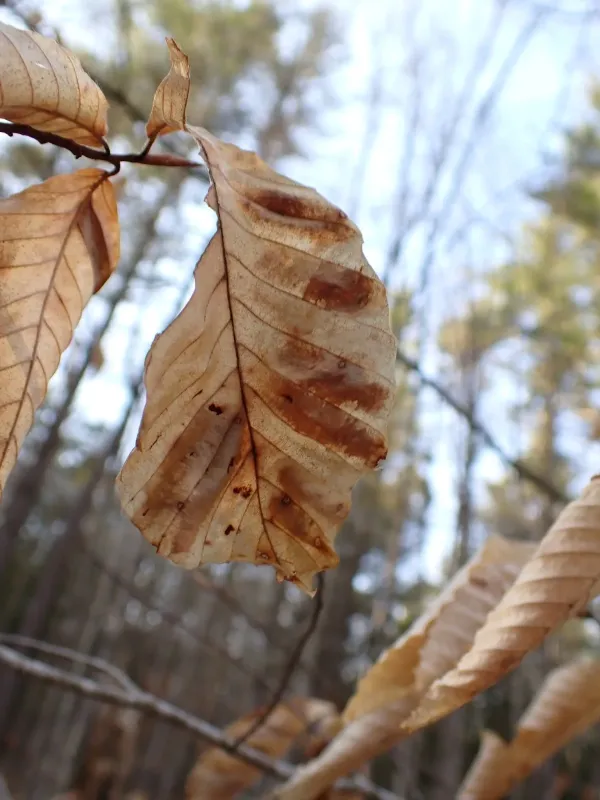
The most distinctive symptom is the presence of dark, banded stripes between the leaf veins. These bands are caused by tissue thickening and cell damage.
Infected leaves often appear distorted, crinkled, or shriveled. A reduction in leaf size and asymmetry are also common signs observed on infested branches.
As the season progresses, the banded areas may turn chlorotic or necrotic, leading to leaf drop well before the normal autumn abscission period.
Severe infestations cause bud mortality, preventing new growth from developing properly in the following year, which weakens the overall tree structure.
Looking at the canopy against the light often reveals the characteristic darkening patterns, which serve as a reliable field indicator for identification.
Control measures
Management of Litylenchus is challenging because there are currently few registered nematicides that are effective and environmentally safe for forest use.
The main strategy involves stringent quarantine and sanitation measures to prevent the spread of the nematode to uninfested areas or new nurseries.
Research is ongoing to evaluate systemic treatments and biological control agents that could help reduce nematode populations in high-value ornamental trees.
Cultural practices, including maintaining overall tree vigor and soil health, can improve the tree's resilience to nematode pressure.
- Strict monitoring of nursery stock imports.
- Removal and destruction of highly symptomatic branches.
- Public awareness campaigns to prevent the movement of infested foliage.
Taxonomy
- Latin name
- Litylenchus
- Order
- Nematodes
- Family
- Anguinidae
- EPPO code
- LITYSP
Discussion
No discussions yet — be the first.