

Pest · Coleoptera (beetles) · affects Fodder beet, Winter rapeseed, Winter wheat
Especially harmful
Leaf beetles
Chrysomelidae
Description
How to identify
The leaf beetle family (Chrysomelidae) belongs to the order Coleoptera. This is one of the most diverse groups of insects, ranging from minute species to larger forms.
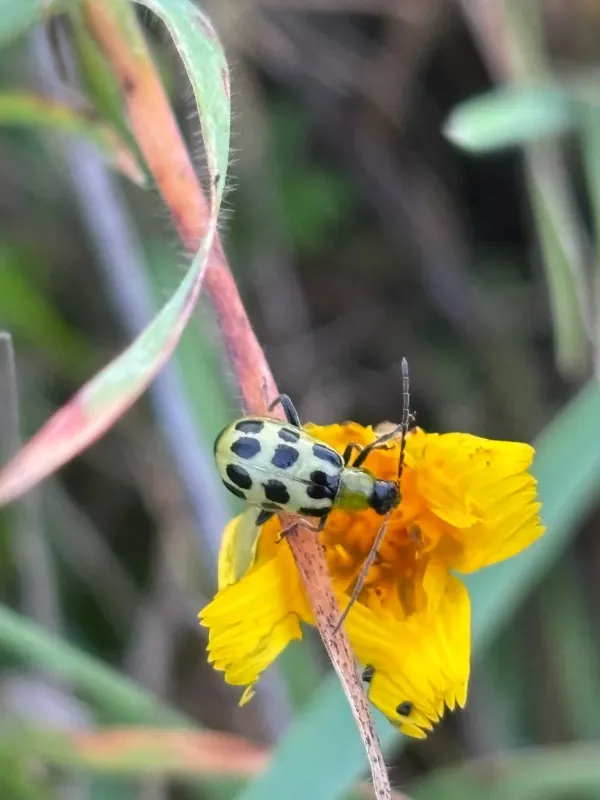
Adult leaf beetles usually possess a compact, oval, or rounded body shape. They have robust mouthparts designed for chewing through various types of plant tissues.
The larvae show a high degree of variation; some species are free-living on leaf surfaces, while others are internal tissue feeders or soil-dwellers.
These insects undergo complete metamorphosis, passing through egg, larval, pupal, and adult stages during their development cycle.
Most species overwinter as adults, finding shelter in the soil, under plant debris, or within leaf litter to survive the cold season.
What it damages
Leaf beetles are significant pests that threaten a wide range of agricultural and horticultural crops, often causing heavy damage to foliage.
Commonly affected crops include fodder beet and alfalfa, where the beetles can drastically reduce biomass production and overall plant health.
Viticulture is also heavily impacted, as certain leaf beetle species consume vine leaves, shoots, and young buds, compromising the vineyard yield.
The damage is caused by both adults and larvae, which consume large amounts of leaf tissue, disrupting the plant's photosynthetic capacity.
Severe infestations often result in stunted plant growth, decreased vigor, and, in some cases, the death of young seedlings or nursery stock.
When it appears
Leaf beetle activity typically begins in the early spring, as rising temperatures trigger the emergence of overwintering adults from the soil.
The most critical window for crop protection is the period of active vegetative growth, when the plants are most vulnerable to defoliation.
The life cycle often involves one or more generations per growing season, depending on the climatic conditions of the specific region.
Peak larval populations often occur in late spring and early summer, matching the period of rapid crop development in many agricultural areas.
As autumn approaches, adult beetles seek out protective environments to enter diapause, effectively ending their feeding season on the crops.
Signs of infestation
Visible feeding damage is the most common diagnostic sign, typically appearing as irregular holes or notches eaten into the leaf margins.
In severe cases, leaf beetles can perform skeletonization, leaving only the primary veins of the leaf, which quickly leads to tissue necrosis.
- Circular or irregular holes in the leaf blades.
- Accumulation of dark frass (droppings) on the foliage.
- Deformation and curling of young, tender leaves.
- Presence of larvae on the underside of leaves during inspection.
- Reduced growth rate and yellowing of foliage due to nutrient loss.
On grapevines, specific grazing patterns on the leaf edges or damage to flower clusters are key indicators of a leaf beetle presence.
Control measures
A successful integrated pest management strategy combines cultural, biological, and chemical methods to keep leaf beetle populations below thresholds.
Cultural practices such as deep autumn plowing are essential to disrupt the overwintering sites of the beetles and reduce the following year's population.
Crop rotation and field hygiene, including the removal of weeds that serve as alternative hosts, are vital components of preventive management.
When chemical intervention is required, systemic or contact insecticides should be applied at the correct developmental stage of the pest.
Regular field monitoring and the use of scouting methods help determine the timing of applications, ensuring economic and environmental efficiency.
In brief
3
Damages crops
Content graph
Damages crops · 3
Content graph
Connections · Leaf beetles
Most often together:
Marketplace
Products · 6


Borey s.c.
ЗАТ Фірма Август, Росія.,селище Вурнари,
Insecticides
0
0
·
96
2 offers
17.55 €per 1 l
Buy

Biology
Taxonomy
- Latin name
- Chrysomelidae
- Order
- Coleoptera (beetles)
- Family
- Chrysomelidae
- EPPO code
- 1CHRYF
Community
Discussion
No discussions yet — be the first.