
Viburnum scale
Lichtensia viburni
Description
How to identify
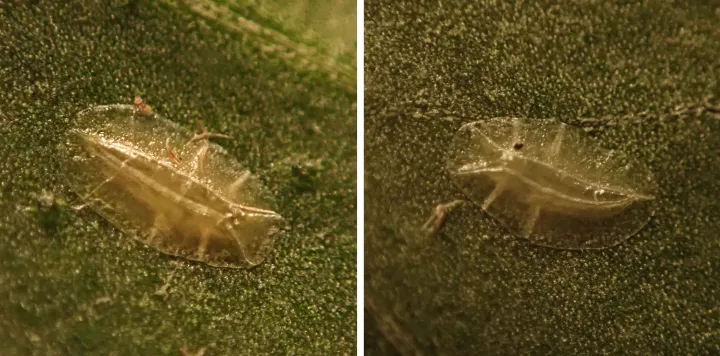
Viburnum scale (Lichtensia viburni) is a member of the Coccidae family, commonly known as soft scales. The female is recognized by her convex, white or cream-colored wax cover that protects her and her eggs.
Unlike armored scales, the protective cover of Lichtensia viburni is part of the insect's body, which becomes firm and waxy as the insect matures and lays eggs.
Adult females are sessile, remaining attached to the bark or the underside of leaves for most of their adult life, while males are rare, winged, and short-lived.
During winter, the pest is found as second-instar nymphs, appearing as tiny, flat, brownish scales that blend perfectly with the bark of the host shrub.
These insects are highly specialized, typically infesting viburnum species and maintaining a life cycle that is synchronized with the seasonal growth of the host plant.
What it damages
The damage is caused primarily by the nymphs and females feeding on the plant's sap, which drains essential nutrients and leads to overall plant weakness.
Heavy infestations result in stunted growth, yellowing of foliage (chlorosis), and premature leaf drop, which can significantly stress the viburnum shrub.
The feeding process causes physical distortion of young shoots and leaves, reducing the ornamental value of the plant and making it susceptible to cold stress.
Sooty mold growth is a secondary consequence, as the pests excrete honeydew that covers the leaf surface, blocking sunlight and interfering with photosynthesis.
In severe cases, if left unchecked, the accumulation of damage can lead to the dieback of branches and, in vulnerable plants, the death of the entire shrub.
When it appears
Viburnum scale is a univoltine species, meaning it completes only one generation per year, making the timing of monitoring crucial for effective management.
Nymphs overwinter on the twigs and bark, emerging to feed when temperatures rise and the sap begins to flow in the spring.
By late spring or early summer, the nymphs mature into adults, and shortly after, females begin laying eggs beneath their waxy coverings.
The emergence of "crawlers" (newly hatched nymphs) typically occurs in early summer, representing the most mobile and vulnerable stage of the life cycle.
As autumn approaches, the young nymphs migrate to their final wintering spots on the twigs, entering a state of dormancy to survive the winter season.
Signs of infestation
The most visible signs during the summer are white, cotton-like masses on the undersides of leaves or along the branches, which house the scale's eggs.
Honeydew accumulation makes the foliage appear sticky or shiny, often followed by a black, dusty layer caused by the growth of sooty mold fungus.
A noticeable decline in the plant's health, including wilted or yellowing leaves and reduced vigor during the main growing season, is a classic indication.
- Small, raised bumps or "plaques" on the branches throughout the year.
- Clusters of ants on the branches, which "farm" the scales for their honeydew.
- Significant twig dieback appearing after several years of infestation.
Regular inspection of the undersides of leaves and young stems is essential for early detection, as the pests are often hidden from casual view.
Control measures
Cultural control involves pruning and disposing of heavily infested branches, which physically reduces the overwintering population of the scales.
Horticultural oil sprays applied in early spring, before buds break, can effectively suffocate the overwintering nymphs by covering their respiratory pores.
During the crawler stage in early summer, contact insecticides are most effective, as the young insects do not yet have their protective waxy layer.
Ant management using sticky barriers can help re-establish natural biological control, allowing predators like ladybugs to access and feed on the scales.
For chemical control, systemic insecticides applied to the soil or foliage can be effective, provided they are used in accordance with local regulations and safety guidelines.
Taxonomy
- Latin name
- Lichtensia viburni
- Order
- Hemiptera (bugs, aphids, leafhoppers)
- Family
- Coccidae
- EPPO code
- LITEVI
Discussion
No discussions yet — be the first.