
Bamboo borer
Leucinodes laisalis
Description
How to identify
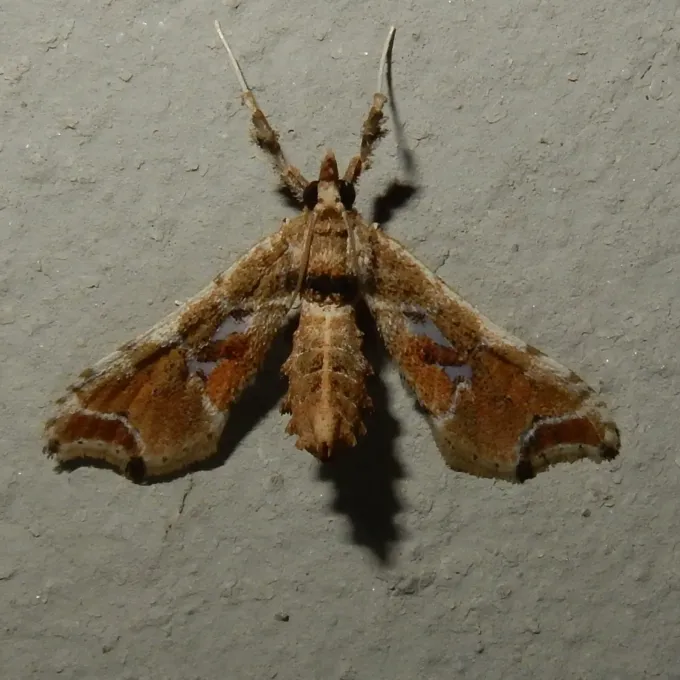
The bamboo borer (Leucinodes laisalis) is a moth belonging to the Crambidae family. Adult moths are typically nocturnal and have a wing span that allows them to remain cryptic when resting on plant stems during the day.
The life cycle consists of the egg, larval, pupal, and adult stages. Females lay eggs on the tender parts of the host plant, often near the nodes of the bamboo shoots.
The larvae are the primary damaging stage. They are characterized by a robust head capsule and a body that changes color as they mature, facilitating their penetration into hard plant tissues.
Pupation usually occurs within the tunnels created inside the host plant or in the soil debris, protected by a dense silken cocoon that makes them resilient to environmental fluctuations.
Multiple generations can occur throughout the year in warm, humid climates, making this pest a continuous threat to susceptible crops.
What it damages
The bamboo borer primarily targets various species of bamboo. The larvae tunnel into the growing shoots, consuming the internal pith, which disrupts nutrient flow and kills the apical meristem.
While bamboo is the main host, the pest may occasionally infest other graminaceous plants in the vicinity if the bamboo population is stressed or depleted.
The infestation results in stunted growth and structural weakness of the culm, rendering the bamboo useless for decorative or construction purposes.
Secondary infections, such as fungi and bacteria, frequently colonize the internal cavities created by the larvae, leading to rot and complete death of the shoot.
Severe infestations can lead to significant economic losses in nurseries and plantations, significantly reducing the biomass production of the bamboo stand.
Signs of infestation
The most visible sign of an infestation is the sudden wilting and yellowing of the shoot tips, even when moisture levels are adequate for the plant.
Small entry holes on the stem, accompanied by piles of frass (bore dust), serve as clear indicators of larval activity inside the culm.
Internal examination of affected stems reveals long, longitudinal tunnels and the presence of larvae that have hollowed out the center of the shoot.
Deformation of the stem, such as bending or narrowing at the point of larval activity, is common due to the destruction of internal support tissues.
- Wilting and yellowing of the shoot top.
- Entry/exit holes with bore dust accumulation.
- Internal hollow tunnels in the shoot.
- Overall loss of vigor in affected bamboo stalks.
Control measures
Sanitation is a critical control measure. All infested shoots should be cut and destroyed immediately to break the lifecycle and reduce the local population of the pest.
Systemic insecticides are the most effective chemical control method because they are absorbed by the plant, reaching the larvae hidden deep within the stems.
Light traps can be utilized during the peak flight season to monitor moth populations and provide an early warning for initiating control interventions.
Biological controls, including the use of Bacillus thuringiensis sprays or entomopathogenic nematodes, offer a targeted solution that minimizes harm to beneficial insects.
Promoting overall plant health through balanced irrigation and nutrient management helps plants tolerate damage and recover more effectively from pest attacks.
Taxonomy
- Latin name
- Leucinodes laisalis
- Order
- Lepidoptera (butterflies)
- Family
- Crambidae
- EPPO code
- LEUILA
Discussion
No discussions yet — be the first.