
Giant water bug
Lethocerus insulanus
Description
How to identify
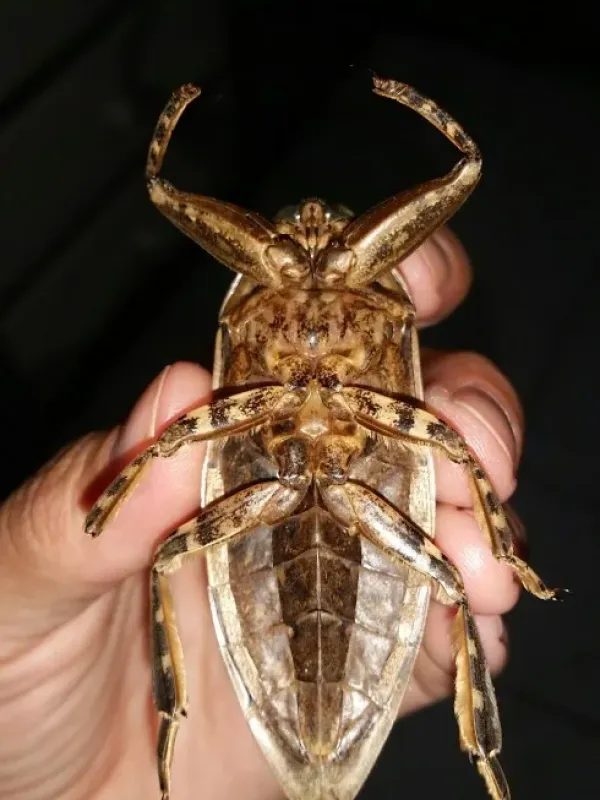
The giant water bug (Lethocerus insulanus) belongs to the family Belostomatidae in the order Hemiptera. These are among the largest insects, typically measuring 7–9 cm in length with a flattened, brownish body.
They possess robust, raptorial front legs specialized for grasping prey, and a short, piercing-sucking beak that injects digestive enzymes into their victims.
Adults are capable of flight and often migrate between water bodies at night, frequently being attracted to artificial lights, which has earned them the nickname "electric-light bugs."
The life cycle involves hemimetabolous development, meaning nymphs look similar to miniature versions of the adults but lack wings until they reach the final molt.
An interesting biological trait is that males often carry the eggs on their backs, providing protection until the nymphs emerge, which is a key reproductive strategy for the species.
What it damages
The primary concern regarding Lethocerus insulanus is its negative impact on aquaculture, specifically in fish farming ponds and nurseries where they predate on fry and fingerlings.
These bugs are aggressive predators; they hunt small fish, tadpoles, and other aquatic organisms, leading to a direct decrease in the population of cultivated fish species.
When attacking, they inject a potent paralytic toxin. Even if a fish manages to escape, the toxin causes tissue necrosis, making the fish highly susceptible to secondary fungal or bacterial infections.
High infestations within a managed pond environment can lead to significant economic losses for fish farmers, as the bugs can wipe out large numbers of sensitive fry.
While they do not feed on crops directly, their presence in irrigation reservoirs or aquaculture systems requires strict management to preserve the aquatic balance.
Signs of infestation
A sudden, unexplained decline in fish fry populations in a contained pond without signs of disease is a primary indicator of a water bug infestation.
Adult bugs can often be detected at night near the water's surface or by checking lights near ponds, as they are strong flyers and are frequently attracted to illumination.
Searching the shoreline and floating vegetation might reveal the presence of adults or their egg clusters if the environment is suitable for their reproduction.
Finding discarded exoskeletons of large insects near the pond edges or water-side vegetation can confirm the establishment of a population in the local ecosystem.
Conducting systematic surveys using sweep nets in shallow, vegetated areas of the pond during the warmer seasons is the most reliable way to monitor for their presence.
Control measures
Mechanical removal using fine-mesh nets is the most effective and eco-friendly method for controlling giant water bug populations in contained fish ponds.
Installing anti-insect netting over nursery ponds can prevent adult bugs from flying into the water, effectively protecting the vulnerable fish stock from predation.
Managing aquatic vegetation by thinning out reeds and dense surface cover reduces the available hiding spots for both adults and nymphs, discouraging colonization.
Limiting bright artificial lighting near pond areas can reduce the number of nocturnal flights, as the insects are highly attracted to bright light sources at night.
Chemical control is generally discouraged in aquaculture environments due to the risk of toxicity to fish and the importance of maintaining a healthy aquatic ecosystem.
Taxonomy
- Latin name
- Lethocerus insulanus
- Order
- Hemiptera (bugs, aphids, leafhoppers)
- Family
- Belostomatidae
- EPPO code
- LETHIN
Discussion
No discussions yet — be the first.