
Giant water bug
Lethocerus americanus
Description
How to identify
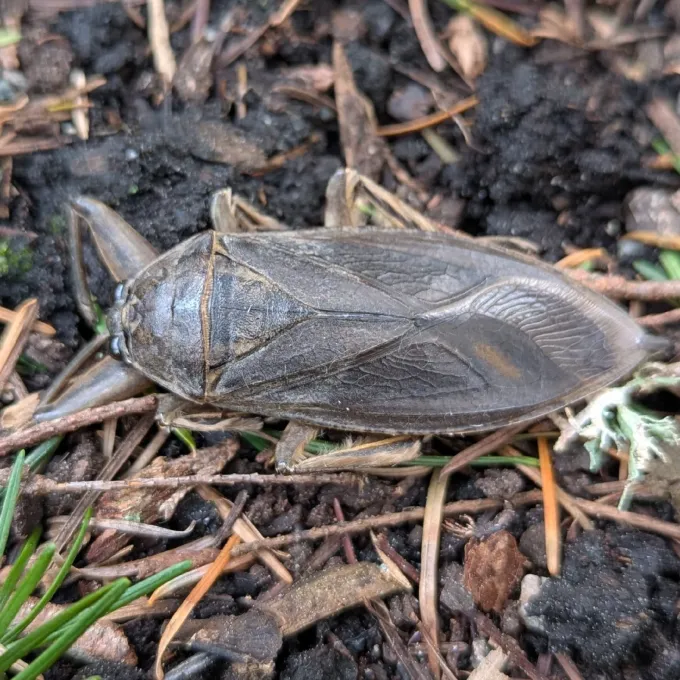
The giant water bug, scientifically known as Lethocerus americanus, belongs to the family Belostomatidae within the order Hemiptera. These insects are among the largest aquatic insects globally, typically reaching sizes of 5 to 7 centimeters.
Their bodies are flattened and oval-shaped, sporting a brownish color that allows for exceptional camouflage within muddy pond bottoms and aquatic vegetation. The forelegs are specialized into raptorial appendages used to firmly grasp prey.
Equipped with a short, stout proboscis, they inject potent digestive enzymes into their prey to liquefy tissues for consumption. Adults possess strong wings, enabling them to fly between aquatic habitats during migration or dispersal events.
The life cycle involves incomplete metamorphosis, progressing through egg, nymphal stages, and adult phases. Nymphs closely resemble smaller, wingless versions of adults and occupy the same ecological niche.
They prefer still or slow-moving water bodies rich in plants, which are frequently adjacent to agricultural areas, such as rice paddies, irrigation ditches, or stocked fish ponds.
What it damages
While not a direct herbivore that consumes plant tissues, the giant water bug is a significant predator in aquatic ecosystems. It poses a serious threat to juvenile fish, making it a nuisance in commercial aquaculture.
In fish hatcheries, a high density of these bugs can decimate fry populations, leading to reduced survival rates and significant financial losses for farmers. Their predatory behavior is highly effective and difficult to mitigate once a population is established.
By consuming tadpoles and small amphibians, they can disrupt the local ecological balance. This may lead to an increase in other insect populations that were previously controlled by those amphibian predators.
Although they are not agricultural crop pests in the traditional sense, their presence in irrigation infrastructure can cause complications for water management. Workers performing maintenance in these areas risk painful bites if the insects are handled.
Their impact is primarily economic within the scope of fish farming and environmental within the scope of pond management, rather than direct damage to crops like rice or vegetables.
Control measures
Managing giant water bugs involves physical pond maintenance rather than chemical pesticides, as chemical use is often incompatible with fish farming operations. Regular clearing of dense aquatic vegetation is the most effective deterrent.
Draining ponds periodically helps break the life cycle of the bugs by exposing their habitats. Removing debris and submerged logs significantly reduces the number of ambush sites available for hunting.
Fine-mesh screening on water intake pipes is a critical preventative measure to stop adult bugs from entering ponds during their active flight seasons. This is essential for protecting young fish stocks.
Biocontrol methods involve encouraging local predators, such as waterfowl, which naturally consume large insects. This integrates well into sustainable farm management practices without threatening aquatic life.
Monitoring using light traps during warm nights can help identify peak migration periods. During these times, proactive steps can be taken to seal ponds and minimize the influx of new individuals.
Taxonomy
- Latin name
- Lethocerus americanus
- Order
- Hemiptera (bugs, aphids, leafhoppers)
- Family
- Belostomatidae
- EPPO code
- LETHAM
Discussion
No discussions yet — be the first.