
Lespesia frenchii
Lespesia frenchii
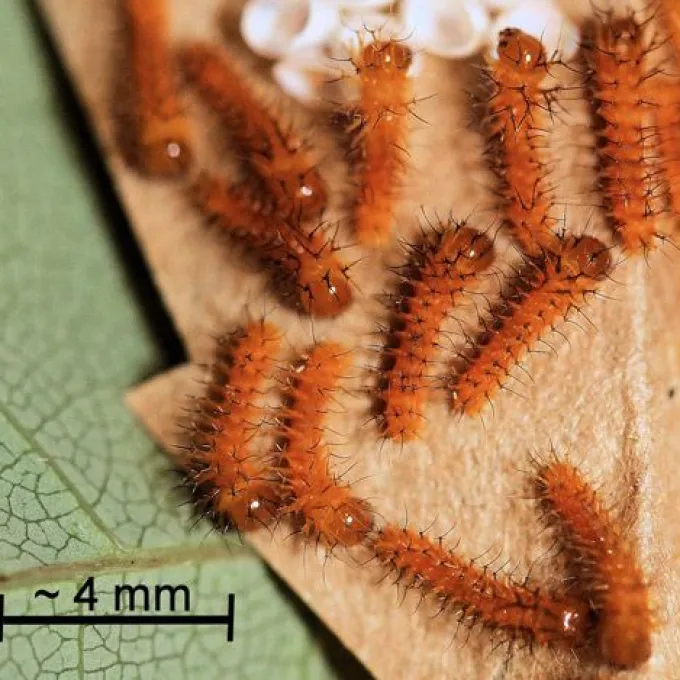
Description
How to identify
Lespesia frenchii belongs to the family Tachinidae, a diverse group of flies known for their parasitoid habits. These insects are essential components of the natural ecosystem, acting as significant regulators of caterpillar populations.
Adult flies are robust, often covered in bristles, and possess distinct, large eyes. Their morphology is highly adapted for tracking and parasitizing specific host larvae, primarily from the order Lepidoptera.
The life cycle involves an egg-laying stage where the female fly places eggs on or near the host larva. Upon hatching, the larva bores into the host and begins to feed internally, completing its development within the host's body.
Identification often requires careful morphological inspection of the adult fly, particularly the pattern of thoracic bristles and wing venation, as many tachinids share a similar superficial appearance.
These flies are generally found in agricultural fields and grasslands where host caterpillars are abundant. They are active during the warmer months when their host populations reach their peak.
What it damages
Lespesia frenchii does not damage crops directly through feeding on plant tissues. Its primary activity is the parasitization of larvae, which makes it a beneficial organism rather than a direct crop pest.
The damage caused by this insect is restricted to the host larvae it destroys. In a field context, this activity is considered a form of natural biological suppression of key agricultural pests, such as armyworms or cutworms.
There are very few instances where this species is considered harmful. Its presence in high numbers is usually a positive indicator of a functioning biological control system within the farm environment.
In rare circumstances, if the population is extremely high, it might parasitize larvae that are being used for other biological control programs, leading to a complex interaction between different beneficial species.
Overall, the net impact on agricultural productivity is positive, as these flies reduce the number of herbivorous caterpillars that would otherwise cause direct damage to the crops.
Control measures
Direct control measures against Lespesia frenchii are generally unnecessary and often counterproductive. Because these flies function as natural biological control agents, their presence should be encouraged.
- Minimize the use of broad-spectrum insecticides.
- Implement integrated pest management (IPM) to preserve beneficial insect populations.
- Provide floral resources around field borders to attract and sustain adult flies.
- Monitor pest levels accurately to ensure that chemical treatments are only used when necessary.
By protecting these parasitoids, farmers can reduce their dependency on synthetic pesticides, as the flies provide a consistent level of control over pest populations throughout the growing season.
Conservation biological control is the most effective approach for maintaining healthy levels of Lespesia frenchii, ensuring that the agroecosystem remains resilient against major pest outbreaks.
Taxonomy
- Latin name
- Lespesia frenchii
- Order
- Diptera (flies)
- Family
- Tachinidae
- EPPO code
- LESPFR
Discussion
No discussions yet — be the first.