
Leptoglossus vexillatus
Leptoglossus vexillatus
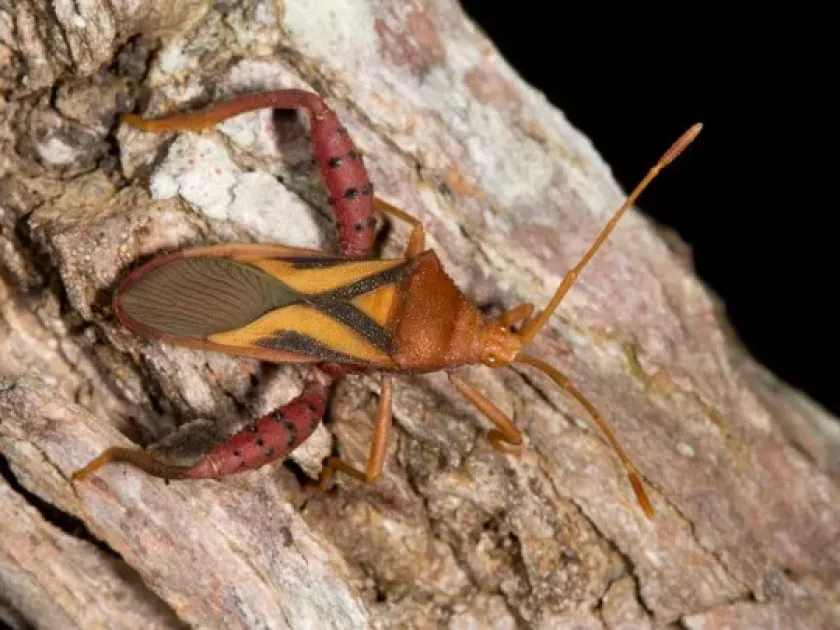
Description
How to identify
Leptoglossus vexillatus is a species belonging to the order Hemiptera and the family Coreidae (leaf-footed bugs). The insect is characterized by distinctive leaf-like expansions on the hind tibiae, which serve as a diagnostic feature for the genus.
The adult body is typically elongated, with coloration ranging from light brown to dark brown. The head features a piercing-sucking mouthpart, known as a rostrum, adapted for extracting sap from plant tissues.
Nymphs resemble smaller, wingless versions of the adults, though their coloration may be more vibrant to aid in camouflage. They undergo several nymphal stages, progressively developing until they reach adulthood.
As true bugs with hemimetabolous development, they do not undergo a pupal stage. Instead, nymphs grow through successive molts, gradually acquiring wing pads and adult morphological traits.
These insects prefer warm climates and are highly active during sunny conditions. Their life cycle is heavily influenced by ambient temperature and host plant availability.
What it damages
The pest primarily targets a wide range of agricultural and wild plants, including legumes, various solanaceous crops, and woody ornamentals. They are known for their ability to feed on reproductive plant parts.
By using their rostrum to pierce plant tissues, they extract cell sap from developing fruits, seeds, and stems. This process directly interferes with the plant's nutrient transport system and metabolic activities.
Feeding damage often manifests as fruit deformation, stunted growth, and loss of commercial value. In legumes, the bugs specifically target immature seeds, leading to shriveled grains and reduced yield quality.
Puncture sites often become necrotic, which can facilitate the entry of secondary pathogens such as bacteria and fungi, causing fruit rot or localized tissue death.
High infestation levels can cause severe stress to the host plant, resulting in premature flower drop and, in extreme cases, the overall decline of the plant's health and vigor.
When it appears
Activity begins in early spring as temperatures rise, signaling the emergence of overwintering adults from their dormant state. They quickly move to host plants to begin feeding and reproduction.
Peak population levels typically occur during mid-summer, coinciding with the mass hatching of nymphs. This is the period when crop damage is most significant due to the high metabolic demand of the growing nymphs.
The number of generations per year is dependent on the local climate. In warmer regions, the species can complete multiple life cycles within a single growing season, extending the threat duration.
As autumn approaches and temperatures drop, adults search for suitable overwintering sites. They seek protection in plant debris, under tree bark, or in man-made structures.
The insects enter a state of diapause during the winter months, allowing them to survive harsh conditions and emerge once favorable environmental cues are detected in spring.
Signs of infestation
The presence of the bugs themselves is the most obvious sign, as they are often found in clusters on developing fruits, flowers, or tender stems. They are relatively mobile but may remain stationary while feeding.
Visually, damage appears as localized puncture marks on the skin of fruits. These marks may become discolored, sunken, or hardened as the plant tissue responds to the feeding injury.
Affected stems and terminal shoots may show signs of twisting or stunted growth. This distortion is caused by the localized depletion of nutrients and potential injection of enzymes during the feeding process.
Secondary signs include the presence of frass (excrement) on leaf surfaces and the premature abscission of fruit or flower buds, which is a common stress response to heavy bug infestation.
- Chlorotic spots or necrotic lesions on leaves and fruit.
- Presence of malformed, shriveled seeds within pods.
- Increased incidence of secondary fungal or bacterial infections in fruit.
Control measures
Integrated Pest Management (IPM) is essential for controlling Leptoglossus vexillatus. Cultural practices, such as removing weeds that serve as alternative hosts, are the first line of defense.
Deep plowing after harvest is an effective method to disrupt overwintering sites and kill dormant adults in the soil, significantly reducing the starting population for the next cycle.
Chemical control should be reserved for periods of high economic threshold exceedance. Systemic or contact insecticides are most effective when targeted at the nymphal stages, which are less mobile than adults.
Biological control agents, such as egg parasitoids, can play a significant role in suppressing populations within natural environments and should be encouraged by maintaining ecological balance.
Regular field monitoring using traps is recommended to track population dynamics. Early detection of migratory individuals allows for targeted interventions before the population reaches damaging levels.
Taxonomy
- Latin name
- Leptoglossus vexillatus
- Order
- Hemiptera (bugs, aphids, leafhoppers)
- Family
- Coreidae
- EPPO code
- LEPLVE
Discussion
No discussions yet — be the first.