
Lepidostoma hirtum
Lepidostoma hirtum
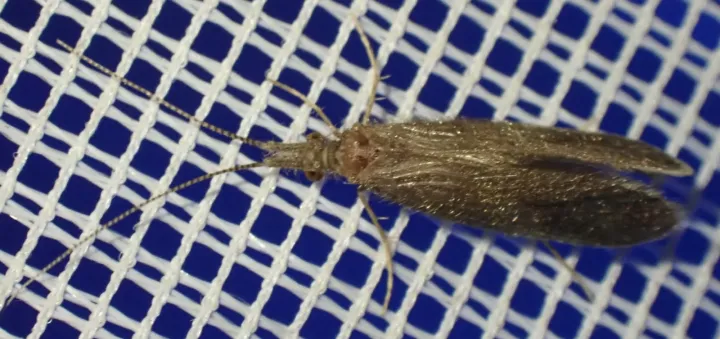
Description
How to identify
Lepidostoma hirtum is a species of caddisfly (order Trichoptera) belonging to the family Lepidostomatidae. The adults are small, moth-like insects with wings covered in fine, hair-like structures, which gives the species its characteristic appearance.
The larval stage is strictly aquatic. Larvae construct protective cases, often referred to as casings, made from sand grains, bark fragments, or plant debris, which they bind together using silk secreted from their salivary glands.
The pupation process occurs entirely within these protective cases. Once ready to transform, the larva anchors its case to a solid substrate, ensuring safety during the delicate process of metamorphosis into an adult.
Adults are terrestrial and have a short lifespan, primarily focusing on reproduction. They are typically found in the vicinity of freshwater bodies, which are essential for their life cycle and egg-laying.
While ecologically beneficial as part of the aquatic food web, their presence can be problematic in human-managed water systems, especially in agricultural irrigation projects.
What it damages
The primary concern regarding L. hirtum in agriculture is not direct herbivory on dry-land crops, but the impact on irrigation infrastructure. Larvae frequently inhabit water intake systems, where their protective cases clog filters, nozzles, and pipes.
In greenhouses and nurseries utilizing hydroponic or aquatic growing methods, these larvae can cause direct damage by feeding on the soft tissues of roots, stems, and leaves of submerged or floating plants.
The blockage of irrigation lines causes significant operational issues, leading to uneven water distribution, reduced plant growth, and increased maintenance costs due to equipment downtime.
The feeding activity of larvae on plant tissues creates entry points for secondary pathogens, such as fungi and bacteria, which can exacerbate plant health issues.
Excessive accumulation of larval waste and abandoned cases within irrigation networks degrades water quality, potentially introducing harmful contaminants to sensitive agricultural crops.
When it appears
Larval development typically initiates during the spring months, as water temperatures rise, creating ideal conditions for their growth and active feeding.
Adult emergence occurs during the summer months. The timing of the emergence is highly correlated with the ambient temperature and the thermal properties of the local water bodies.
In the autumn, larvae concentrate on accumulating energy reserves for overwintering, often leading to higher densities of organisms in water collection systems.
Climatic factors such as drought or unseasonably warm weather can significantly shift the emergence windows and developmental rates of the population.
The presence of multiple generations per year can occur in warmer climates, leading to a prolonged period of potential infestation in agricultural water sources.
Signs of infestation
The most reliable sign of a L. hirtum infestation is the presence of their cylindrical, sand- or debris-covered cases in irrigation filters and water pump systems.
Visual inspection of aquatic or hydroponically grown plants may reveal irregular feeding marks or "notching" on leaves, caused by the larvae's biting mouthparts.
Mass swarming of adults near artificial lights at night, especially near farms or greenhouses adjacent to water sources, is a strong indicator of a high local population.
A noticeable decrease in water pressure or flow within irrigation lines, despite clean water source conditions, often indicates internal buildup of larval casings.
The accumulation of granular fecal matter within water storage tanks is a clear biological marker that larvae are active within the system.
Control measures
Effective management requires the installation of high-quality mesh filters at the water intake points to physically exclude larvae from entering the irrigation lines.
Regular maintenance of pumps and water channels, including the removal of debris and algae, is essential to minimize suitable habitats for the larvae.
In hydroponic setups, the use of fine-pore filtration systems and regular water disinfection protocols can successfully mitigate larval presence.
Light traps can be deployed strategically to capture adult caddisflies before they have the opportunity to lay eggs near the agricultural water supply.
- Install micro-mesh filters (under 1mm) at pump inlets.
- Implement routine cleaning and flushing of irrigation pipes.
- Reduce standing water and organic buildup in water channels.
- Use ultraviolet or LED light traps for adult population monitoring.
Taxonomy
- Latin name
- Lepidostoma hirtum
- Family
- Lepidostomatidae
- EPPO code
- LPSAHI
Discussion
No discussions yet — be the first.