
Crunoecia irrorata
Crunoecia irrorata
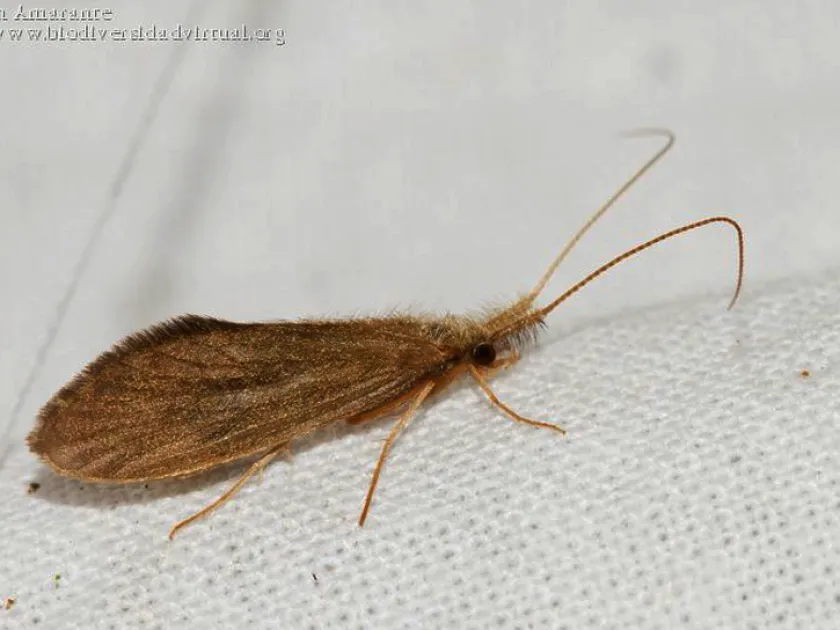
Description
How to identify
Crunoecia irrorata is a species of caddisfly in the family Lepidostomatidae, characterized by its unique biological adaptations to moist environments.
The adult insects are recognized by their hairy wings and distinct coloration that allows them to blend into their riparian habitats seamlessly.
The larvae are particularly noted for their distinctive, cone-shaped cases, which they construct using sand grains and small pieces of plant matter.
The morphology of the larval head and thoracic segments is adapted for survival in flowing or seep-like water conditions, which defines their ecological niche.
Accurate identification requires examining the construction materials of the larval cases, as these are specific to this particular species of Trichoptera.
What it damages
While Crunoecia irrorata is generally not a significant agricultural pest, it can occasionally damage plants in water-logged or excessively damp conditions.
The larvae feed primarily on detritus but can consume young roots or shoots if their natural food supply is insufficient or absent during development.
Damage is typically observed on crops grown in high-humidity areas, such as those near drainage ditches, marshes, or poorly drained field edges.
The intensity of the damage is usually low, appearing as focal spots where the larvae have grazed on the plant tissue near the soil-water interface.
Secondary infections often exacerbate the damage caused by the larvae, leading to further weakening of the crop plants in those affected areas.
When it appears
The life cycle of Crunoecia irrorata is tied to aquatic and semi-aquatic habitats, with distinct seasonal patterns of development throughout the year.
Adults are typically most active during the warmer months, ranging from late spring through early autumn, when mating and egg-laying occur.
Larval development takes place during the summer, characterized by steady growth and the enlargement of their protective cases as they feed.
Pupation occurs as the weather cools, with the adult emergence marking the end of the annual cycle for this population.
Temperature and moisture levels are critical factors that determine the timing of each developmental stage in the insect's life cycle.
Signs of infestation
The most reliable sign of a population presence is the discovery of the species' characteristic cone-shaped cases on stems or the soil surface.
Damage symptoms include irregular grazing marks on the roots or basal stalks of young plants, especially those situated in moist environments.
Direct observation is often challenging because larvae retreat deep into their protective cases when disturbed by agricultural work.
Surface necrosis or shallow pits on plant parts near the water level are typical indicators of the larvae's feeding activity.
Frequent sightings of adult caddisflies near irrigation channels during dusk suggest the proximity of a potential infestation site.
Control measures
Effective control focuses on the physical management of the environment, specifically reducing the moisture levels in and around field areas.
Clearing drainage ditches and removing decaying organic matter are the primary steps to disrupt the larvae's habitat and eliminate food sources.
Proper field maintenance and soil drainage improvements are usually sufficient to prevent the establishment of significant populations of this insect.
Chemical intervention is rarely required and should be considered only if population thresholds reach levels that impact significant crop yields.
- Improve soil drainage systems.
- Regular removal of aquatic debris.
- Monitoring of wet field zones.
Taxonomy
- Latin name
- Crunoecia irrorata
- Family
- Lepidostomatidae
- EPPO code
- CRUNIR
Discussion
No discussions yet — be the first.