
Lepidostoma
Lepidostoma
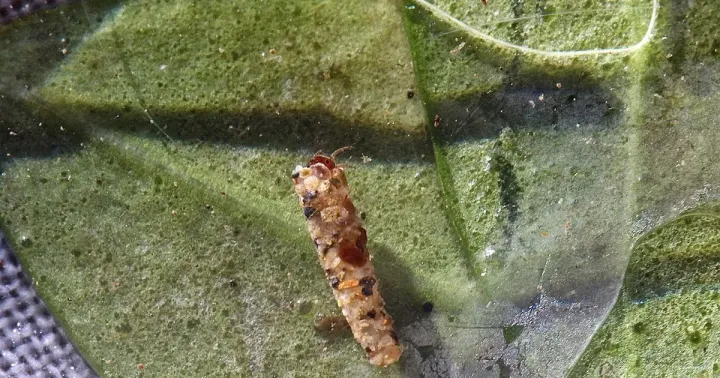
Description
How to identify
Lepidostoma is a genus of caddisflies belonging to the order Trichoptera and the family Lepidostomatidae. These insects are characterized by their aquatic larval stage.
Adults are small, moth-like insects with wings covered in fine hairs and scales, which is a distinctive feature of this particular taxonomic group.
The larvae are most notable for constructing protective cases known as caddis houses, crafted from plant debris, sand grains, or small pebbles bonded with silk.
Systematically, they are adapted to various freshwater environments, ranging from cold streams to slow-moving water bodies near agricultural lands.
While they are not common agricultural pests in dry fields, they can emerge as significant problems in nurseries or hydroponic setups near natural water sources.
What it damages
Damage is primarily caused by larvae, which are typically detritivores but may switch to consuming living plant tissue when preferred food sources are scarce.
In nurseries, they can feed on the tender stems and leaves of young seedlings that are kept in humid environments or partially submerged in water.
Feeding activities result in skeletonized leaves or girdled stems, which weaken the plant and hinder its growth during the most vulnerable development stages.
Damaged tissues provide entry points for secondary pathogens, such as fungi and bacteria, leading to further decay and potential plant loss.
Hydroponic crops are particularly at risk, as larvae can enter systems through intake water and damage roots or submerged foliage directly.
When it appears
The life cycle of Lepidostoma typically spans one year, governed by temperature fluctuations and the availability of organic matter in the water.
Larval activity peaks in the spring and early summer when metabolic rates increase and the larvae prepare for the pupation phase.
Adult emergence usually occurs in mid-summer, at which point mating and egg-laying take place to ensure the survival of the next generation.
Overwintering occurs at the larval stage, with the insects resting in bottom sediments and continuing to consume detritus even in colder months.
Crop monitoring should be intensified during the transition from late winter to early spring, the period when larvae are most actively feeding on new growth.
Signs of infestation
The most reliable sign of a Lepidostoma infestation is the presence of their portable cases attached to plant stems or submerged debris.
Plants may show irregular holes in leaves or missing tissue along the edges, indicative of the larvae's chewing mouthparts.
Wilting of seedlings in wet areas, often accompanied by visible slime trails left by larvae as they move across the plant surface.
Root systems may appear stunted or damaged if the larvae gain access to the root zone of container-grown plants in aquatic conditions.
- Visible protective cases on plants.
- Irregular feeding patterns on leaves.
- Unexpected wilting of seedlings in humid zones.
Control measures
The most effective strategy involves mechanical exclusion, such as installing fine-mesh filters on irrigation inlets to keep larvae and eggs out of the system.
Vegetation management around water sources, such as clearing aquatic weeds and debris, reduces the natural habitat of the larvae.
Biological controls can be implemented by managing the water quality to make it less suitable for excessive caddisfly development.
Chemical control is rarely recommended due to the proximity of the pest to water, but if necessary, use targeted, water-safe biological insecticides.
Implementing proper drainage and preventing excessive standing water around greenhouse foundations can significantly reduce infestation risks.
Taxonomy
- Latin name
- Lepidostoma
- Family
- Lepidostomatidae
- EPPO code
- LPSASP
Discussion
No discussions yet — be the first.