
Crunoecia
Crunoecia
Description
How to identify
The genus Crunoecia belongs to the order Trichoptera (caddisflies), family Lepidostomatidae. While adult insects are relatively harmless, their larvae can pose a threat to specific plants in moist environments.
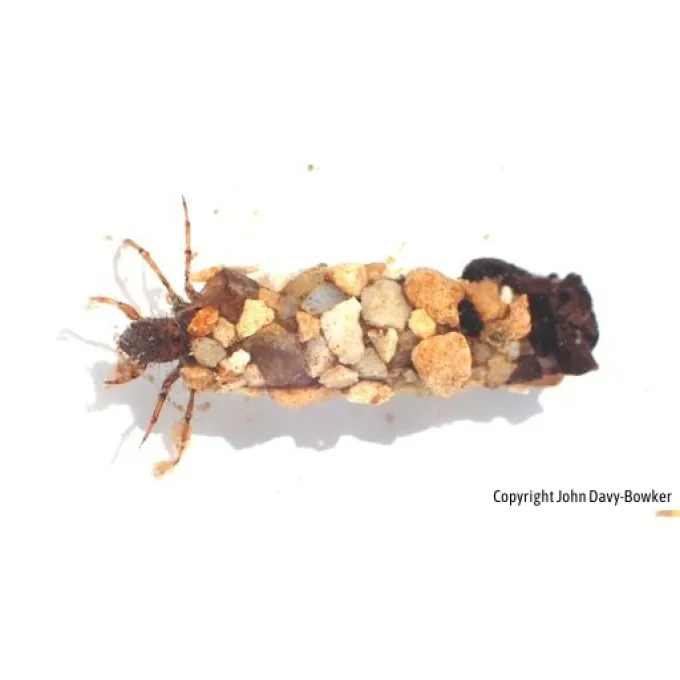
Larvae of this genus are characterized by their unique cases, constructed from small sand grains or plant fragments. They lead an aquatic or semi-aquatic lifestyle, making them site-specific inhabitants.
The adult form is generally dull, with brownish or greyish wings showing the typical caddisfly venation. Detailed identification usually requires examination of genitalia structures.
The biology of these insects is deeply tied to running water and springs, which defines their distribution patterns near agricultural land.
Understanding their systematic position allows agronomists to predict their presence in areas with high water tables or poor drainage systems.
What it damages
Crunoecia primarily impacts plants situated in waterlogged areas, such as those near drainage ditches, low-lying fields, or irrigation channels.
Vegetable crops and young seedlings planted in hydromorphic soils are the most susceptible. Larvae may feed on the root collar and lower stem tissues of young plants.
The resulting damage weakens the plant's metabolic processes and creates entry points for secondary bacterial or fungal infections.
Although they are not considered major field pests, their activity in intensive vegetable farming can lead to significant localized crop loss.
Economic impact is highest in regions where dense irrigation networks provide the necessary conditions for these larvae to thrive throughout the growing season.
When it appears
The life cycle of Crunoecia is closely linked to water temperature and environmental moisture. Larval development is most intense during spring and early summer.
Adult emergence typically occurs late in spring, followed by mating and egg deposition into water bodies or adjacent damp environments.
Larvae reach peak activity when moisture levels are high, as these conditions are optimal for their survival and construction of their sand cases.
As water sources dry up in late summer, larval activity may decline, though they possess the ability to survive unfavorable periods within soil litter.
Monitoring should be initiated as soon as temperatures stabilize in spring, as this marks the period when larvae transition to active feeding after diapause.
Signs of infestation
The primary sign of infestation is the presence of their distinct, tube-like cases left on the soil surface or attached to the base of plant stems.
Visible damage appears as superficial necrotic ulcers or scrapings on the stem, typically localized near the soil line where the plant remains moist.
Soil inspections in affected areas often reveal small plant debris or scraped stem fragments, which are clear indicators of larval feeding activity.
A high density of caddisflies in nearby drainage channels serves as a strong warning sign for potential future infestations of neighboring vegetable crops.
Stunted growth, wilting, or yellowing of lower leaves in nursery seedlings may indicate stem base damage caused by this specific pest.
Control measures
Effective control focuses on land management, specifically improving drainage to reduce soil moisture, which inherently limits the larval habitat.
Biological control agents, such as entomopathogenic nematodes or specific bacteria, can be applied in areas where the pest density is high.
Cultural practices, including the regular clearing of excess vegetation from irrigation ditches and canals, remove essential shelters for the larvae.
Chemical control with insecticides is generally a last resort, recommended only when thresholds are exceeded, and must strictly comply with local water protection regulations.
- Regular monitoring of fields with poor water management.
- Implementing crop rotation to prevent habitat buildup.
- Creating dry soil barrier strips around vulnerable plantings.
Taxonomy
- Latin name
- Crunoecia
- Family
- Lepidostomatidae
- EPPO code
- CRUNSP
Discussion
No discussions yet — be the first.